WeChat-ready HTMLCopy and paste into your editorCopy article
WeChat-ready HTMLCopy and paste into your editor
Copy and paste into your editor
YUANMU · WINTER SOUTHERN XINJIANG
Colour fades. Mountains, desert, cities and the road itself become clearer.
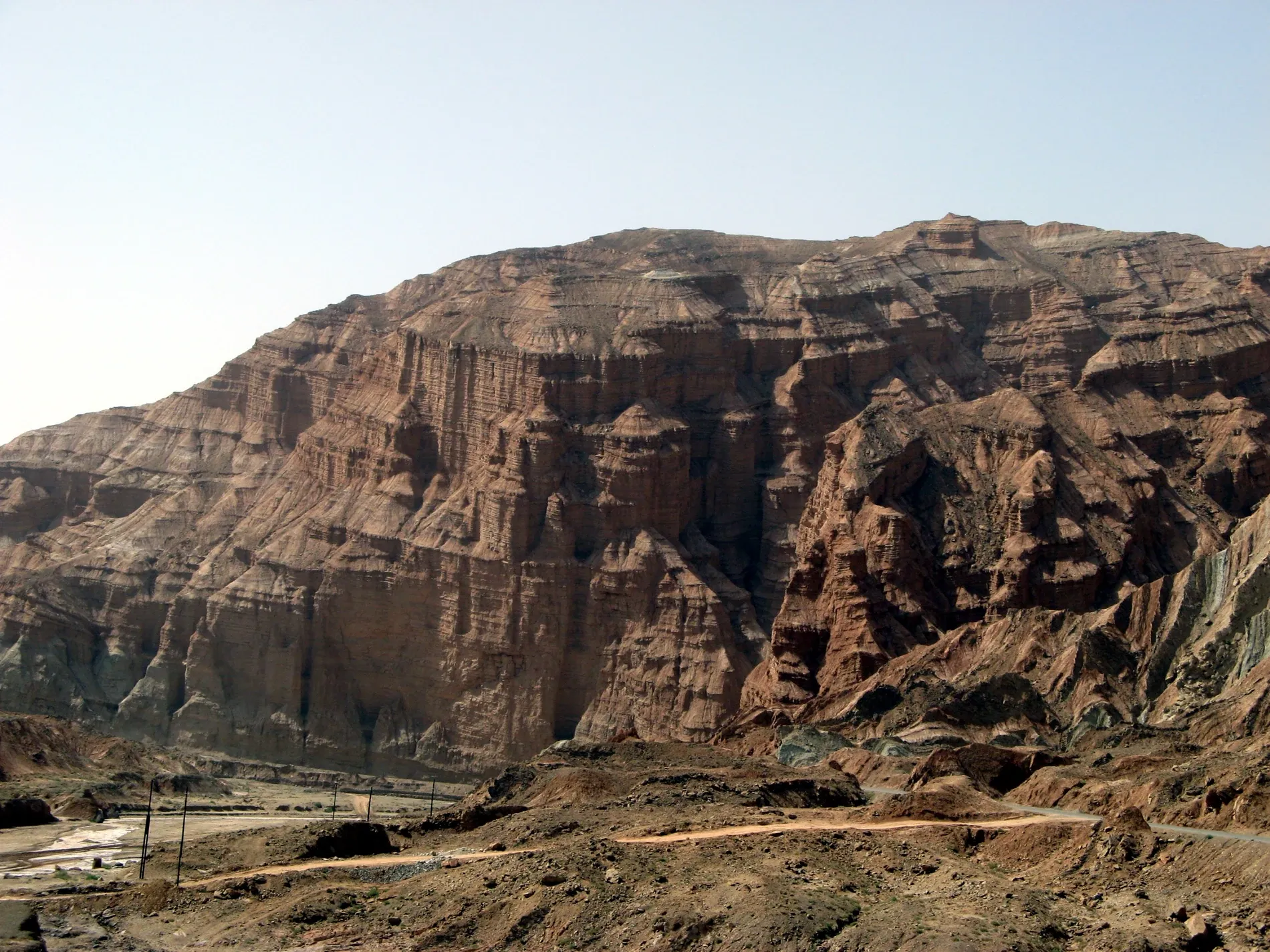
Winter does not stop Kashgar. It simply changes the pace of the day.Image: Radosław Botev / Wikimedia Commons
Late autumn makes Southern Xinjiang easy to recognise: poplar turns gold. When the colour is gone, many travellers assume the season is over. It is not. In winter, the snow line in the Pamirs sharpens, the Tarim Basin becomes more restrained, desert light falls lower, and Kashgar, Yarkand and Hotan return to human scale. Southern Xinjiang no longer needs colour to prove itself.
The first change is pace. Mornings are colder. Light comes later. The lanes keep moving, but there is less reason to force an entire journey into one afternoon.
Kashgar works best as both beginning and return. Go west towards the frontier. Go south into the Pamirs. Come back after altitude and road, and the city restores the scale of daily life.
In a winter itinerary, a city matters because it can reconnect the journey.
The city disappears quickly. Clearer air pulls the horizon apart. The western edge of China and the Irkeshtam direction feel less like map points and more like distance.
Winter also makes one thing obvious: remote roads cannot be treated as promises. Weather, access and road controls may change how far the day can go.
The farther point should be a chapter, not the condition that makes the whole journey worthwhile.
White Sand Lake lowers the palette. Muztagh Ata raises the horizon. Along G314, the road moves between snow, bare rock and high valleys.
Reaching Tashkurgan is not the end of the day. Staying there is the point. The next morning, Panlong Road and Bandir Lake become part of a continuous highland journey rather than a string of stops.
The Pamirs change when you wake up beneath them once.
Snow on G314. In winter, the road into the Pamirs is already part of the journey.Image: rheins / Wikimedia Commons / CC BY 3.0
Once you reach the high country, the temptation is obvious: go farther. Khunjerab direction, Panlong, Bandir, Muji — the map invites completion.
Winter asks for another kind of discipline. Wind, road surface, daylight and cold make the same distance feel different. Keep the second morning. Decide how far to continue only after the day reveals itself.
A mature winter route knows when to move and when to stay.
Winter in the Pamirs is not only snow. It is low light, long shadow and a mountain line that becomes harder to ignore.Image: Wikimedia Commons
After the mountains, the journey does not need a stronger landscape. Zepu, Yarkand and Kashgar bring it back to food, streets, workshops, lighted shops and winter nights.
The Pamirs open the view. The towns put the traveller back into life. That contrast is what makes Southern Xinjiang complete.
Snow mountains and ordinary evenings belong in the same journey.
There is another way to travel: leave the Pamirs for later and first cross Bachu, Aksu, Wensu, Kuqa, Alar, Hotan and Yarkand.
In late autumn, poplar gives this route its colour. In winter, the colour recedes and the structure becomes clearer. Canyon, desert highway, oasis city and long distances no longer need to share one golden-season label.
Even the poplar stays. Without leaves, it becomes part of the desert skeleton. Winter gives this long route less colour and more space.
In winter, the desert road stops selling autumn colour. It returns to what it really is: distance.Image: Yoshi Canopus / Wikimedia Commons / CC BY-SA 4.0
Highland roads, frontier directions, Panlong Road, Muji and scenic-area operations may all change with current conditions.
That means a winter route needs more than substitute attractions. It needs rules for stopping. If the farther road is wrong for the day, staying longer in Tashkurgan, returning early to Kashgar or giving Yarkand a fuller evening can be the better trip.
The goal is not to remove uncertainty. It is to make sure the journey still works when uncertainty arrives.
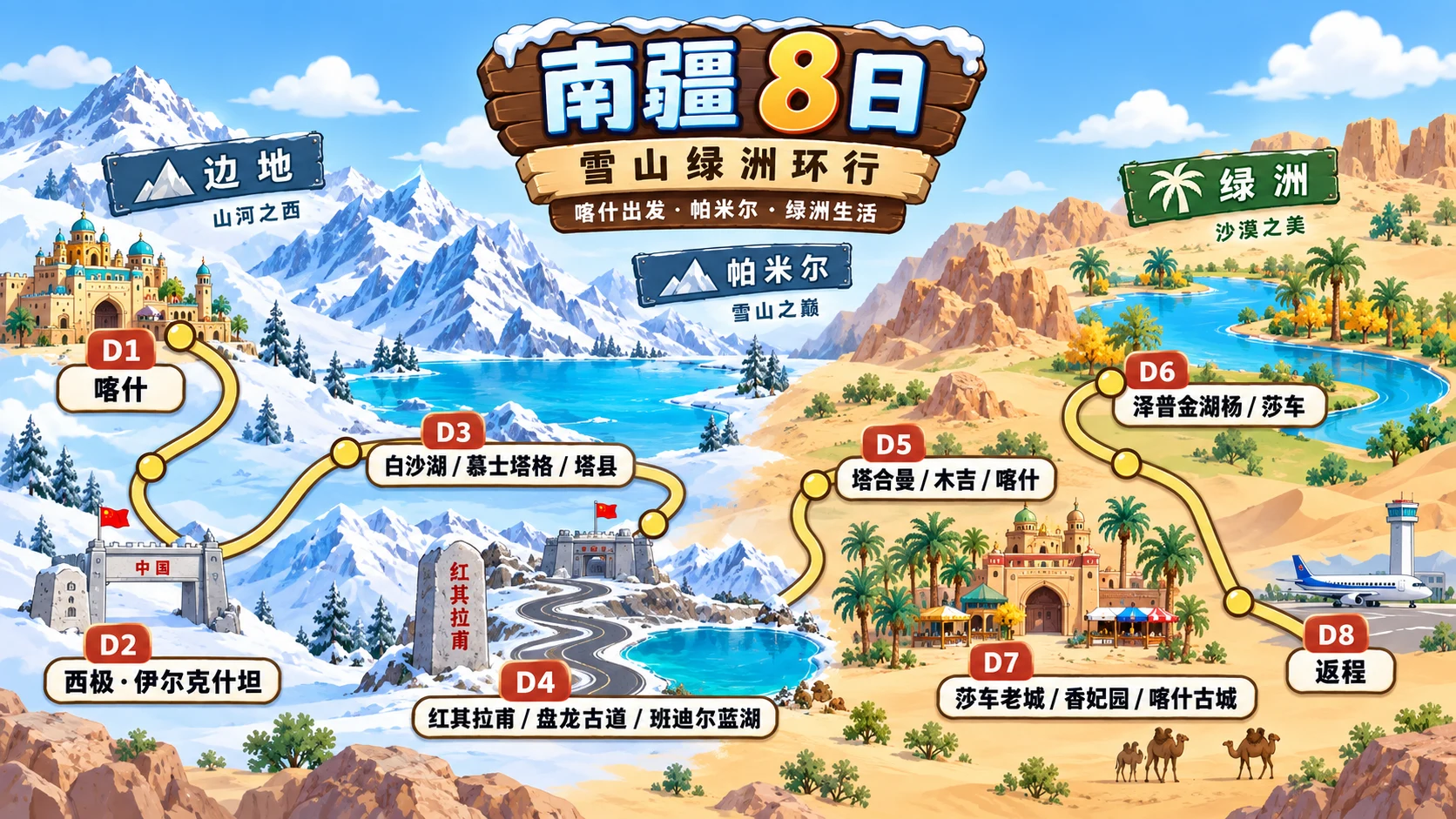
With about a week, let Kashgar be the centre. Go west for the frontier scale, south into the Pamirs, then return through Zepu and Yarkand. The journey keeps opening out, but it always has somewhere to come back to.
Rhythm: Kashgar → western frontier / Irkeshtam direction → White Sand Lake / Muztagh Ata → Tashkurgan → Panlong / Bandir → Muji direction → Zepu / Yarkand → Kashgar.
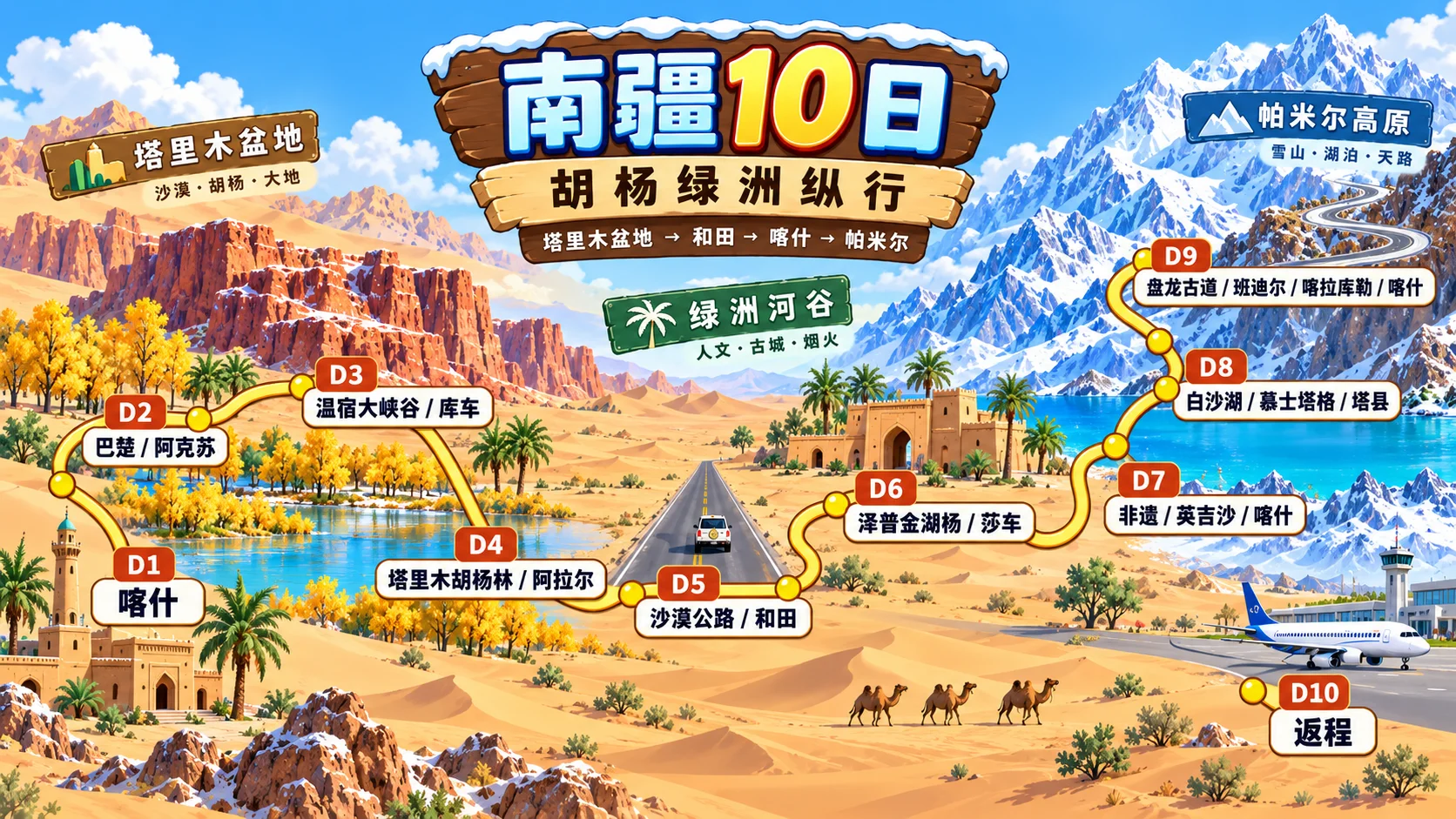
With ten days, let the road take over. Move through Bachu and Aksu, Wensu and Kuqa, Tarim poplar country and Alar, the desert road and Hotan, Yarkand and Yengisar. Return to Kashgar only before the final climb into the Pamirs.
Rhythm: Kashgar → Bachu / Aksu → Wensu / Kuqa → Tarim / Alar → desert road / Hotan → Zepu / Yarkand / Yengisar → Kashgar → White Sand Lake / Tashkurgan → Panlong / Bandir / Karakul → Kashgar.
One winter opens Southern Xinjiang from Kashgar. The other crosses it by road.
WINTER SOUTHERN XINJIANG
Less colour. More space.
Mountains, desert, old towns, winter nights and long roads return to their proper place.
SOUTHERN XINJIANG · 8 DAYS Snow Mountains & Oases Loop
SOUTHERN XINJIANG · 8 DAYS
SOUTHERN XINJIANG · 10 DAYS Poplar & Oasis Traverse
SOUTHERN XINJIANG · 10 DAYS
The land is vast. A journey has more than one answer.With every arrival, see Xinjiang anew.
Winter highland and frontier sections remain subject to current weather, road conditions, access rules and local operations. Poplar colour is an autumn phenomenon and is not presented as a winter promise.
Winter in Kashgar does not begin with a landmark
The first change is pace. Mornings are colder. Light comes later. The lanes keep moving, but there is less reason to force an entire journey into one afternoon.
Kashgar works best as both beginning and return. Go west towards the frontier. Go south into the Pamirs. Come back after altitude and road, and the city restores the scale of daily life.
In a winter itinerary, a city matters because it can reconnect the journey.
Go west, and the frontier feels farther in winter
The city disappears quickly. Clearer air pulls the horizon apart. The western edge of China and the Irkeshtam direction feel less like map points and more like distance.
Winter also makes one thing obvious: remote roads cannot be treated as promises. Weather, access and road controls may change how far the day can go.
The farther point should be a chapter, not the condition that makes the whole journey worthwhile.
Head south and the snow line takes over the view
White Sand Lake lowers the palette. Muztagh Ata raises the horizon. Along G314, the road moves between snow, bare rock and high valleys.
Reaching Tashkurgan is not the end of the day. Staying there is the point. The next morning, Panlong Road and Bandir Lake become part of a continuous highland journey rather than a string of stops.
The Pamirs change when you wake up beneath them once.
In Tashkurgan, one more night can matter more than one more frontier stop
Once you reach the high country, the temptation is obvious: go farther. Khunjerab direction, Panlong, Bandir, Muji — the map invites completion.
Winter asks for another kind of discipline. Wind, road surface, daylight and cold make the same distance feel different. Keep the second morning. Decide how far to continue only after the day reveals itself.
A mature winter route knows when to move and when to stay.
Come down from the plateau, and Yarkand and Kashgar feel warmer
After the mountains, the journey does not need a stronger landscape. Zepu, Yarkand and Kashgar bring it back to food, streets, workshops, lighted shops and winter nights.
The Pamirs open the view. The towns put the traveller back into life. That contrast is what makes Southern Xinjiang complete.
Snow mountains and ordinary evenings belong in the same journey.
Keep going east, and winter across the Tarim Basin becomes a different trip
There is another way to travel: leave the Pamirs for later and first cross Bachu, Aksu, Wensu, Kuqa, Alar, Hotan and Yarkand.
In late autumn, poplar gives this route its colour. In winter, the colour recedes and the structure becomes clearer. Canyon, desert highway, oasis city and long distances no longer need to share one golden-season label.
Even the poplar stays. Without leaves, it becomes part of the desert skeleton. Winter gives this long route less colour and more space.
Winter needs room for uncertainty
Highland roads, frontier directions, Panlong Road, Muji and scenic-area operations may all change with current conditions.
That means a winter route needs more than substitute attractions. It needs rules for stopping. If the farther road is wrong for the day, staying longer in Tashkurgan, returning early to Kashgar or giving Yarkand a fuller evening can be the better trip.
The goal is not to remove uncertainty. It is to make sure the journey still works when uncertainty arrives.
Two winter rhythms
With about a week, let Kashgar be the centre. Go west for the frontier scale, south into the Pamirs, then return through Zepu and Yarkand. The journey keeps opening out, but it always has somewhere to come back to.
Rhythm: Kashgar → western frontier / Irkeshtam direction → White Sand Lake / Muztagh Ata → Tashkurgan → Panlong / Bandir → Muji direction → Zepu / Yarkand → Kashgar.
With ten days, let the road take over. Move through Bachu and Aksu, Wensu and Kuqa, Tarim poplar country and Alar, the desert road and Hotan, Yarkand and Yengisar. Return to Kashgar only before the final climb into the Pamirs.
Rhythm: Kashgar → Bachu / Aksu → Wensu / Kuqa → Tarim / Alar → desert road / Hotan → Zepu / Yarkand / Yengisar → Kashgar → White Sand Lake / Tashkurgan → Panlong / Bandir / Karakul → Kashgar.
One winter opens Southern Xinjiang from Kashgar. The other crosses it by road.