
WeChat Rich-Text CopyClick, then paste into the WeChat editorCopy Full Article
WeChat Rich-Text CopyClick, then paste into the WeChat editor
WeChat Rich-Text Copy
Click, then paste into the WeChat editor
YUANMU · WINTER KASHGAR / G314
Follow G314 out of Kashgar and into the Pamirs. Winter removes some of the color, but sharpens the geography: the city falls away, the valleys tighten, lakes appear, and the snow peaks keep drawing closer.
Winter Kashgar–Pamir route visual (4K). Kashgar is the gateway, Baisha Lake the transition, Karakul Lake the prelude, and Tashkurgan the place where the route finally stops and stays.
Xinjiang is vast, so many itineraries try to prove themselves with a loop: no backtracking, a different hotel every night, a neat circle on the map.
Winter between Kashgar and the Pamirs does not need that.
What matters here is not how many places fit on the route, but how the world changes, step by step, along the same road.
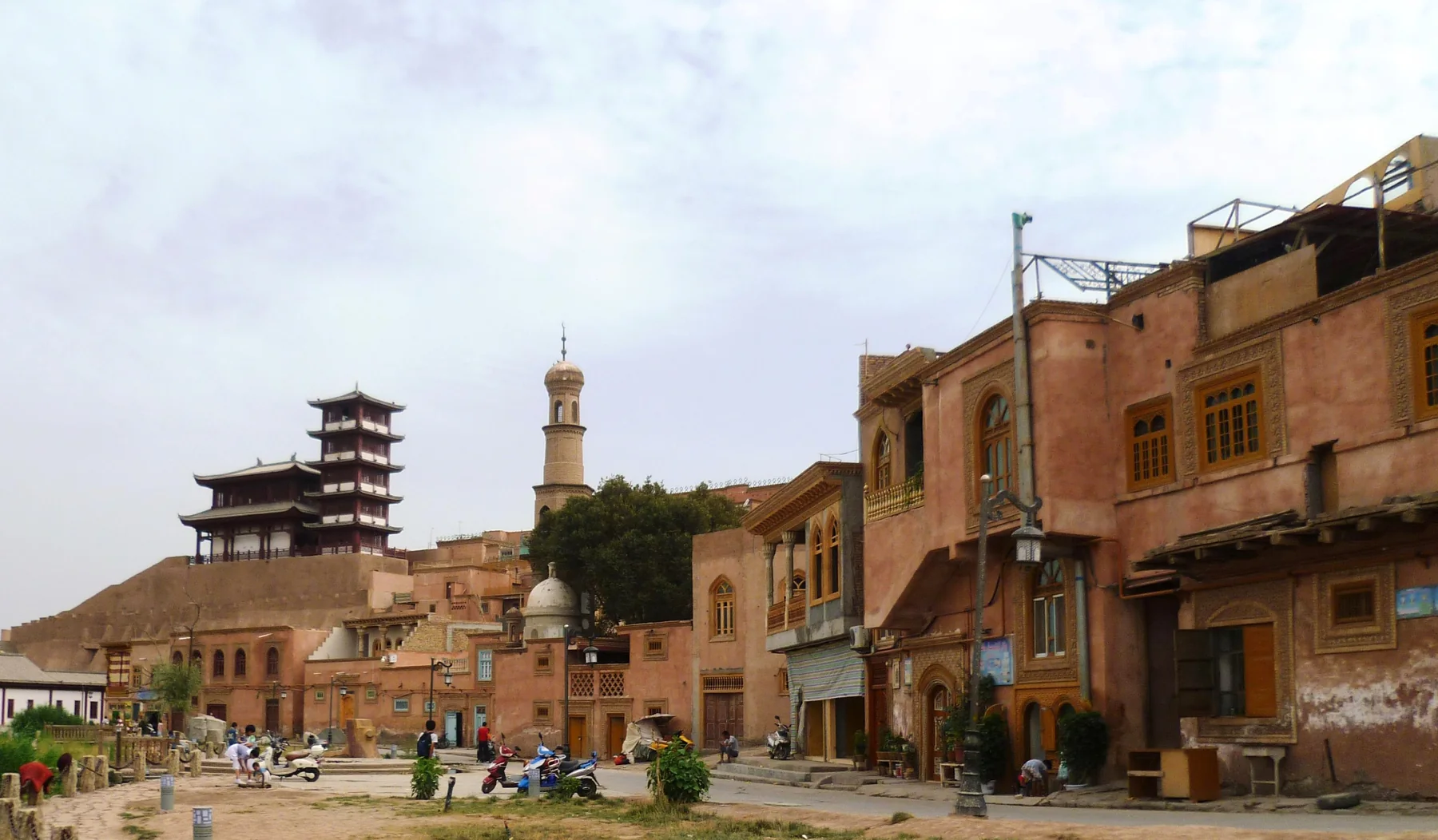
On a standard itinerary, Kashgar often means arrival, the Old Town, then departure the next morning. On this route, it plays a larger role. It is the point where oasis life gives way to the rising geography of the Pamirs.
Beyond the city, buildings thin out, the mountains move closer, and the road opens into quieter, larger spaces. The value is not only in what you stop to see, but in the order in which those changes arrive.
Route role: Gateway — the geographic start of the Pamirs.Winter logic: keep arrival light. Before heading higher, give Kashgar enough time to be understood as a city, not just used as a gateway.
Baisha Lake is worth stopping for, but calling it simply a beautiful blue lake misses what it does for the route.
By the time you reach it, Kashgar has faded from the rear-view mirror. White sand, water, wind and bare mountain walls take over. In winter, with fewer colors competing for attention, the geography becomes easier to read.
Its real role is transition: not the climax, but the moment the Pamirs begin.
Higher along G314, lake, snow peak and highway stop behaving like separate attractions. They become one continuous high-altitude landscape. Muztagh Ata is no longer just a mountain in the distance; it stays with you across the road, the water and the horizon.
That is why this day should not be overloaded. Kashgar, Baisha Lake, Karakul Lake and Tashkurgan already make a complete shift from oasis to plateau. Winter daylight is shorter, and cold, meals, photography and altitude adjustment all take time.
A good day on the road does not need to be full. It needs one clear purpose.
The first night gets you to Tashkurgan. The second turns it into part of the journey.
Two nights mean no repacking in the morning, no forced late drive back to Kashgar after a highland branch, and room to adjust when weather or road conditions change.
More importantly, the next day no longer has to keep moving “up.” It can unfold sideways from Tashkurgan: choose one route that genuinely works that day, explore it properly, then return to the same base.
The second night is not a hotel upgrade.It is the backbone of the winter Pamir route.
Panlong Road, Bandir Lake and other highland branches can each make a strong chapter. They do not need to become fixed tasks on the same day.
A winter itinerary needs room to change. Reconfirm road, weather and access conditions before departure, then choose one branch that truly works. If conditions turn, stay closer to Tashkurgan, use a nearer highland experience, or allow the day to become a recovery day.
One fewer name on the itinerary is not one less journey. One direction, done properly, is usually worth more than four names rushed through.
Taking the same road back to Kashgar may look like backtracking on a map. From the car, it feels different.
On the way up, the city disappears. On the way down, the snow peaks recede, villages return, the oasis returns, and eventually there are restaurants, streetlights and people again.
The outbound road is about altitude.The return is about distance.The same G314 carries two different stories.
Kashgar, Baisha Lake, Karakul Lake and Tashkurgan can each be described as destinations. The point of this journey, however, is the relationship between them.
Kashgar gives the route a human scale. Baisha Lake marks the first real spatial shift. Karakul lets the high plateau take over. Tashkurgan is where the journey finally stops moving long enough to be felt. Their order is not a piece of travel-copy decoration; it follows the geography itself.
Winter removes some of the noise and leaves the logic of the road exposed.
A summer rhythm cannot simply be copied into winter. Daylight is shorter, cold is more immediate, altitude adjustment matters more, and road conditions, site operations, bookings and access all need to be reconfirmed before travel.
Xinjiang's 2026 transport guidance continues to place G314, Kashgar, Baisha Lake, Karakul Lake and the Pamir area on one core southern Xinjiang travel axis. Kashgar's previous winter season also promoted products linking the Old Town, the Pamirs and Muztagh Ata. What is structurally reliable is the Kashgar–Pamir axis itself, not any single highland side branch.
A mature winter itinerary does not promise perfect conditions.It stays coherent when conditions change.
YUANMU · ROUTE INTERPRETATION
We do not design a route simply to make the map look neater.
What matters is that every departure, pause and return makes sense in geography, season and human rhythm.
Vast landscapes. More than one answer to travel.For every arrival, a deeper understanding of Xinjiang.
Source note: This article explains the structure of a winter Kashgar–Pamir route. It is not a guarantee that every road, side branch or attraction operates year-round. Highland weather, road conditions, site operations, reservations and access can change. Always reconfirm before departure.
Kashgar is the start of the road, not merely the first stop
On a standard itinerary, Kashgar often means arrival, the Old Town, then departure the next morning. On this route, it plays a larger role. It is the point where oasis life gives way to the rising geography of the Pamirs.
Beyond the city, buildings thin out, the mountains move closer, and the road opens into quieter, larger spaces. The value is not only in what you stop to see, but in the order in which those changes arrive.
Route role: Gateway — the geographic start of the Pamirs.Winter logic: keep arrival light. Before heading higher, give Kashgar enough time to be understood as a city, not just used as a gateway.
Baisha Lake is where the city finally falls behind

Baisha Lake is worth stopping for, but calling it simply a beautiful blue lake misses what it does for the route.
By the time you reach it, Kashgar has faded from the rear-view mirror. White sand, water, wind and bare mountain walls take over. In winter, with fewer colors competing for attention, the geography becomes easier to read.
Its real role is transition: not the climax, but the moment the Pamirs begin.
At Karakul, the mountains take over the journey
Higher along G314, lake, snow peak and highway stop behaving like separate attractions. They become one continuous high-altitude landscape. Muztagh Ata is no longer just a mountain in the distance; it stays with you across the road, the water and the horizon.
That is why this day should not be overloaded. Kashgar, Baisha Lake, Karakul Lake and Tashkurgan already make a complete shift from oasis to plateau. Winter daylight is shorter, and cold, meals, photography and altitude adjustment all take time.
A good day on the road does not need to be full. It needs one clear purpose.
The second night in Tashkurgan is what makes the winter route work
The first night gets you to Tashkurgan. The second turns it into part of the journey.
Two nights mean no repacking in the morning, no forced late drive back to Kashgar after a highland branch, and room to adjust when weather or road conditions change.
More importantly, the next day no longer has to keep moving “up.” It can unfold sideways from Tashkurgan: choose one route that genuinely works that day, explore it properly, then return to the same base.
The second night is not a hotel upgrade.It is the backbone of the winter Pamir route.
On the second plateau day, choose one direction
Panlong Road, Bandir Lake and other highland branches can each make a strong chapter. They do not need to become fixed tasks on the same day.
A winter itinerary needs room to change. Reconfirm road, weather and access conditions before departure, then choose one branch that truly works. If conditions turn, stay closer to Tashkurgan, use a nearer highland experience, or allow the day to become a recovery day.
One fewer name on the itinerary is not one less journey. One direction, done properly, is usually worth more than four names rushed through.
The return is not repetition. It is the other half of the route
Taking the same road back to Kashgar may look like backtracking on a map. From the car, it feels different.
On the way up, the city disappears. On the way down, the snow peaks recede, villages return, the oasis returns, and eventually there are restaurants, streetlights and people again.
The outbound road is about altitude.The return is about distance.The same G314 carries two different stories.
What stays with you is not a list of names, but the way the road changes
Kashgar, Baisha Lake, Karakul Lake and Tashkurgan can each be described as destinations. The point of this journey, however, is the relationship between them.
Kashgar gives the route a human scale. Baisha Lake marks the first real spatial shift. Karakul lets the high plateau take over. Tashkurgan is where the journey finally stops moving long enough to be felt. Their order is not a piece of travel-copy decoration; it follows the geography itself.
Winter removes some of the noise and leaves the logic of the road exposed.
A winter route has to behave like winter
A summer rhythm cannot simply be copied into winter. Daylight is shorter, cold is more immediate, altitude adjustment matters more, and road conditions, site operations, bookings and access all need to be reconfirmed before travel.
Xinjiang's 2026 transport guidance continues to place G314, Kashgar, Baisha Lake, Karakul Lake and the Pamir area on one core southern Xinjiang travel axis. Kashgar's previous winter season also promoted products linking the Old Town, the Pamirs and Muztagh Ata. What is structurally reliable is the Kashgar–Pamir axis itself, not any single highland side branch.
A mature winter itinerary does not promise perfect conditions.It stays coherent when conditions change.