
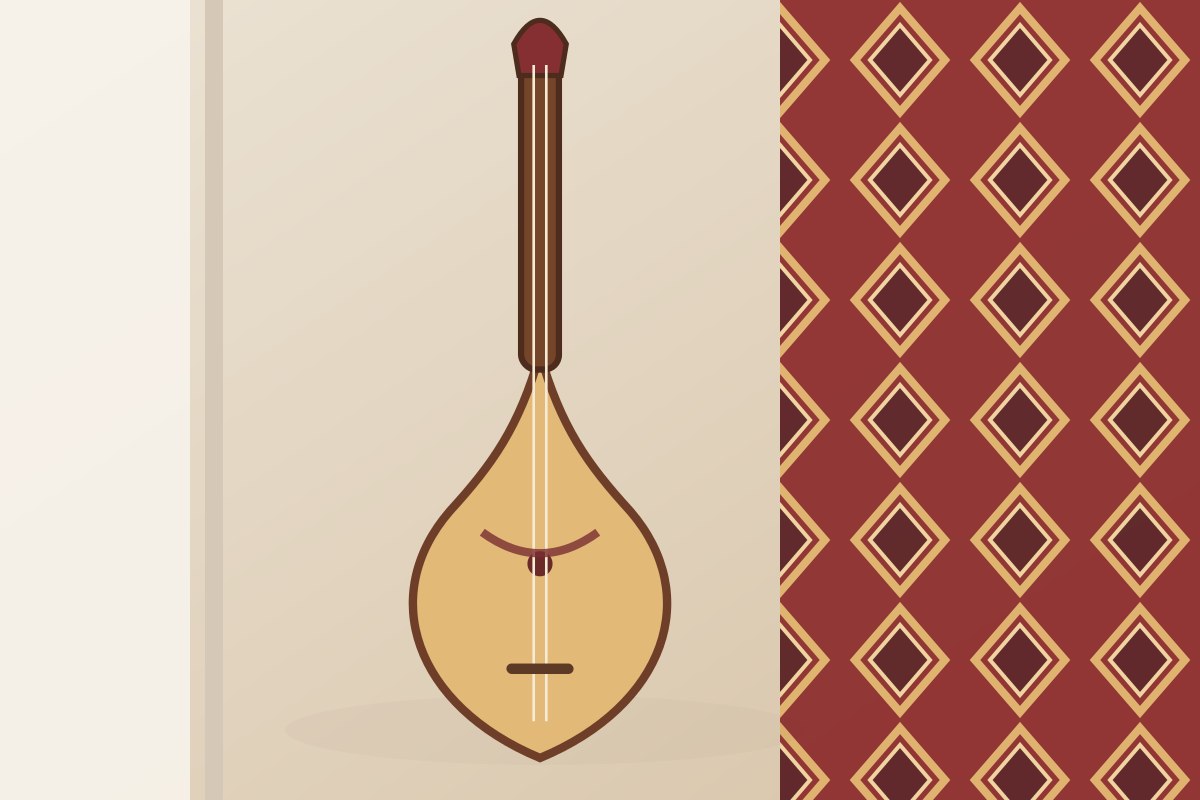
In Shufu County near Kashgar, wood slowly becomes sound. What matters is not merely the title of intangible heritage, but how a craft sustains work, families and daily life.
In Shufu County near Kashgar, wood slowly becomes sound. Beyond the label of intangible heritage, it is a living craft supporting families today.
Before It Became “Heritage,” It Helped Feed a Family
When instrument maker Mamut Rehman spoke about his family history in a 2026 interview, he returned to something remarkably ordinary.
In the 1950s and 1960s, his grandfather made instruments to support the family. His grandfather, Abdulla Isa, later worked in a local handicraft cooperative. The skill passed to the next generation and, eventually, to Mamut himself.
Seen from today, it is tempting to tell such a story with familiar words:
heritage, preservation, master craftsman, cultural tourism.
Those words came later.
Earlier, the logic was simpler.
Someone needed an instrument.
Someone else knew how to make one.
If it was good, somebody bought it.
The money helped support a household.
A dutar, a traditional long-necked string instrument, or a rawap, a traditional plucked string instrument, was never only an object of culture. It was made to be played, bought, sold and used.
And the person who made it was working.
Culture had always been there — inside work, family and everyday life.
How an Instrument Emerges from Wood
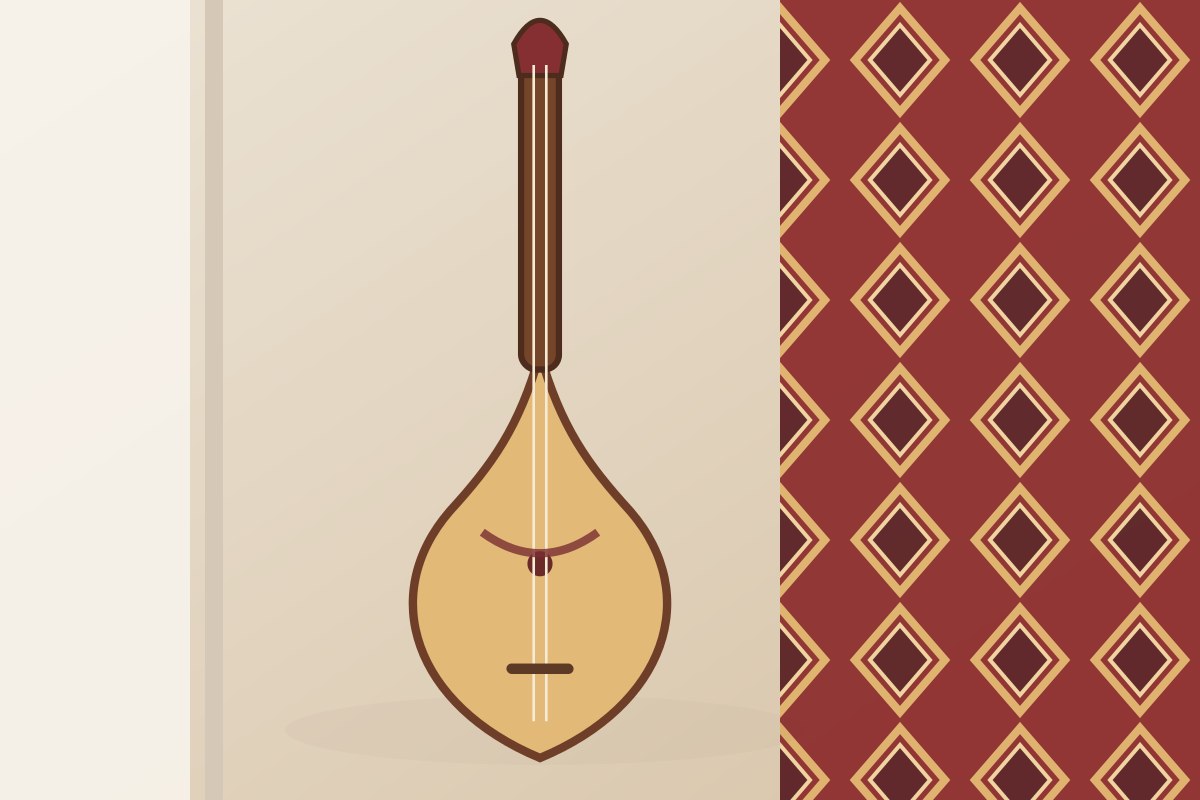
Inside the village workshops today, the finished instruments hanging from the walls naturally draw the eye.
But the workbench may tell the more interesting story.
Mulberry is one of the traditional woods used for instruments such as the dutar and rawap. A maker has to judge the material before the carving even begins: where to cut, how much to remove, how the body should curve, how the pieces should join and how the finished instrument should resonate.
The process can involve carving, heating and shaping, joining, decorative work, polishing, lacquering, fitting the bridge and strings, and finally tuning.
In a workshop documented in 2025, a 76-year-old veteran craftsman was still carving an instrument body from mulberry wood with a chisel. He had spent more than half a century working with planes, chisels, files and sandpaper.
Another master craftsman, Rehman Abdulla, was born in Shufu County in 1952 and began learning from his father at the age of six. Three generations of his family had been involved in making and playing musical instruments. He later trained more than fifty apprentices.
The craft demands more than woodworking.
An instrument maker needs an ear as much as a hand.
The thickness of the body, its shape, the material, the strings and the final adjustments all lead back to one question:
What does it sound like?
That places the craft between two worlds.
On one side is the hand.
On the other is the ear.
The Village Has Changed. So Has the Craft.
Tuowankewukusake today is not the village it was 150 years ago.
Traditional handwork now exists alongside modern equipment. Sales no longer depend only on local bazaars and familiar customers; e-commerce and modern logistics can take an instrument far beyond Kashgar.
Visitors enter the workshops.
Students learn the craft.
The village now serves several audiences at once: musicians, students, online buyers and travellers.
According to a 2026 report by Xinjiang Daily, 64 households and around 130 people in the village were engaged in instrument making. Mamut Rehman had mastered the techniques required to make more than twenty types of instrument and was also teaching students at a vocational school. The report said he sold more than 200 traditional instruments in 2025.
Local figures put visitor numbers at more than 150,000 that same year.
Behind those numbers lies a practical question:
How does an old craft remain part of modern life?
Machines can make some processes more efficient.
Online sales can enlarge the market.
Tourism can create another source of income.
Schools can bring new people into the craft.
But some knowledge still lives in the hand and the ear.
How does the wood feel?
Does another fraction need to be shaved away?
Is the sound right yet?
Tradition does not have to mean refusing change. The harder task is knowing what can change — and what should remain.
Why Would a Young Person Still Learn This?
Every traditional craft eventually faces a simple question:
Why should the next generation continue?
If a skill survives only inside a display case, or only as an abstract obligation to preserve the past, it can drift further away from ordinary life.
Shufu suggests another possibility.
Learning to make instruments can still become a profession.
Someone can join a workshop.
Someone can run one.
Someone can teach students.
Someone can sell instruments online.
Someone can explain the craft to travellers arriving in the village.
More than a century ago, earlier generations made instruments partly because the work supported their families.
The tools, customers and markets are different today.
But the craft still matters partly because people can still make a living from it.
When something can still be learned, used, played, sold and passed on, it is not confined to the past.
What Should a Traveller Look For?
A visitor to the village will naturally notice the loudest things first.
Someone is playing.
Someone is singing.
Instruments of different shapes hang across a workshop wall.
Phones come out for photographs.
All of that is part of the experience.
But it is worth staying a little longer.
Watch how a piece of mulberry wood is held against the workbench.
Watch where the chisel first enters.
Look at the curve of an unfinished body.
See how a decorative pattern slowly appears.
And when an instrument seems finished, notice that the maker still plays it again and again.
Why does this one sound different from the one beside it?
At that point, the “musical instrument village” stops being simply another cultural attraction on a map.
You begin to see how a material becomes a tool, how a tool becomes sound, and how sound enters somebody’s work, family and everyday life. Sometimes understanding a place begins with something that small.
Preservation Is Only Part of the Story
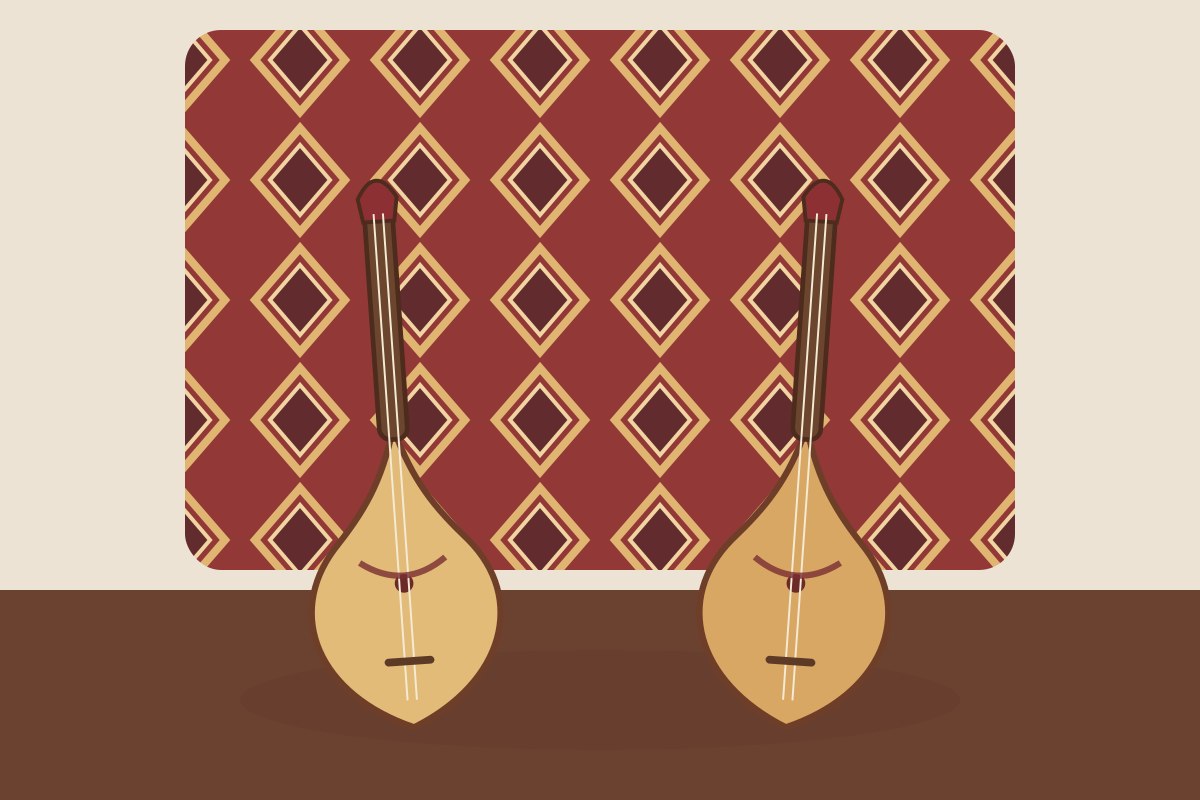
We often speak about traditional culture in the past tense.
Something handed down by ancestors.
A heritage that must be protected.
But a craft that is still alive has to deal with the present.
Do people still play these instruments?
Why would a young person learn to make them?
Where should machines enter the process?
What do visitors actually want to understand?
How does an instrument find a buyer?
Can a craftsman still build a life around the skill?
None of these questions disappeared when the craft entered China’s national intangible cultural heritage list in 2008.
More than a century ago, this was work that helped feed families.
Later, it became a profession shared across a village.
Today, it also belongs to classrooms, workshops, markets and the journeys of people who come to see how the instruments are made.
Inside the workshop, wood shavings still fall across the bench.
The strings are fitted.
The maker plucks them once.
Then he listens.
1. China Intangible Cultural Heritage Network: Traditional musical instrument-making techniques (Uygur musical instruments), listed in the second batch of national intangible cultural heritage in 2008.
2. Xinjiang Daily / Xinhua Xinjiang, 17 Aug 2026: report on Tuowankewukusake Village’s instrument-making industry and tourism.
3. Kashgar Prefectural Government / Xinjiang Daily, 2025: field reporting on instrument-making processes and village workshops.
4. China Intangible Cultural Heritage Network: profile of national representative inheritor Rehman Abdulla.
Image note: the photographs in this edition are openly licensed reference images from Kashgar or musical-instrument collections. They are included to help readers understand the forms and material culture of traditional Uygur instruments. None is presented as a documentary photograph of Tuowankewukusake Village.