
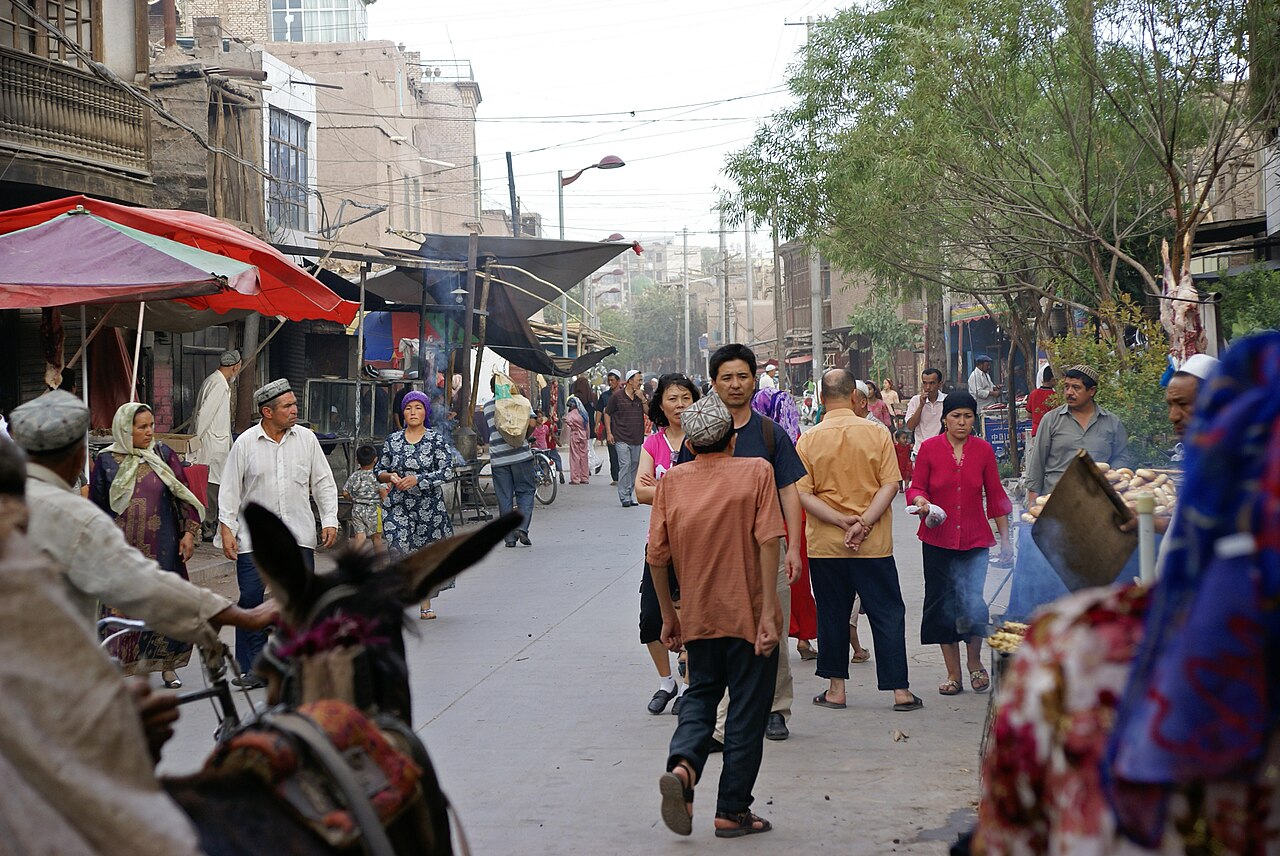
Winter does not make Southern Xinjiang a lesser version of itself. When grand scenery steps back, lanes, teahouses, crafts and everyday encounters receive the time they deserve.
Winter does not make Southern Xinjiang a lesser version of itself. From Kashgar to the Pamirs, when grand scenery steps back, daily life steps forward.
First, Get the Scale Right: There Is No Single Southern Xinjiang Winter
Southern Xinjiang covers too much ground for one winter formula. From Kuqa and Aksu to Hotan and Kashgar, then up towards the Pamir Plateau, temperature, road conditions, daylight and travel rhythm can differ on the same day. Putting all of this under one neat “southern Xinjiang winter” label would erase much of what makes the region intelligible.
So this is not an attempt to write a single answer for the whole south. The lens is narrower: Kashgar and the Pamirs. One is a city you can enter again and again. The other is a high plateau that resets your sense of scale. Together, they make a useful pair for understanding how winter changes attention.
The northern story was about roads, distance and the logic of staying. Here the question shifts: when the great landscape no longer takes the whole itinerary, do streets, workshops, tables and ordinary routines finally have time to come into view?
Winter Does Not Remove the Scenery. It Shifts the Centre of Gravity.
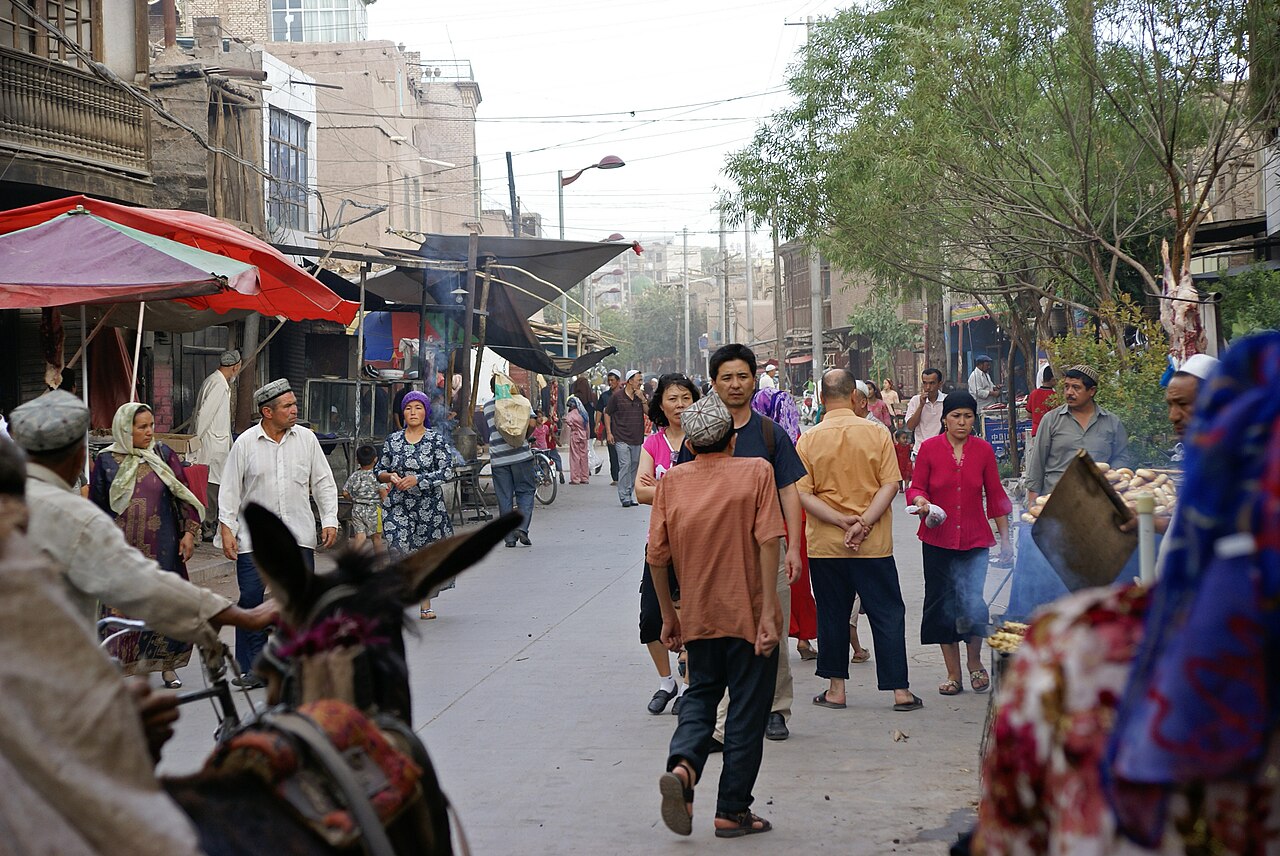
The first mental image of southern Xinjiang often lives far away: mountains, desert, poplar forests, the Pamirs, a road running towards the horizon. That is understandable. The natural scale is immense. A camera almost lifts itself.
But a journey made only of distant views can create an odd result. Every day brings a new place and a new photograph, yet it can still be difficult to say how a city wakes in the morning, why a street takes the shape it does, or how a craft survives as work rather than as a display.
Winter is not valuable because “there is less scenery, so we have to look at life instead”. Cities, markets, food and craft exist in every season. What changes is the itinerary. When the day is no longer built entirely around chasing the next distant view, things that were always close by have more chance to enter the frame.
So when the scenery “steps back”, nothing has disappeared. The far view simply stops carrying the full weight of the journey.
A CHANGE OF ATTENTION
The far view still matters mountains · plateau · roads · lakes
The near view gets more time streets · markets · craft · food · daily routines
A Second Morning Can Matter More Than Another Sight
Kashgar is a good place to see this change. Many itineraries compress the city into a day: enter the old town, follow a few familiar lanes, eat, take photographs, spend the evening in a busy commercial area, then leave for the plateau the next morning. You can see a great deal in a day. A city is harder to understand that quickly.
A second morning works at a different scale. Instead of asking what is still unchecked, you begin to notice what time yesterday’s shop opens, which lanes are quieter before lunch, which businesses serve everyday needs, and which places become busier only towards evening.
Even returning to the same shop can change the experience. The first visit may leave you with decoration and merchandise. The second may make you notice how the work is done, how customers use the space, and why that shop belongs on that street. The city begins to move from “a sight” to a place with repeated rhythms.
In July 2026, Kashgar’s tourism planning again emphasised transport that makes arrival easier while encouraging visitors to travel more slowly and stay longer. On the ground, the idea can be translated into something very simple: you do not have to change hotels every day, and you do not have to repack the car every morning.
Winter Brings Indoor Spaces Back into the Journey
Summer travel naturally favours the outdoors. The days are longer, the temperature invites movement, and valleys, roads and open landscapes keep calling you forward. Over time, travel can become a sequence of arrivals: stand outside, see a mountain, drive a road, complete a sight.
In winter, indoor spaces return to the centre of the journey. Restaurants, teahouses, markets, museums, workshops, guesthouses and ordinary shops take up more time. They are not substitutes for bad weather. They are part of how a city is understood.
Why does a hot dish matter more in this season? Who does a long-running shop mainly serve? Which goods in a market are bought by travellers, and which belong to everyday routines? What purpose did a handmade object have before it became something a visitor might take home? None of these questions requires a grand historical lecture. Yet each makes a place more specific.
Southern Xinjiang is often described through beautiful nouns. Winter creates space to turn those nouns back into verbs: eating, buying, making, repairing, opening a shop, closing one, passing the same doorway again.
A sense of place often lives in those ordinary actions.
A Craft Should Be More Than a Label
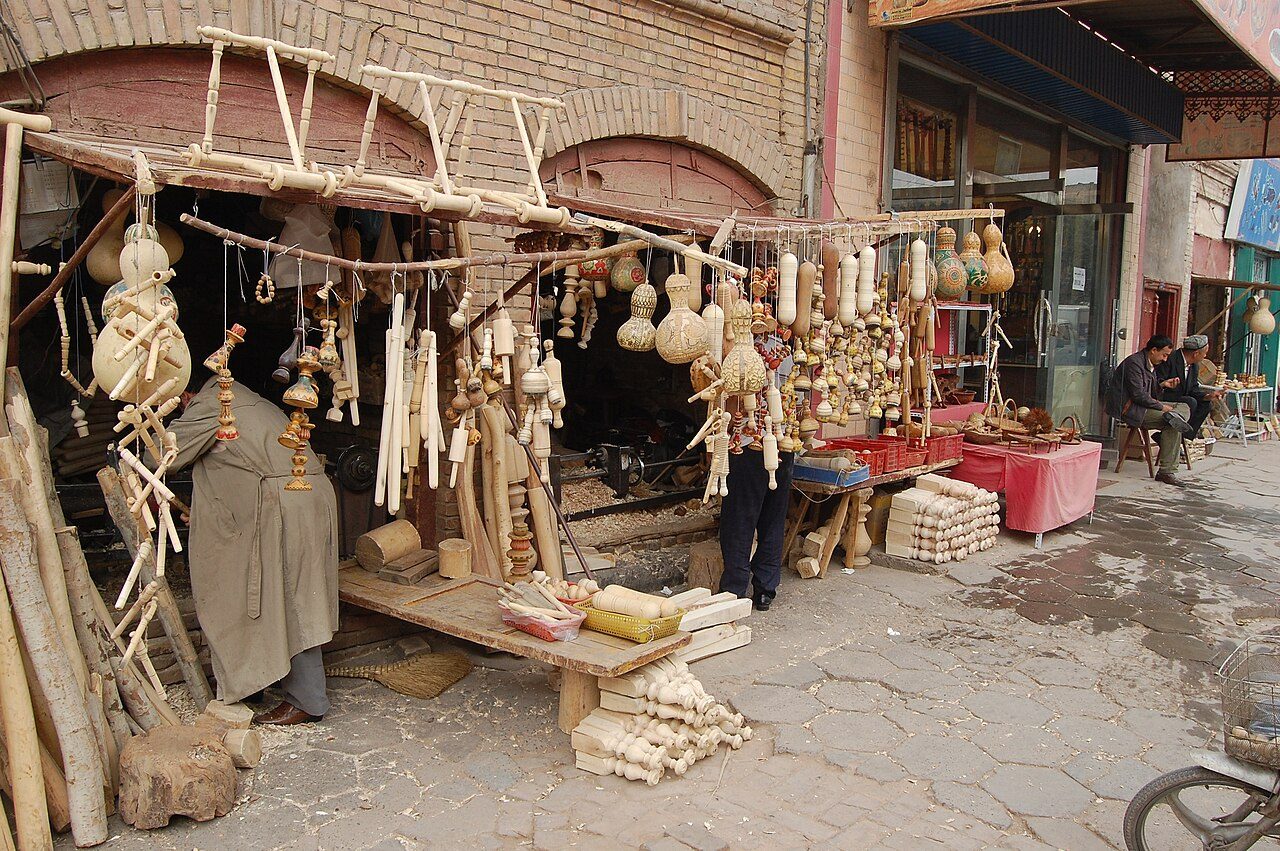
Kashgar’s Gaotai residential quarter offers a useful way into this idea. Its value is not limited to architecture. Work still happens there. Public information on the area describes pottery, woodcarving, copperwork and other intangible-cultural-heritage workshops, with more than 20 recognised practitioners involved in teaching, demonstration and production; some workshops also welcome visitors to take part.
If everything is reduced to the label “intangible cultural heritage”, the craft can become abstract. The more revealing questions are smaller. How does a lump of clay acquire shape? Which tools are used again and again? Why does one movement take years to master? How can a workshop function at once as a workplace, a place of transmission and a point of contact with visitors?
In a pottery space, the finished object is only the last moment. Clay, tools, heat, hands and the slow emergence of form bring the idea of “traditional craft” back to labour you can actually observe.
That way of looking is also more respectful. An artisan is not a character placed there for a photograph, and a market is not decorative scenery. Travellers can watch, ask and sometimes take part, but the first fact to understand is simpler: these places have their own purpose and rhythm whether or not a visitor is present.
Leave Kashgar for the Plateau, and Distance Returns
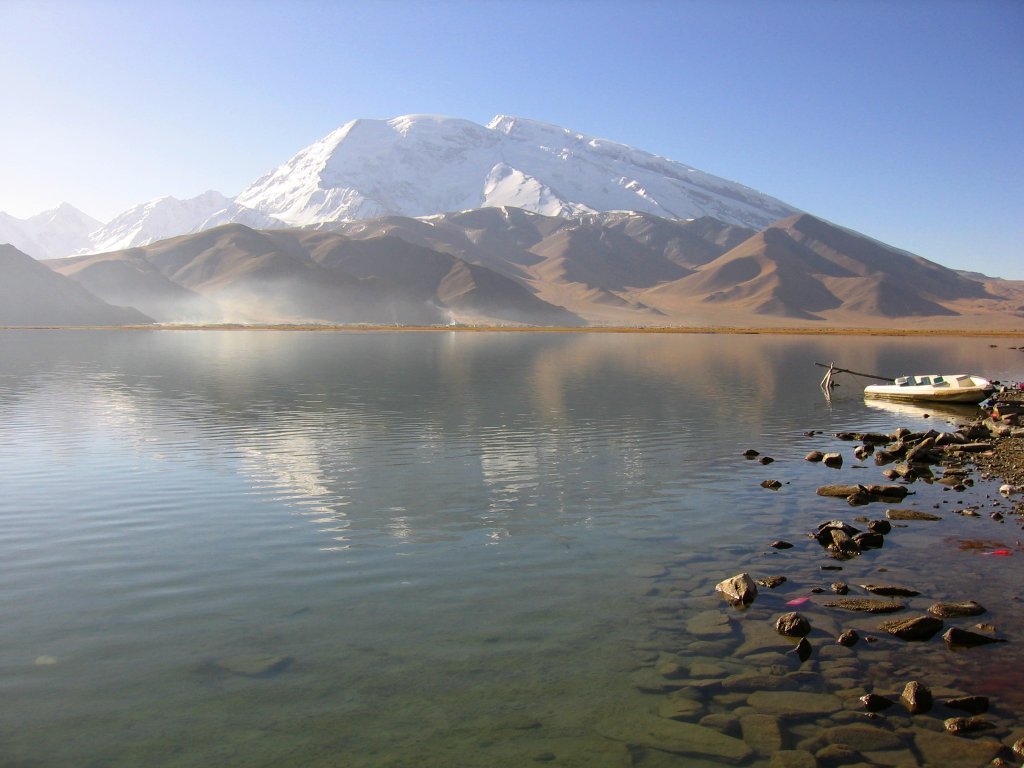
Southwest of Kashgar, G314 climbs towards the Pamir Plateau and the scale widens again. Mountains draw closer. Altitude rises. Baisha Lake, Karakul Lake, Muztagh Ata and the high country around Taxkorgan bring the far horizon back to the centre of vision.
Winter does not make those landscapes less important. It makes entering them more conditional. At high altitude, road conditions, weather, physical condition and return time belong on the same itinerary.
That is why an article written in September should not promise December’s weather. It should not guarantee a particular kind of snow, nor use last year’s road conditions as a substitute for current information. Even where winter maintenance and access have improved, a real journey must still be built around current official road information, attraction notices and weather forecasts.
Here, extra time is not merely insurance. It is part of the experience. Missing one stop and leaving more margin for the plateau can be more valuable than completing every name on a map.
Stay Longer in One Place, Then Decide How Far to Go Today
Putting Kashgar and the Pamirs in the same winter journey does not mean pushing farther every day. Another structure is possible: stay several nights in Kashgar, then decide each outward journey according to weather, roads and physical condition.
During the 2025–26 winter season, Kashgar Prefecture scheduled more than 160 cultural and tourism events and introduced 10 winter routes linking places including Kashgar’s old town, the Pamir Plateau and Muztagh Ata. The point is not the number of events. It is that city culture, craft, highland scenery and winter activities were being organised within the same travel season.
That gives a journey more than one answer. You can keep a morning for the city. You can go higher when conditions are good. If weather changes, the trip still has substance without forcing every day to depend on one long-distance sight.
This structure suits travellers coming to southern Xinjiang for the first time, anyone who prefers a calmer pace, and people who care as much about cities, food and craft as they do about landscape. It is not about travelling less. It is about redistributing movement and time.
Markets, Tables and Streets Are Not Decorative Backdrops
Travel writing can flatten southern Xinjiang into a handful of familiar adjectives. The problem is not only that they are clichés. Adjectives do not explain how a place works.
A market is first of all where buying and selling happen. Someone brings goods in. Someone chooses them. Someone works at the same stall every day. A street carries movement, homes and business. Food is not only a checklist of dishes; it also belongs to temperature, working hours, family habits and the way a city is supplied.
Instead of looking for one phrase that can summarise the south, it is more useful to observe concrete differences. How does the same street change between morning and evening? Which shops behave differently on weekends and working days? Why does indoor time expand in winter? Where do spaces used by visitors overlap with ordinary urban life, and where do they remain separate?
These questions do not produce an instant grand conclusion. They do something more important: they keep a place—and the people living in it—from being reduced to symbols inside a traveller’s frame.
For YuanMu, the question after seeing something is not only “did we photograph it?” but “do we understand what we are looking at?”
Who Is This Kind of Winter Journey For?
When the Scenery Steps Back
YUANMU · WINTER XINJIANG 02 / SOUTH
Winter does not make southern Xinjiang a lesser version of itself. Around Kashgar and the Pamirs, when distant scenery stops taking all the time, streets, craft and daily life move closer.
In the first story, Altay showed how winter rewrites distance and movement. Continue south and the question changes: when a journey is no longer built only around the far horizon, what comes into view?
Xinjiang in Winter: More Than One Answer is a two-part YuanMu series. The north is about distance, roads, daylight and staying longer; the south is about cities, daily life, attention and understanding.
Southern Xinjiang covers too much ground for one winter formula. From Kuqa and Aksu to Hotan and Kashgar, then up towards the Pamir Plateau, temperature, road conditions, daylight and travel rhythm can differ on the same day. Putting all of this under one neat “southern Xinjiang winter” label would erase much of what makes the region intelligible.
So this is not an attempt to write a single answer for the whole south. The lens is narrower: Kashgar and the Pamirs. One is a city you can enter again and again. The other is a high plateau that resets your sense of scale. Together, they make a useful pair for understanding how winter changes attention.
The northern story was about roads, distance and the logic of staying. Here the question shifts: when the great landscape no longer takes the whole itinerary, do streets, workshops, tables and ordinary routines finally have time to come into view?
The first mental image of southern Xinjiang often lives far away: mountains, desert, poplar forests, the Pamirs, a road running towards the horizon. That is understandable. The natural scale is immense. A camera almost lifts itself.
But a journey made only of distant views can create an odd result. Every day brings a new place and a new photograph, yet it can still be difficult to say how a city wakes in the morning, why a street takes the shape it does, or how a craft survives as work rather than as a display.
Winter is not valuable because “there is less scenery, so we have to look at life instead”. Cities, markets, food and craft exist in every season. What changes is the itinerary. When the day is no longer built entirely around chasing the next distant view, things that were always close by have more chance to enter the frame.
So when the scenery “steps back”, nothing has disappeared. The far view simply stops carrying the full weight of the journey.
A CHANGE OF ATTENTION
The far view still matters mountains · plateau · roads · lakes
The near view gets more time streets · markets · craft · food · daily routines
Kashgar is a good place to see this change. Many itineraries compress the city into a day: enter the old town, follow a few familiar lanes, eat, take photographs, spend the evening in a busy commercial area, then leave for the plateau the next morning. You can see a great deal in a day. A city is harder to understand that quickly.
A second morning works at a different scale. Instead of asking what is still unchecked, you begin to notice what time yesterday’s shop opens, which lanes are quieter before lunch, which businesses serve everyday needs, and which places become busier only towards evening.
Even returning to the same shop can change the experience. The first visit may leave you with decoration and merchandise. The second may make you notice how the work is done, how customers use the space, and why that shop belongs on that street. The city begins to move from “a sight” to a place with repeated rhythms.
In July 2026, Kashgar’s tourism planning again emphasised transport that makes arrival easier while encouraging visitors to travel more slowly and stay longer. On the ground, the idea can be translated into something very simple: you do not have to change hotels every day, and you do not have to repack the car every morning.
Summer travel naturally favours the outdoors. The days are longer, the temperature invites movement, and valleys, roads and open landscapes keep calling you forward. Over time, travel can become a sequence of arrivals: stand outside, see a mountain, drive a road, complete a sight.
In winter, indoor spaces return to the centre of the journey. Restaurants, teahouses, markets, museums, workshops, guesthouses and ordinary shops take up more time. They are not substitutes for bad weather. They are part of how a city is understood.
Why does a hot dish matter more in this season? Who does a long-running shop mainly serve? Which goods in a market are bought by travellers, and which belong to everyday routines? What purpose did a handmade object have before it became something a visitor might take home? None of these questions requires a grand historical lecture. Yet each makes a place more specific.
Southern Xinjiang is often described through beautiful nouns. Winter creates space to turn those nouns back into verbs: eating, buying, making, repairing, opening a shop, closing one, passing the same doorway again.
A sense of place often lives in those ordinary actions.
Kashgar’s Gaotai residential quarter offers a useful way into this idea. Its value is not limited to architecture. Work still happens there. Public information on the area describes pottery, woodcarving, copperwork and other intangible-cultural-heritage workshops, with more than 20 recognised practitioners involved in teaching, demonstration and production; some workshops also welcome visitors to take part.
If everything is reduced to the label “intangible cultural heritage”, the craft can become abstract. The more revealing questions are smaller. How does a lump of clay acquire shape? Which tools are used again and again? Why does one movement take years to master? How can a workshop function at once as a workplace, a place of transmission and a point of contact with visitors?
In a pottery space, the finished object is only the last moment. Clay, tools, heat, hands and the slow emergence of form bring the idea of “traditional craft” back to labour you can actually observe.
That way of looking is also more respectful. An artisan is not a character placed there for a photograph, and a market is not decorative scenery. Travellers can watch, ask and sometimes take part, but the first fact to understand is simpler: these places have their own purpose and rhythm whether or not a visitor is present.
Southwest of Kashgar, G314 climbs towards the Pamir Plateau and the scale widens again. Mountains draw closer. Altitude rises. Baisha Lake, Karakul Lake, Muztagh Ata and the high country around Taxkorgan bring the far horizon back to the centre of vision.
Winter does not make those landscapes less important. It makes entering them more conditional. At high altitude, road conditions, weather, physical condition and return time belong on the same itinerary.
That is why an article written in September should not promise December’s weather. It should not guarantee a particular kind of snow, nor use last year’s road conditions as a substitute for current information. Even where winter maintenance and access have improved, a real journey must still be built around current official road information, attraction notices and weather forecasts.
Here, extra time is not merely insurance. It is part of the experience. Missing one stop and leaving more margin for the plateau can be more valuable than completing every name on a map.
Putting Kashgar and the Pamirs in the same winter journey does not mean pushing farther every day. Another structure is possible: stay several nights in Kashgar, then decide each outward journey according to weather, roads and physical condition.
During the 2025–26 winter season, Kashgar Prefecture scheduled more than 160 cultural and tourism events and introduced 10 winter routes linking places including Kashgar’s old town, the Pamir Plateau and Muztagh Ata. The point is not the number of events. It is that city culture, craft, highland scenery and winter activities were being organised within the same travel season.
That gives a journey more than one answer. You can keep a morning for the city. You can go higher when conditions are good. If weather changes, the trip still has substance without forcing every day to depend on one long-distance sight.
This structure suits travellers coming to southern Xinjiang for the first time, anyone who prefers a calmer pace, and people who care as much about cities, food and craft as they do about landscape. It is not about travelling less. It is about redistributing movement and time.
Travel writing can flatten southern Xinjiang into a handful of familiar adjectives. The problem is not only that they are clichés. Adjectives do not explain how a place works.
A market is first of all where buying and selling happen. Someone brings goods in. Someone chooses them. Someone works at the same stall every day. A street carries movement, homes and business. Food is not only a checklist of dishes; it also belongs to temperature, working hours, family habits and the way a city is supplied.
Instead of looking for one phrase that can summarise the south, it is more useful to observe concrete differences. How does the same street change between morning and evening? Which shops behave differently on weekends and working days? Why does indoor time expand in winter? Where do spaces used by visitors overlap with ordinary urban life, and where do they remain separate?
These questions do not produce an instant grand conclusion. They do something more important: they keep a place—and the people living in it—from being reduced to symbols inside a traveller’s frame.
For YuanMu, the question after seeing something is not only “did we photograph it?” but “do we understand what we are looking at?”
If the priority is a guaranteed flowering season, guaranteed snow, high-intensity long-distance travel every day, or a fixed checklist that must be completed exactly as planned, southern Xinjiang in winter should not be sold as though every condition can be promised. Weather, roads and high-altitude environments require room for adjustment.
But if you are willing to stay several nights in one city, to treat markets, craft, food and ordinary streets as part of the journey, and to decide the plateau section with current conditions in hand, winter offers another way to understand the south.
It can be especially rewarding for people returning to southern Xinjiang. On a first trip, the largest landscapes naturally dominate. On a second, there may finally be enough attention for one street, one workshop, one market and the daily timing of a city.
A journey is not more complete simply because it contains more sights. Sometimes walking past the same place again is where understanding begins.
Put the two winter stories together and the difference becomes clear. Winter is not one travel template copied across Xinjiang. In Altay, it more visibly rewrites roads, distance and the logic of staying. Around Kashgar and the Pamirs, it raises a different set of questions: what do we look at, how long do we look, and how close are we willing to come?
The north slows movement. The south brings attention closer.
That is why winter in southern Xinjiang is not the peak season with a few attractions subtracted. The mountains are still distant. The plateau is still immense. But when the far view no longer occupies every hour, a city can be entered more than once, a street can be walked a second time, a market can be read more slowly, and a craft can become more than a noun.
The first time past a doorway, you may remember the building. The second, you notice the shop and the people using it. The third, you may recognise the place from yesterday. Travel begins to move from unfamiliarity towards understanding through that repetition.
Winter does not make southern Xinjiang smaller. It gives the near view more time.
SERIES · WINTER XINJIANG
Read with: Northern Xinjiang in Winter: Snow Changes More Than the View
In the north, winter rewrites movement. In the south, it redirects attention. The same season creates different travel rhythms in different parts of Xinjiang.
The land is vast. A journey has more than one answer. With every arrival, see Xinjiang anew.
Source note: This article is based on public information and seasonal travel logic. Winter roads, attraction access, ski operations, transfers, weather and high-altitude conditions can change quickly. Always check current official notices, road conditions and forecasts before travel.