
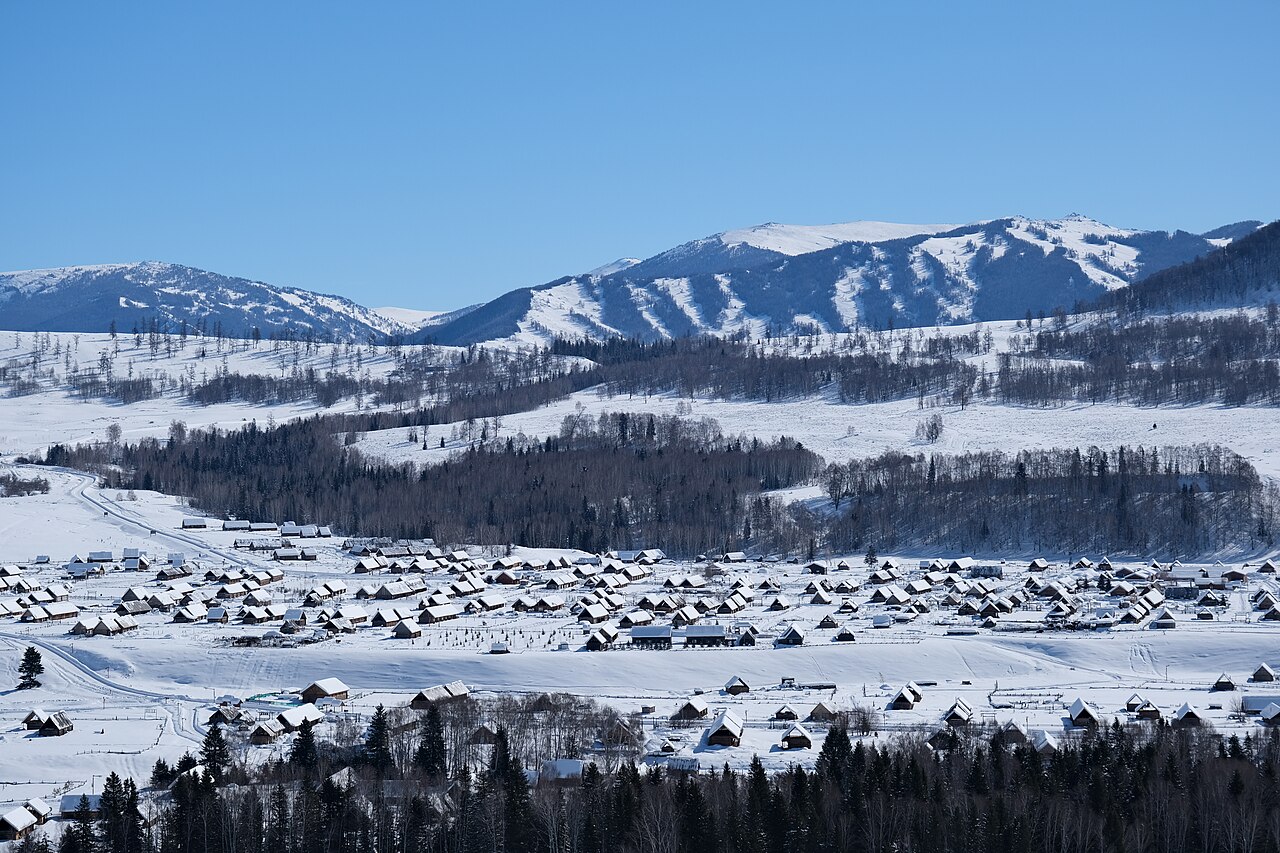
Winter changes more than the view. In the north, it changes distance, roads and the logic of staying. Northern Xinjiang is much larger than Altay; this story begins there because the shift is unusually easy to see.
Winter changes more than the color of Northern Xinjiang. It changes distance, time, and how a journey should unfold.
Snow Changes Distance Before It Changes Colour
The first time you see northern Xinjiang in winter, it is easy to think that little has changed. The mountains are where they were. The wooden houses still sit in the same valleys. Snow has simply covered the green and laid a white roof over the landscape. Winter can look like summer with a different palette.
Once you start moving through it, that idea falls apart. The map is the same. The scale of the journey is not.
In summer, 200 kilometres is first of all a number. In winter, the same distance also contains snowfall, ice, visibility, low temperatures, road maintenance and mountain weather. Xinjiang’s 2026 Spring Festival road guide separately flagged snowfall on the Altay–Hemu Highway and on sections between Kanas and Habahe, while also listing roads closed in both directions for the winter season. Road conditions are not a footnote at the bottom of a winter itinerary; they are part of the itinerary itself.
The questions change with the season. What time should we leave? How much margin should we build into this drive? If the weather turns in the afternoon, is the next stop still worth pushing for? Do we really need to sleep somewhere different tonight?
The kilometres have not changed. The distance has.
Summer Draws a Line. Winter Creates Places to Stay.
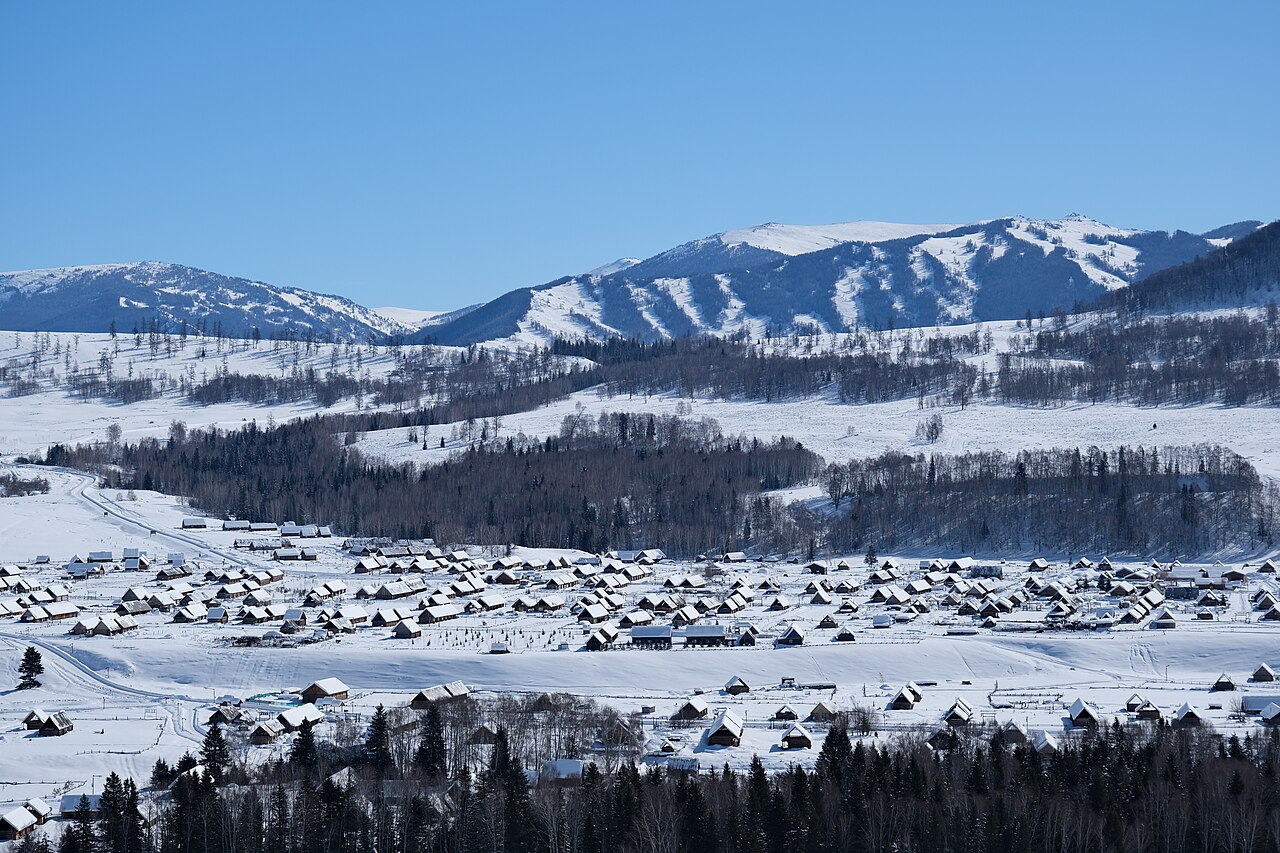
Many classic northern Xinjiang journeys are built around movement. You leave Urumqi, enter Altay, then continue towards Hemu, Kanas or another mountain destination. The scenery keeps slipping past the window; the next stop is always ahead.
Winter quietly changes that rhythm. Altay City no longer has to be somewhere you sleep for one night before moving on. If skiing becomes part of the daily routine, the city can hold several days of a journey. Hemu does not have to follow the sequence of “arrive, photograph, sleep, leave”. Koktokay can also be experienced over several days rather than compressed into one stop.
The journey shifts from a line that keeps advancing to a smaller number of places worth staying in long enough to notice the difference between one morning and the next.
TRAVEL STRUCTURE
SUMMER · LINE Urumqi → Altay → Hemu → Kanas → the next stop
WINTER · STAY + SHORTER OUTINGS Altay · stay longer ↔ Jiangjunshan Hemu · stay longer ↔ Jikepulin Koktokay · stay longer ↔ mountains and ski slopes
Shorter Daylight Changes the Order of a Day
One of winter’s easiest changes to underestimate is time. Not clock time, but the amount of a day that can actually be used in the same way.
Altay lies far enough north for daylight to contract sharply around the winter solstice. A summer day that can stretch late into the evening has to be rebuilt in winter. After a morning on the slopes, does a long afternoon drive still make sense? If you want to walk through a snow-covered village in the best light, is it worth leaving early just to add another stop?
At that point an itinerary stops being a question of efficiency and becomes a question of choice. Winter does not simply compress a summer day. It forces a journey to decide what deserves the available light.
A Road Can Change Its Role in Winter
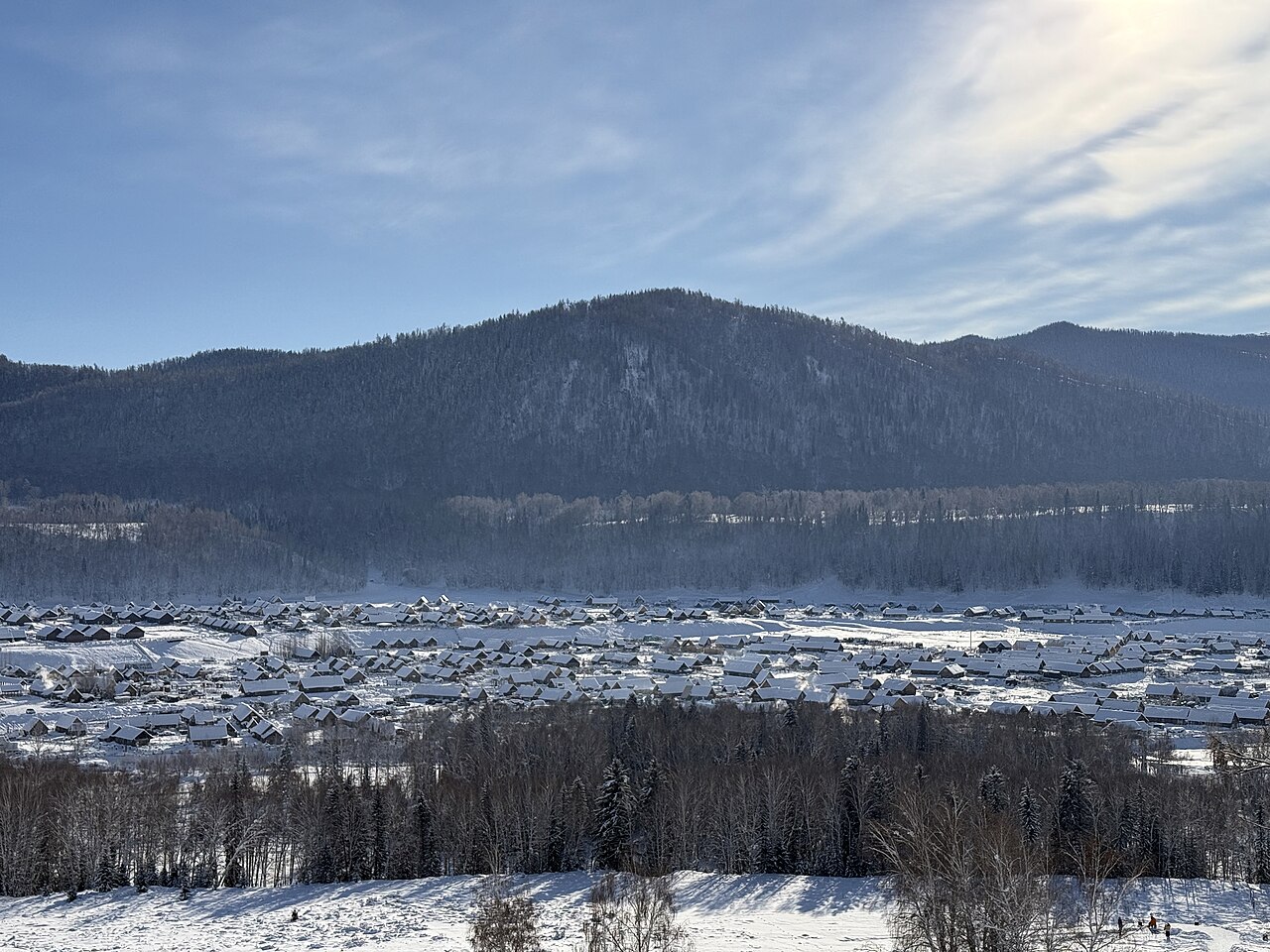
In summer, some roads in northern Xinjiang are much more than links from A to B. The road itself becomes part of the experience: desert recedes, mountains move closer, forest appears, valleys narrow. You understand the geography because you are moving through it.
Season changes the role of that road. A route that functions as a landscape experience in summer must, in winter, first pass the tests of weather, traffic management and road access. It may still be beautiful. It may also become primarily a way of reaching a place safely; under difficult conditions, the wider itinerary may need an alternative.
That does not make winter road travel less interesting. It makes the question more precise: why does this road make sense in this season?
Winter’s Clearest Change Is Learning to Stay
Long-distance travel easily develops its own efficiency rule: if you have come this far, you should see more. Northern Xinjiang’s long summer days and continuous scenery naturally encourage that instinct.
Winter offers another answer. You can wake in Altay and not rush towards another city. You can stay for a second or third morning in Hemu and begin to notice how early light, afternoon and night feel different. In Koktokay, several days can be organised around the mountain, the ski area and the town, rather than reducing the place to a single photograph.
The transport network itself has started to reflect this winter geography. During the previous snow season, local transport authorities introduced a direct service between Jiangjunshan Ski Resort and Koktokay Ski Resort, temporary shuttles linking the airport with major hotel clusters, and transfers connecting the airport or railway station with hotels and ski areas. The network was no longer organised only around a sightseeing circuit; it was being reconnected around skiing, accommodation and everyday movement.
For an individual traveller, the more interesting question is not how much the market has grown. It is this: if we stop rushing away, can we understand a place more fully?
Winter may not add more sights. It can add depth of stay.
Three Ski Areas, Three Different Ways to Travel
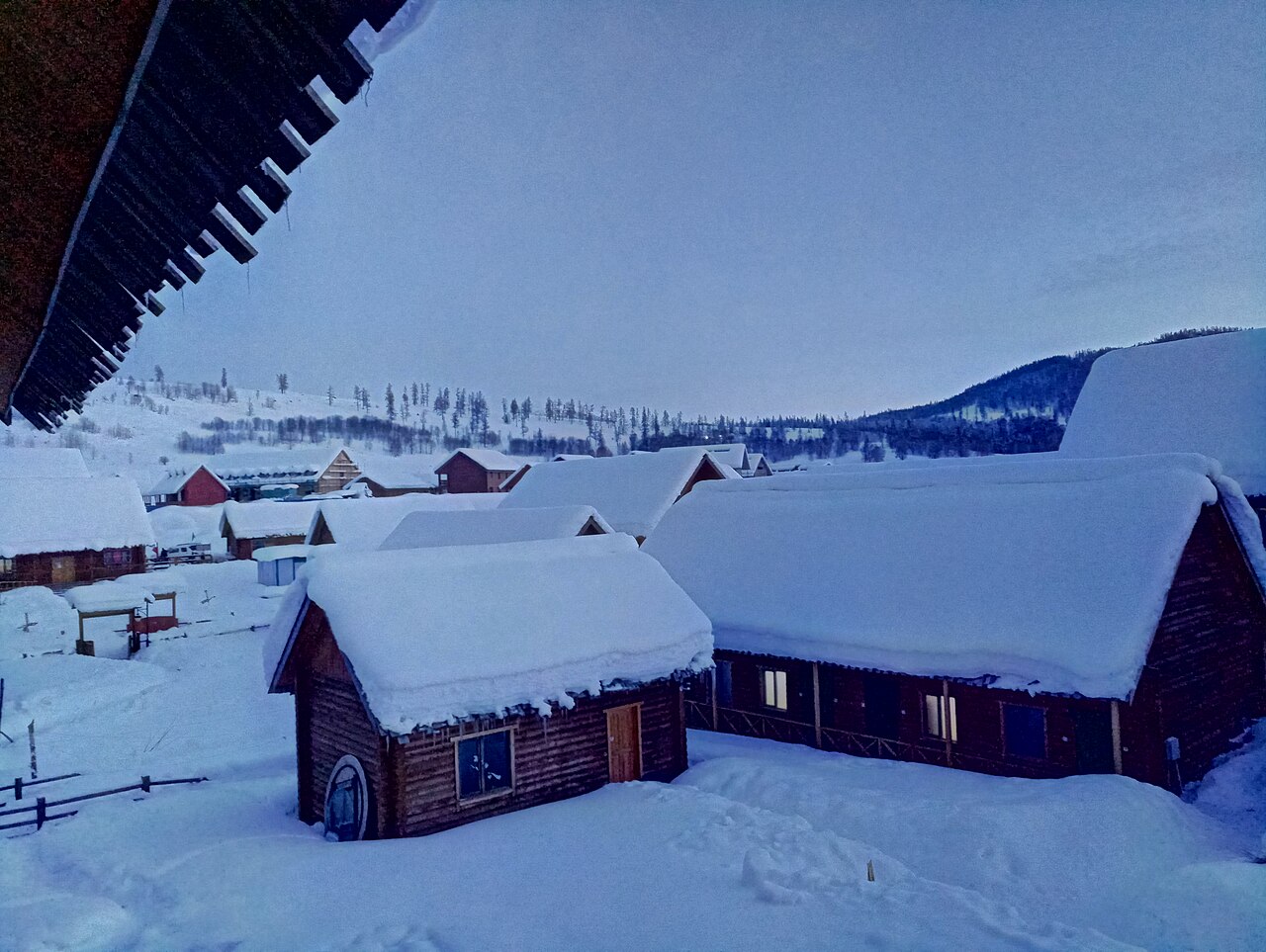
Jiangjunshan, Jikepulin and Koktokay are all major winter-sports destinations in Altay. But if you look beyond piste statistics and ask how a trip is organised around each place, three different structures begin to appear.
Jiangjunshan is closely tied to Altay City. A skier can return to restaurants, cafés, hotels and the ordinary services of a city. Here, skiing sits inside an urban trip rather than replacing it.
Jikepulin is bound to Hemu and its mountain-village setting. Skiing, lodging and time in the settlement overlap. The slopes become part of a longer stay in the mountains.
Koktokay combines the ski area with mountains, valleys and a town that already works as a wider destination. Skiing is one part of a larger mountain journey.
So the question is not simply which resort is “best”. It is what kind of winter you want to spend there. Technical information helps you decide whether a ski area suits your ability and priorities. The travel structure decides what the rest of those days will feel like.
Opening dates, pistes, lift operations, ticketing, transfers and other details for the 2026–27 snow season should be checked against each resort’s current official notices before travel.
Winter Should Not Imitate Summer
If winter in northern Xinjiang is treated as a “snow version” of the summer journey, the solution seems easy: take the summer map, turn the green white and keep moving in the same order.
But a season is not a filter. Snow changes roads. Latitude changes daylight. Cold changes how long people want to remain outdoors. Skiing changes where people sleep. Higher movement costs change how long a place deserves. Eventually, the entire journey is rearranged.
In summer, it is easy to describe a trip by how many places were covered. In winter, that measure begins to fail. Some roads need more time. Some places deserve an extra night. Some afternoons belong only to snow. Towns and villages that once functioned mainly as overnight stops can become the journey itself.
The mountains are still there. The valleys are still there. The map has not moved by a single kilometre.
But the journey is no longer the same journey.
NEXT · WINTER XINJIANG 02 / SOUTH
Next: Southern Xinjiang in Winter: When the Scenery Steps Back
In the north, winter changes distance. Continue south, and another question appears: what do we notice when the far horizon no longer takes all our time?
The land is vast. A journey has more than one answer. With every arrival, see Xinjiang anew.
Source note: This article is based on public information and seasonal travel logic. Winter roads, attraction access, ski operations, transfers, weather and high-altitude conditions can change quickly. Always check current official notices, road conditions and forecasts before travel.