Where Forest Meets Mountain

Where Forest Meets Mountain Why Trees Grow Here

From the southern mountains of Urumqi to the Western Tianshan, then on to Altay and the Eastern Tianshan in Xinjiang, northwest China, this essay follows tree lines, valleys, lakeshores and villages to understand why forests endure only in certain places.

Forests in Xinjiang endure only where elevation, moisture and snow allow—along the Tianshan, Western Tianshan, Altay and Eastern Tianshan treelines. The question is not how many trees, but why this slope kept them.

Forests Do Not Cover Xinjiang

Leaving Urumqi for the mountains, forest rarely arrives all at once. First come pale slopes, dry rock and unfiltered light. As the road climbs, a few spruces appear in a ravine. One more bend, and a whole shaded hillside turns dark. The real change is not simply that you see trees. It is that, for the first time, the mountain has shadow.

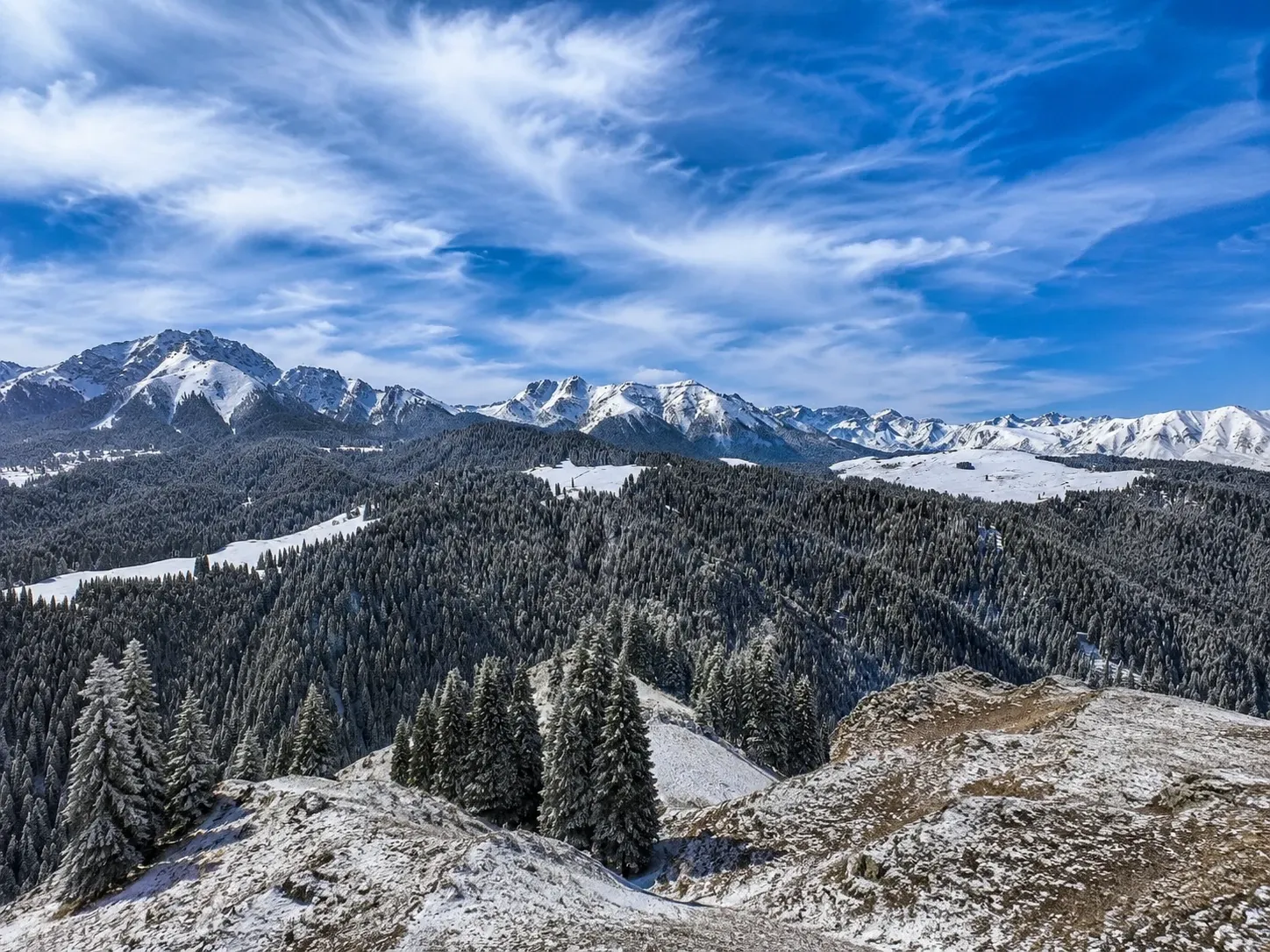
With time, the pattern becomes clear. Trees hold where slopes are cooler, moisture is steadier, snow lingers longer, and elevation limits the losses of summer evaporation. Above the tree line, stone returns. Below it, grassland and shrubs receive the forest’s retreating edge.

So the best way to understand forests in Xinjiang is not to turn a dozen scenic sites into a checklist. It is to follow these boundaries instead: where trees begin, how they move into the mountains along valleys, and where they stop.

CHAPTER 01

In the Tianshan, Forest First Takes Hold

At first, forest is only a dark band on the mountain. Once you learn to read the tree line, you realise that the boundary itself explains climate and terrain.

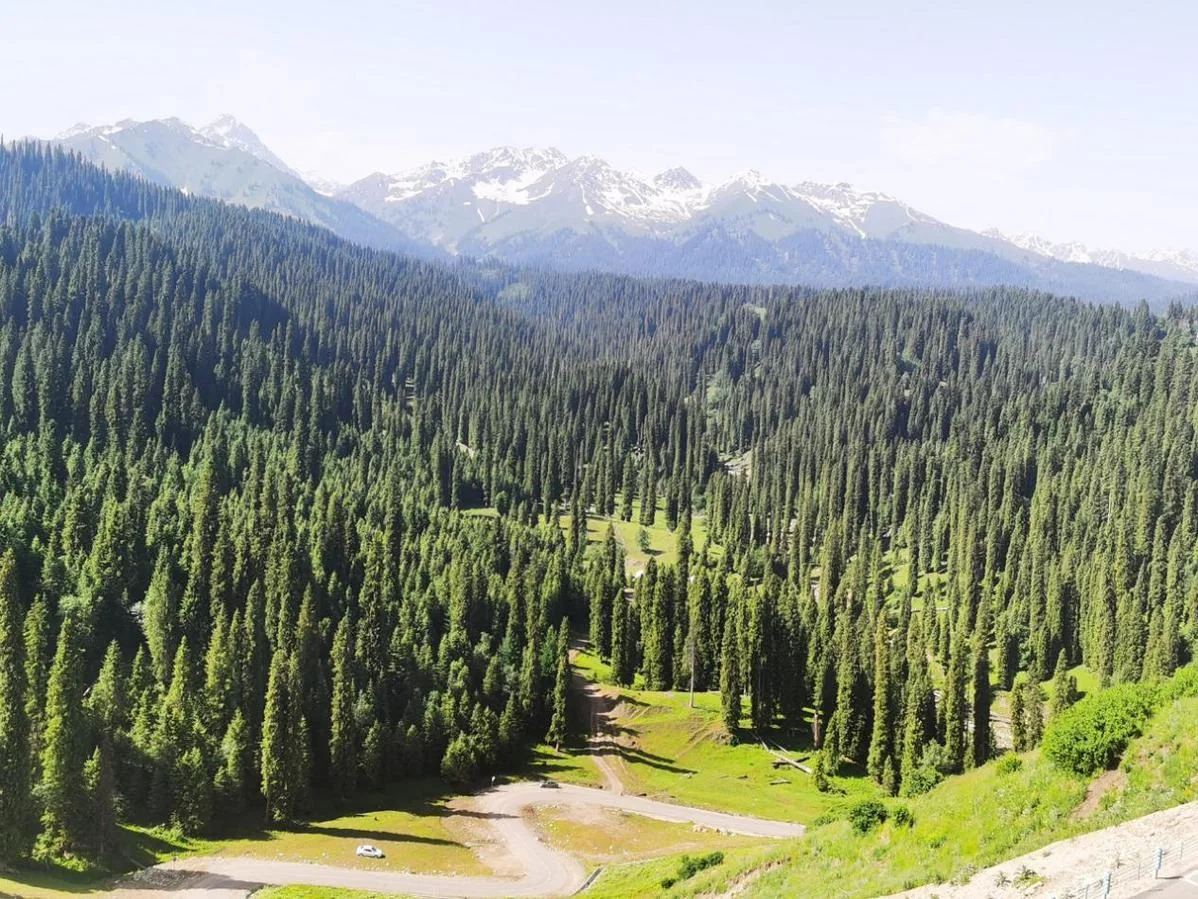
Schrenk spruce forest in Urumqi Tianshan Grand Canyon
Urumqi Tianshan Grand Canyon | Schrenk spruce gains its first hold on cooler, wetter slopes.
Southern Urumqi · Tianshan Grand Canyon

The First Time a Slope Turns Dark

After leaving the city, the moment worth waiting for is not the entrance to a scenic area. It is the first change in the mountain’s colour. The sunny slope remains dry, while spruces appear in the ravine. Deeper in, scattered trees join into a belt, and the hillside shifts from exposed ground to layered green.

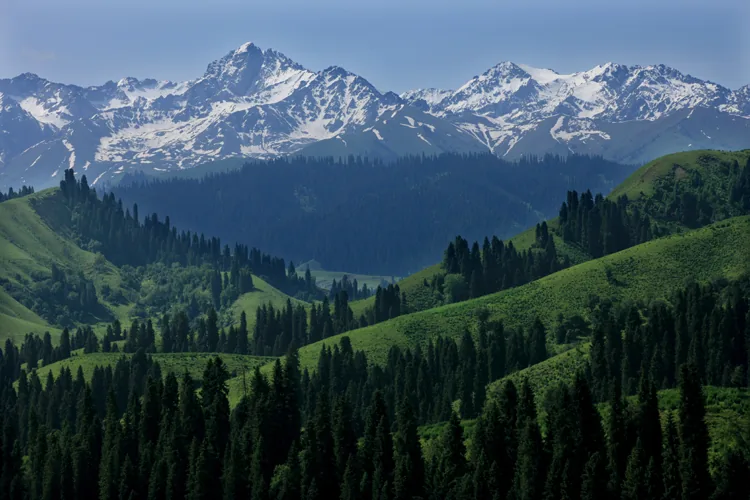
This is a representative stand of Schrenk spruce on the northern slopes of the Tianshan Mountains. From the valley floor, what stands out is not simply the number of trees, but the point at which they stop. Above that line, the mountain returns to rock, meadow and snow. One of the clearest lessons of Xinjiang’s forests is written into that boundary.

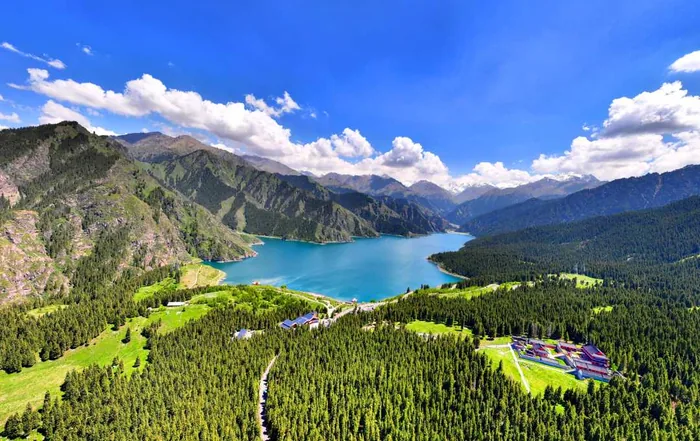
Lakeside spruce forest at Tianshan Tianchi
Tianshan Tianchi | Water in front, forest in the middle, peaks behind.
Tianshan Tianchi

Behind the Lake Stands a Forest

At Tianchi, the eye usually goes first to the water. The lake is too complete, the snow peaks too striking, and the forest too easy to leave in the background. Walk the shore slowly, though, and the scene separates into layers: spruces begin at the water’s edge, their crowns rising one above another; only then do the mountains take over.

The lake feels enclosed not only because the peaks are high, but because the forest fills the space between water and stone. As a lake, Tianchi is water ringed by mountains. As a forest scene, it is more like a window: water in front, trees in the middle, mountains behind.

Nalati mountain forest
Nalati | Higher up the grassy slope, forest begins to take over the mountain.
Nalati

Higher Up, the Grassland Meets Trees

Nalati is remembered first for pasture. Yet if you keep moving your gaze upslope, the grass does not go on forever. As valley form, slope aspect and elevation change, natural woodland and planted forest appear, cutting the bright grassland into darker blocks of colour.

There is no perfectly clean line between forest and grassland here. Trees probe downward along gullies, while grass climbs the gentler slopes. That mutual testing is exactly what makes the landscape interesting.

CHAPTER 02

In Kuerdening, Forest Takes the Lead

Earlier woodlands still cling to the mountain. Deeper in the Western Tianshan, that relationship reverses: the mountain is increasingly defined by forest.

Kuerdening spruce and the Western Tianshan
Kuerdening | Schrenk spruce and mountain together lower the light in the valley.
Kuerdening · Western Tianshan

An Entire Mountain in Trees

In Kuerdening, the first thing to change is the light. The valley has not fully narrowed, yet the slopes are already dark. Schrenk spruce rises from lower ground and keeps climbing. The crowns overlap so closely that, from a distance, there seems to be almost no gap left.

Step beneath the trees, however, and the forest no longer feels grand in the way a distant panorama does. Trunks break the view into pieces: a strip of sky, a patch of slope, and a pace that slows under the canopy. Much of Xinjiang trains the eye to look far. Kuerdening asks you to look near.

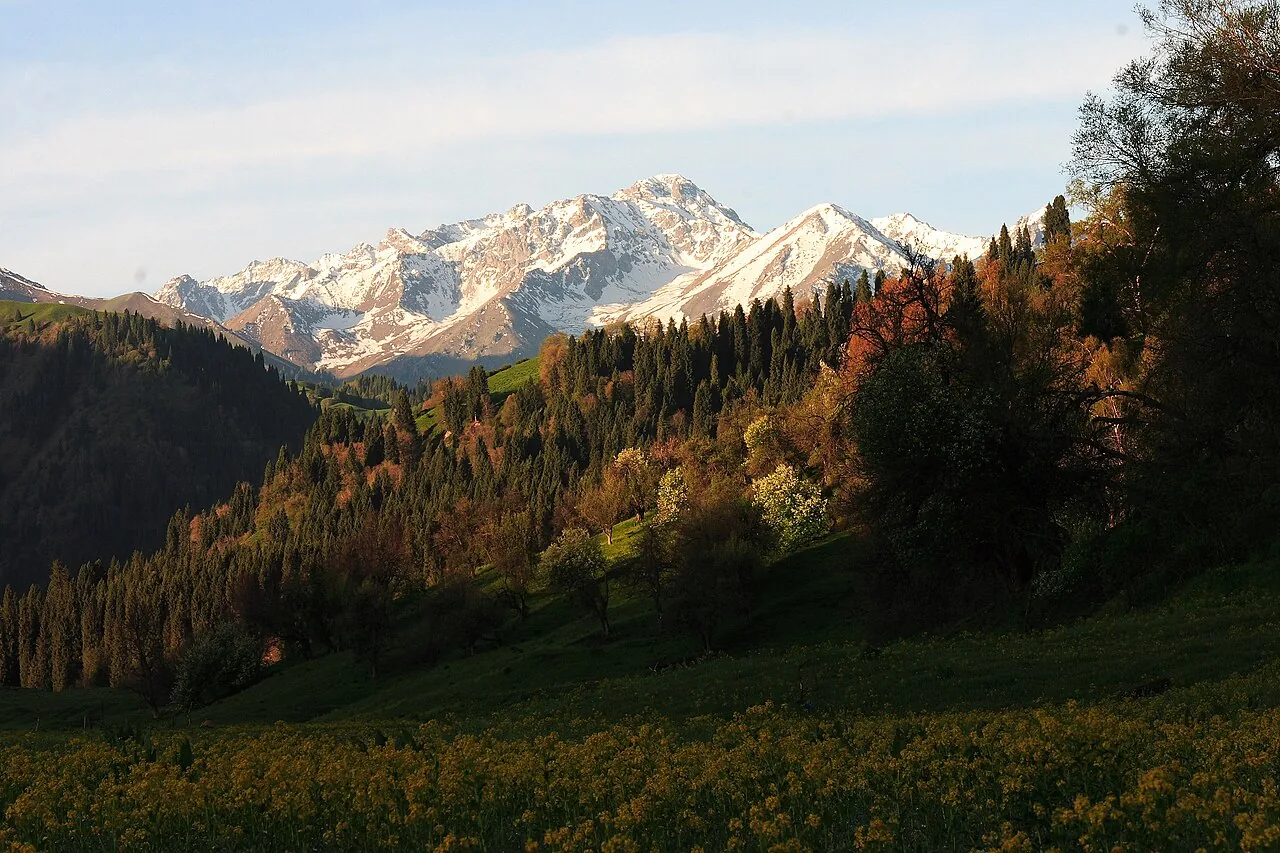
Qiaxi–Talimu forest and snowy peaks
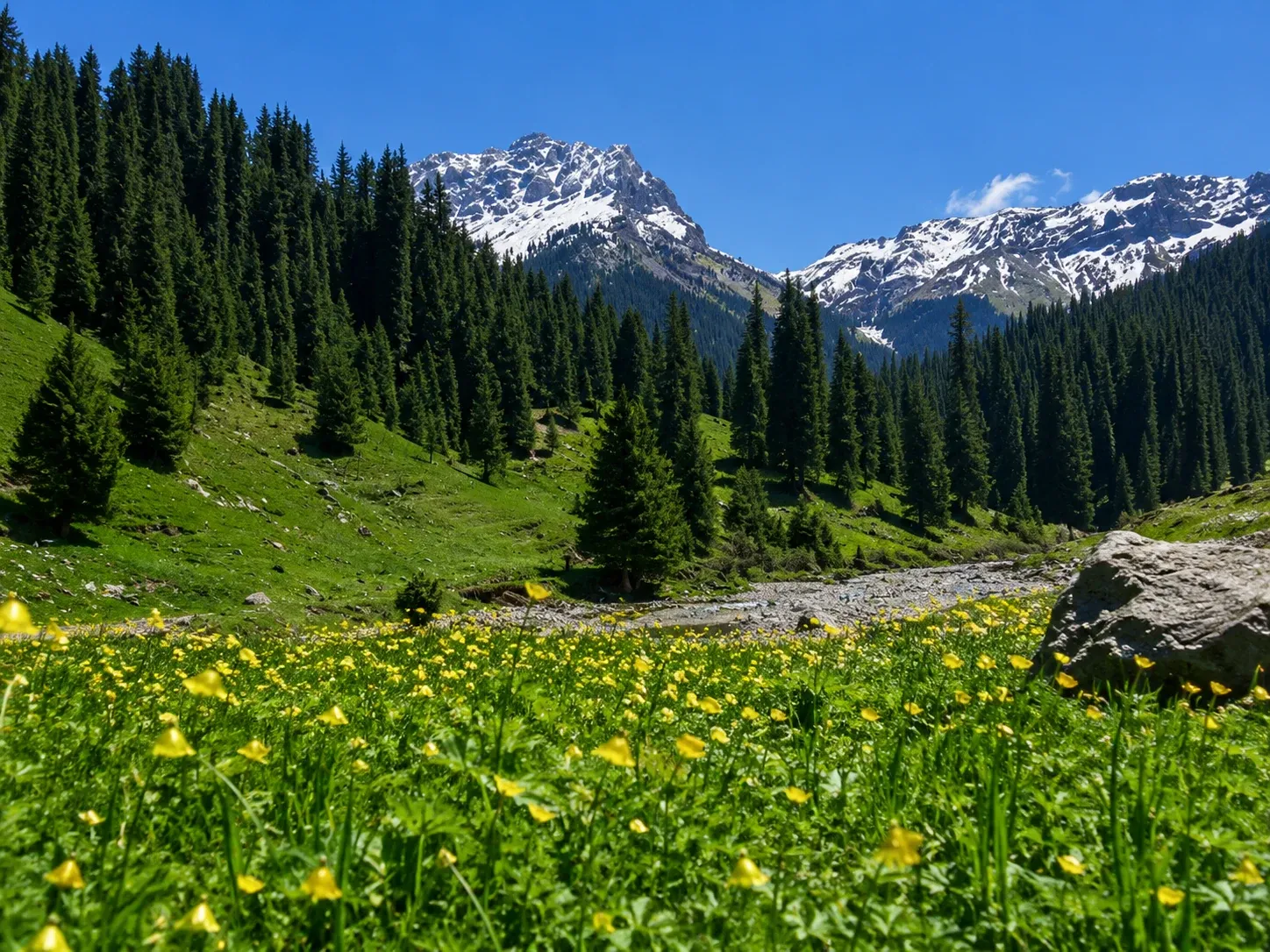
Qiaxi–Talimu | Spruce, meadow and snowy peaks leave room for one another.
Qiaxi–Talimu

Forest and Meadow Stay in the Same Frame

Here, space rarely belongs to a single landform. Forest, grassland, snow mountain and stream are all present at once. Spruce gives the meadow a boundary, and the meadow gives the forest room to breathe. The forest does not need to fill the whole frame to define the place.

CHAPTER 03

Valleys Carry Forest Farther In

Once water enters the story, trees no longer cling only to the slopes. The forest belt begins to advance along the valleys, and the mountains acquire a direction inward.

Gongnaisi valley forest
Gongnaisi | Valley, forest edge and open grassland shape the scene together; forest does not fill it alone.
Gongnaisi

The Grassland Makes Room for Trees

As you move from open country into Gongnaisi, the change is gradual. The grassland remains. The river remains. What changes is that trees begin to appear, little by little, in gullies and on shaded slopes. First they come as scattered patches; later they gather into a darker background.

Gongnaisi resists a clean line for where forest begins. A river can divide two hillsides of entirely different texture, and a single slope can still be broken by grassland. That incompleteness is part of the point.

Tangbula valley and spruce belt
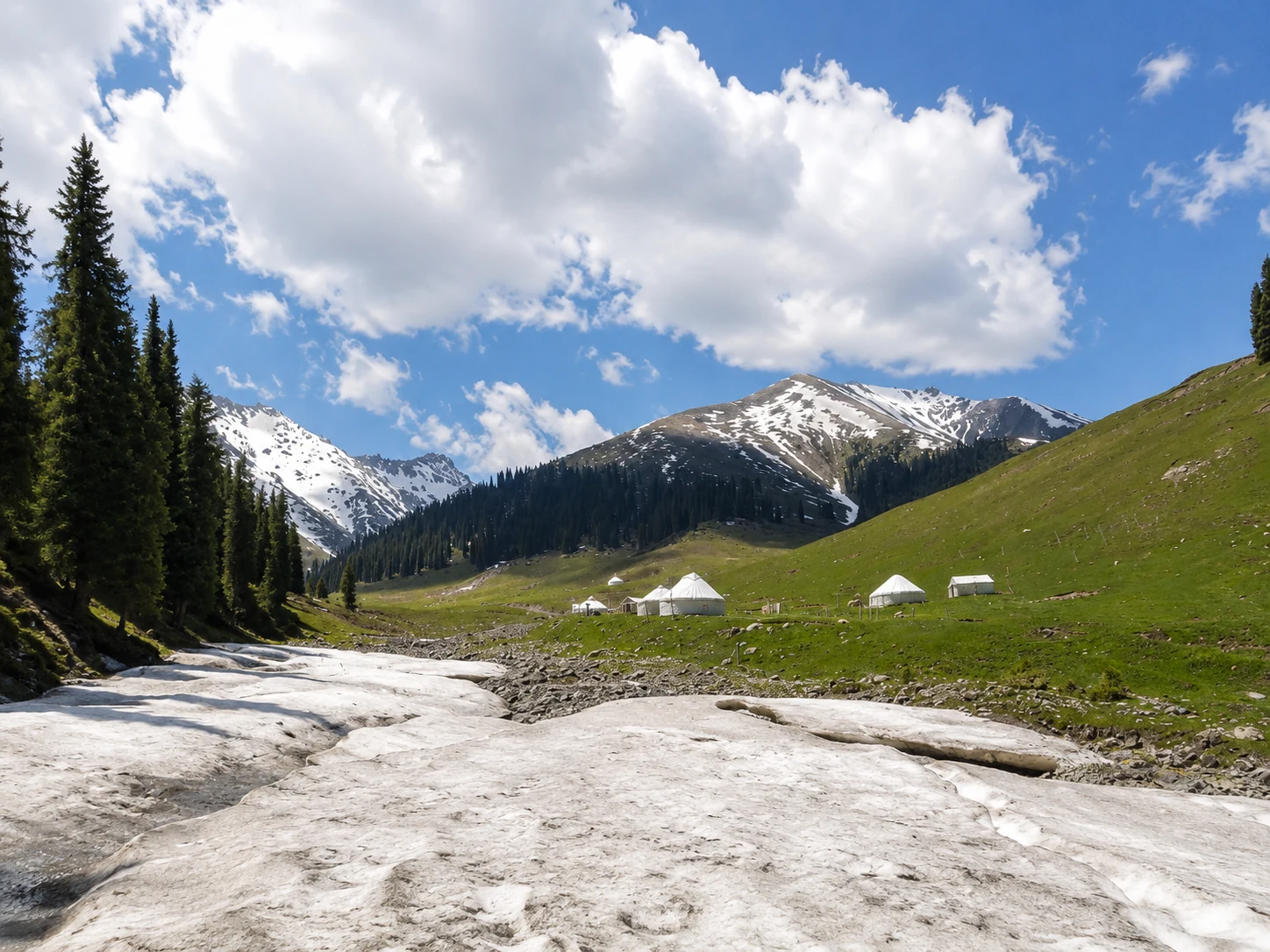
Tangbula | River, grassland and Schrenk spruce give the forest its direction.
Tangbula

The Forest Follows the Valley

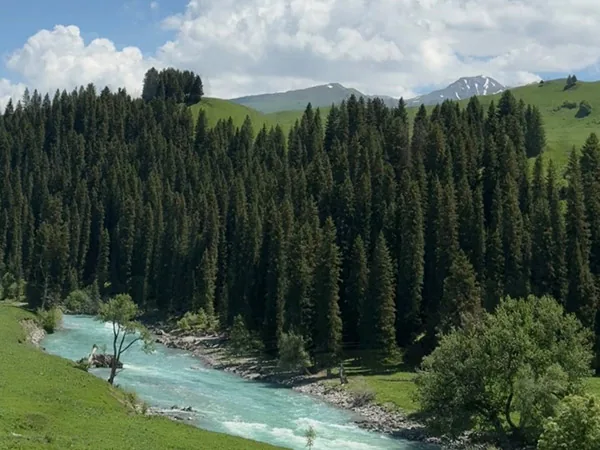
In Tangbula, spruces do not always form one dense, unbroken mass. More often they appear along rivers, at the foot of slopes and inside gullies. The road follows the water, and the forest belt follows it too, so the traveller naturally senses a movement deeper into the mountains.

On open grassland, rivers lead pasture into the hills. Where forest takes over, the same rivers lead trees in instead.

CHAPTER 04

In Altay, the Forest Changes Character

Here the mountain forest of the Tianshan, centred on Schrenk spruce, gives way to a colder and more continuous northern forest world.

Kanas mountain forest and river bend
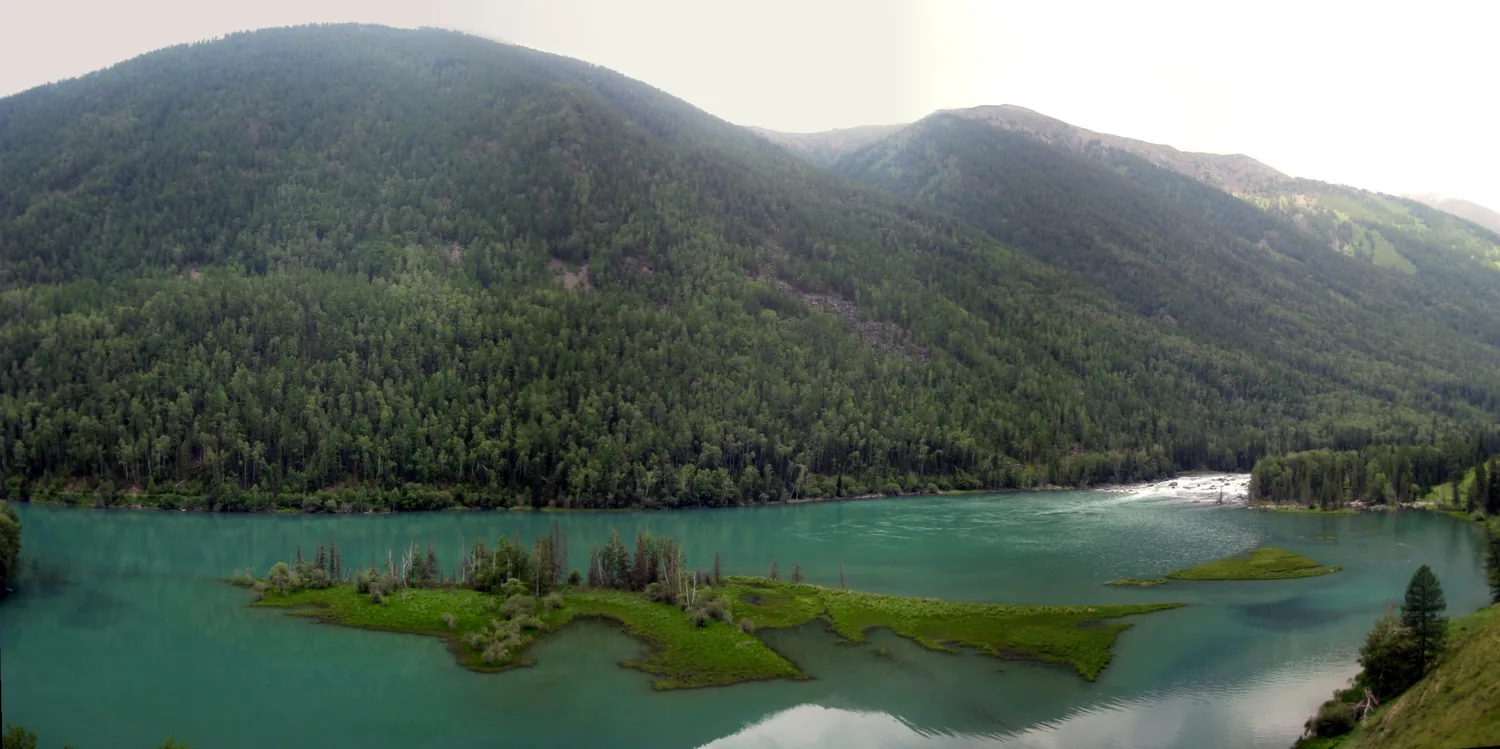
Kanas | Forest runs from the mountainside all the way to the water.
Kanas

From Slope to Shore

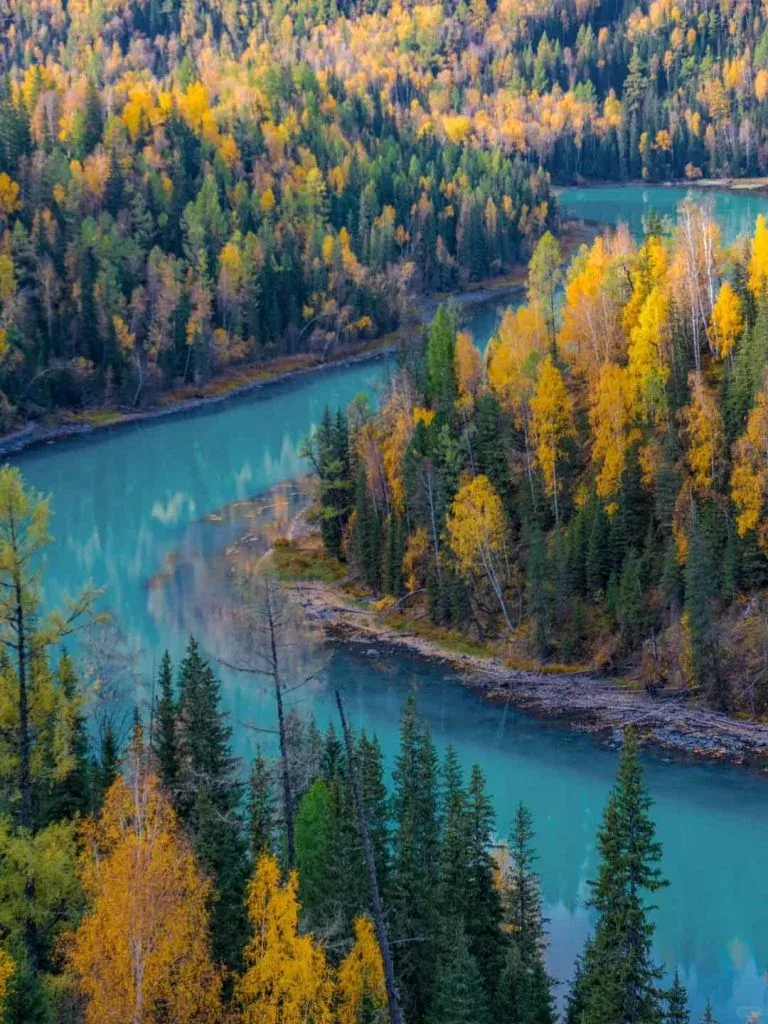
On the road into Kanas, forest appears early. Water slips out from between the trees and then disappears beneath them again. In some places there is almost no buffer between water and woods; the crowns stand right at the bank.

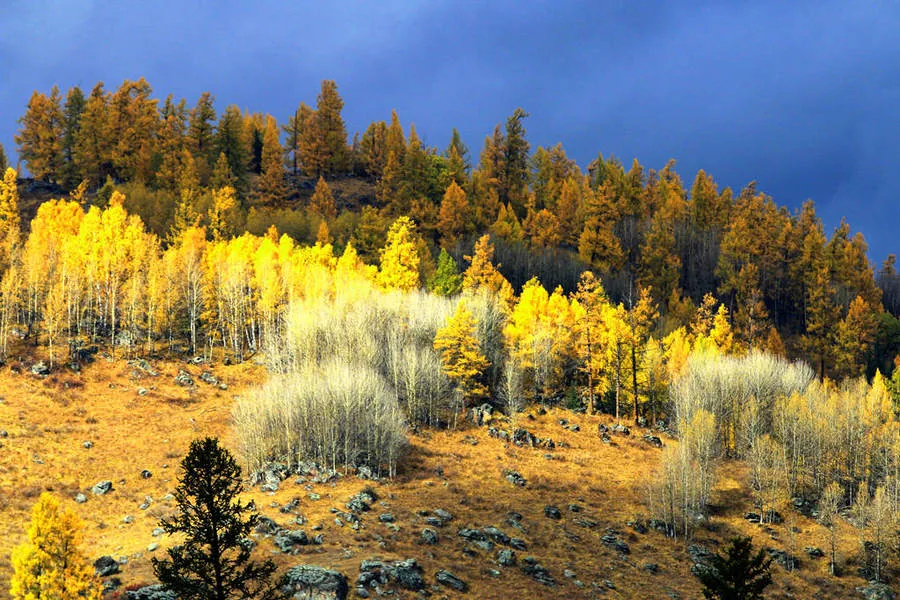
The forests of the Altay Mountains belong to a colder ecological world. Conifers, birch and larch change colour with the seasons. From afar, it looks like one great forest. Up close, it becomes many species, many heights and many layers of time.

Hemu River with autumn birch and conifers
Hemu

When the Forest Turns Bright

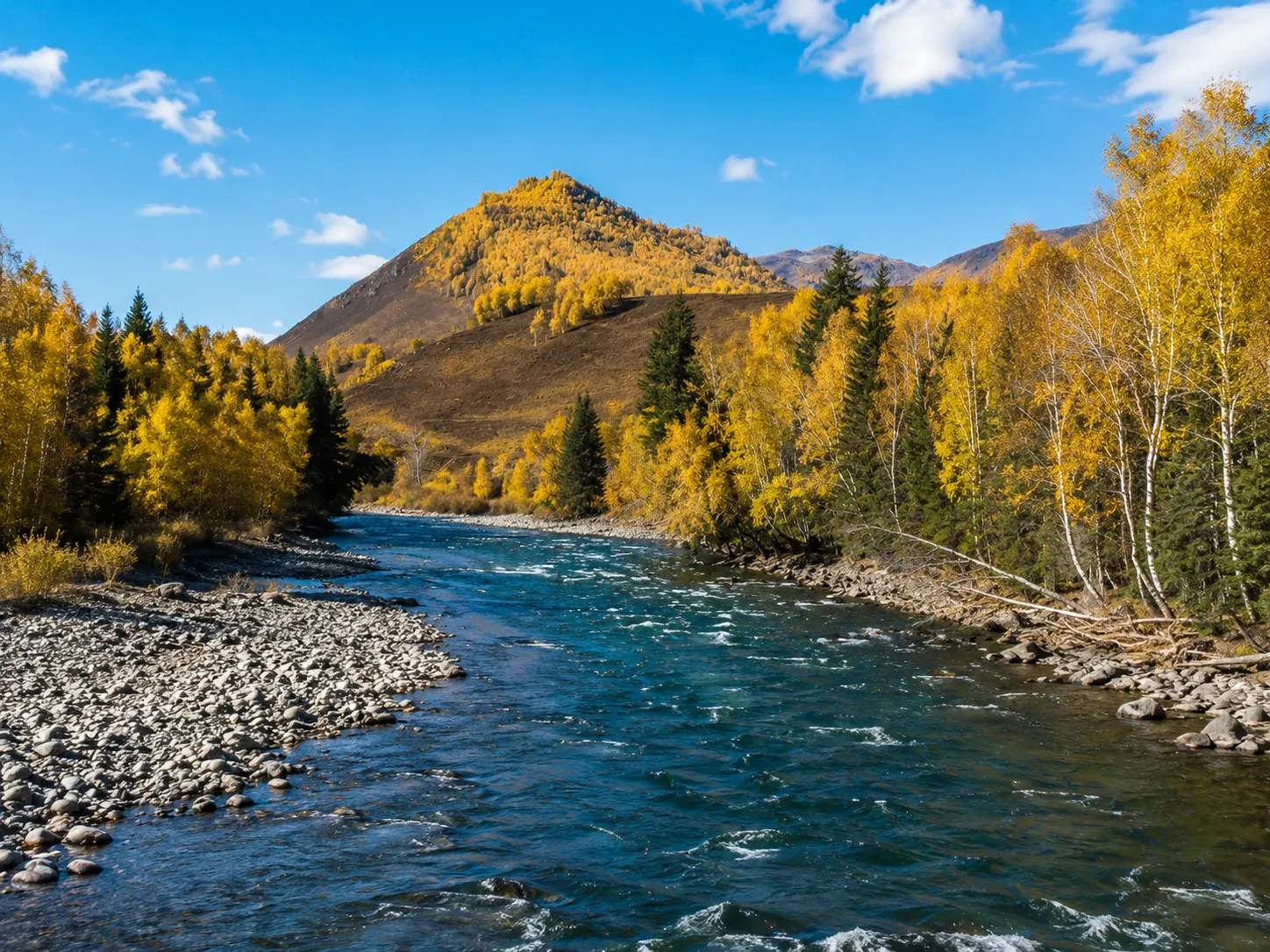
Do not rush to see Hemu as a fairy-tale village. Look first at the trees. Pale birch trunks and the gold of autumn leaves cut through the darker conifers. For the first time, the forest’s internal structure becomes clear.

Baihaba birch forest and valley
Baihaba

A Village at the Forest Edge

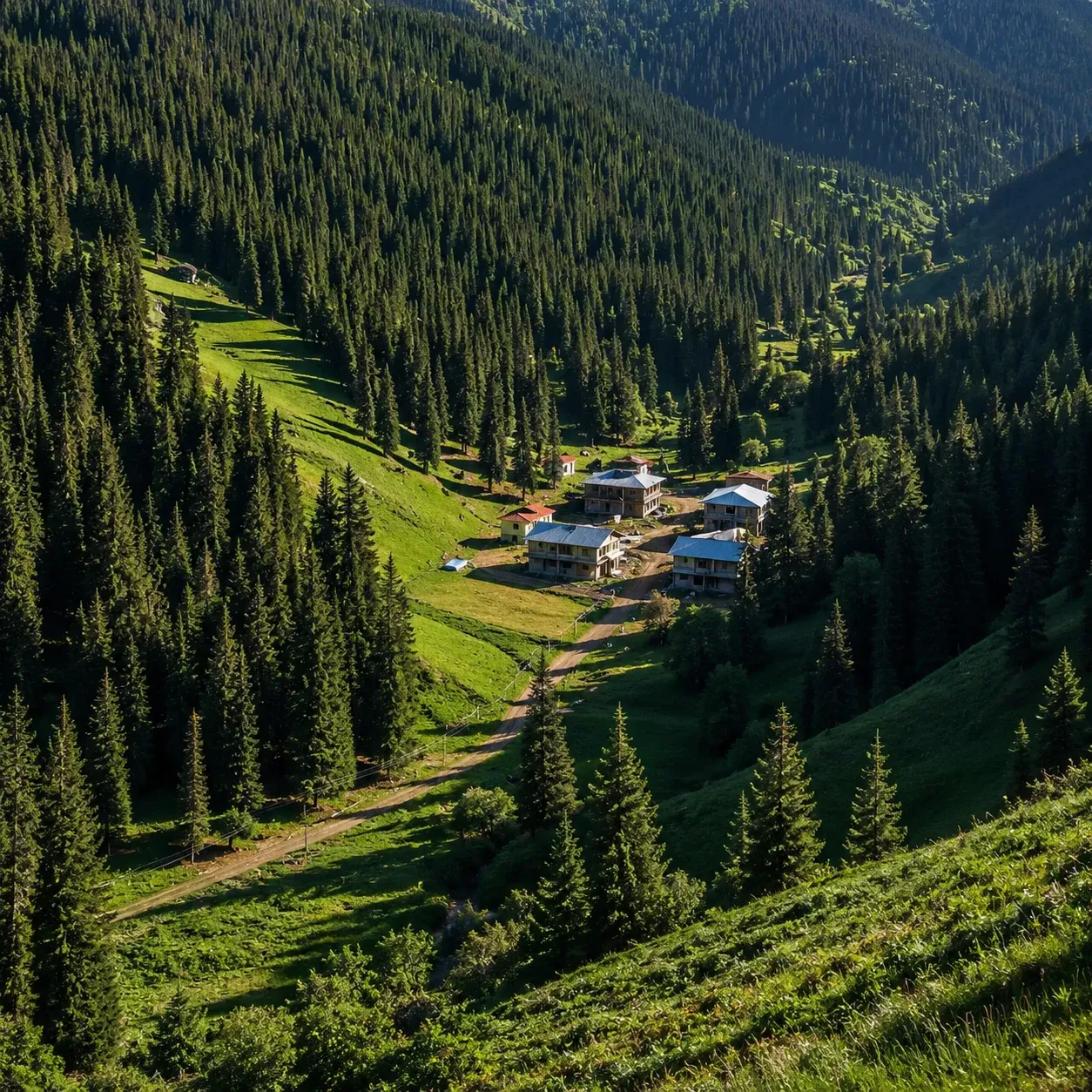
Wooden houses, grassland, birch and conifer sit close together. The village does not occupy the deepest part of the forest. It stops where woodland, river valley and open ground each give way a little.

Jiadengyu mountain forest in autumn
Jiadengyu

Jiadengyu: A Threshold to the Forest

Many travellers treat Jiadengyu as a transport node. Seen through the forest, it feels more like a threshold to Altay: the grassland remains open, the trees are already thickening, and the mountains are drawing closer.

CHAPTER 05

Farther East, Forest Becomes Precious

A forest is not most powerful only when it grows denser. Sometimes, as trees gradually withdraw from a slope, you realise how difficult it was for them to remain at all.

Jiangbulak snow peaks and spruce sea
Jiangbulak | Snow peaks and dark spruce share the same frame; forest becomes one layer in the Tianshan’s vertical landscape.
Jiangbulak

Trees Begin to Yield to Wheat

Jiangbulak lies on the northern flank of the Tianshan Mountains. What matters here is not the forest in isolation, but the short distance over which spruce, grassy slope, wheat field and snowy peak appear in succession. Land use becomes more complex, and forest shifts from being the whole story to being one layer in a vertical mountain landscape.

The dark woodland stops where growing conditions suit it best; below, pale green farmland opens out. Once that layered relationship is clear, it becomes easy to see why this place belongs both to a forest story and to a landscape long used by people.

Hami Tianshan National Forest Park mountain woodland
Hami Tianshan National Forest Park · Hanguigou

In the Eastern Tianshan, Trees Can No Longer Be Taken for Granted

The farther east you go, the drier the air feels. The Eastern Tianshan still preserves natural mountain forest belts, and Hanguigou gathers forest, springs and streams into one valley. The forest here may not be the thickest, but it makes clear how difficult it is for trees to remain.

Xibaiyanggou stream and spruce forest
Xibaiyanggou

Close to the City, the Forest Begins

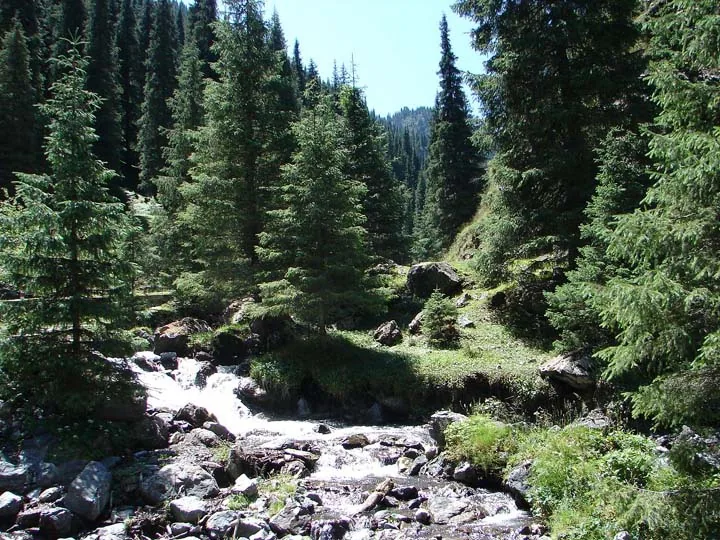
Xibaiyanggou lies on the southern outskirts of Urumqi. Its valley holds continuous spruce, streams and waterfalls. It is a reminder that Xinjiang’s mountain forests are not all hidden deep in distant protected areas. At the city’s edge, a narrow opening into the Tianshan has already begun.

Baishifeng–Qiongbola mountain forest
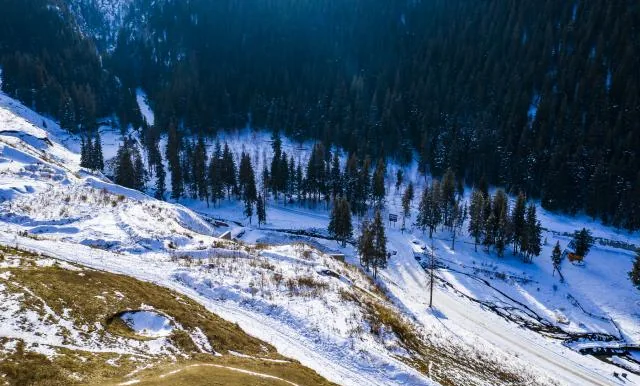
Baishifeng–Qiongbola Forest Park

At Last, the Forest Retreats to the Wusun Mountains

The Qiongbola Valley links forest, meadow, canyon and Baishifeng into one scene. It works well as a final mountain view: trees remain dense at middle elevations, yet higher up the mountain takes the space back. Before departure, actual access and opening conditions should be checked against the latest local information.

Where the Forest Finally Stops

By the end of the route, what stays in memory may not be which forest was densest, but the boundaries themselves.

Trees appear suddenly on one slope in the Tianshan Grand Canyon, interweave with grass at Nalati, cover an entire mountainside in Kuerdening, and keep making room for valleys and grassland in Gongnaisi and Tangbula. In Altay, the forest changes its species and seasons. Farther east, it gradually thins again.

These shifts make Xinjiang’s forests feel unusually specific. You begin to see what woodland needs in order to remain: water, the right slope aspect, lasting snow, suitable temperature and time. Forest is no longer simply a colour. It is what the mountain leaves behind when several conditions come together.

So in Xinjiang, what may be worth remembering is not how many forests you entered. It may be the day you were on the road and saw a mountainside turn dark, and knew that the change was not merely one of colour.

It was that the trees had finally found a place where they could remain.