
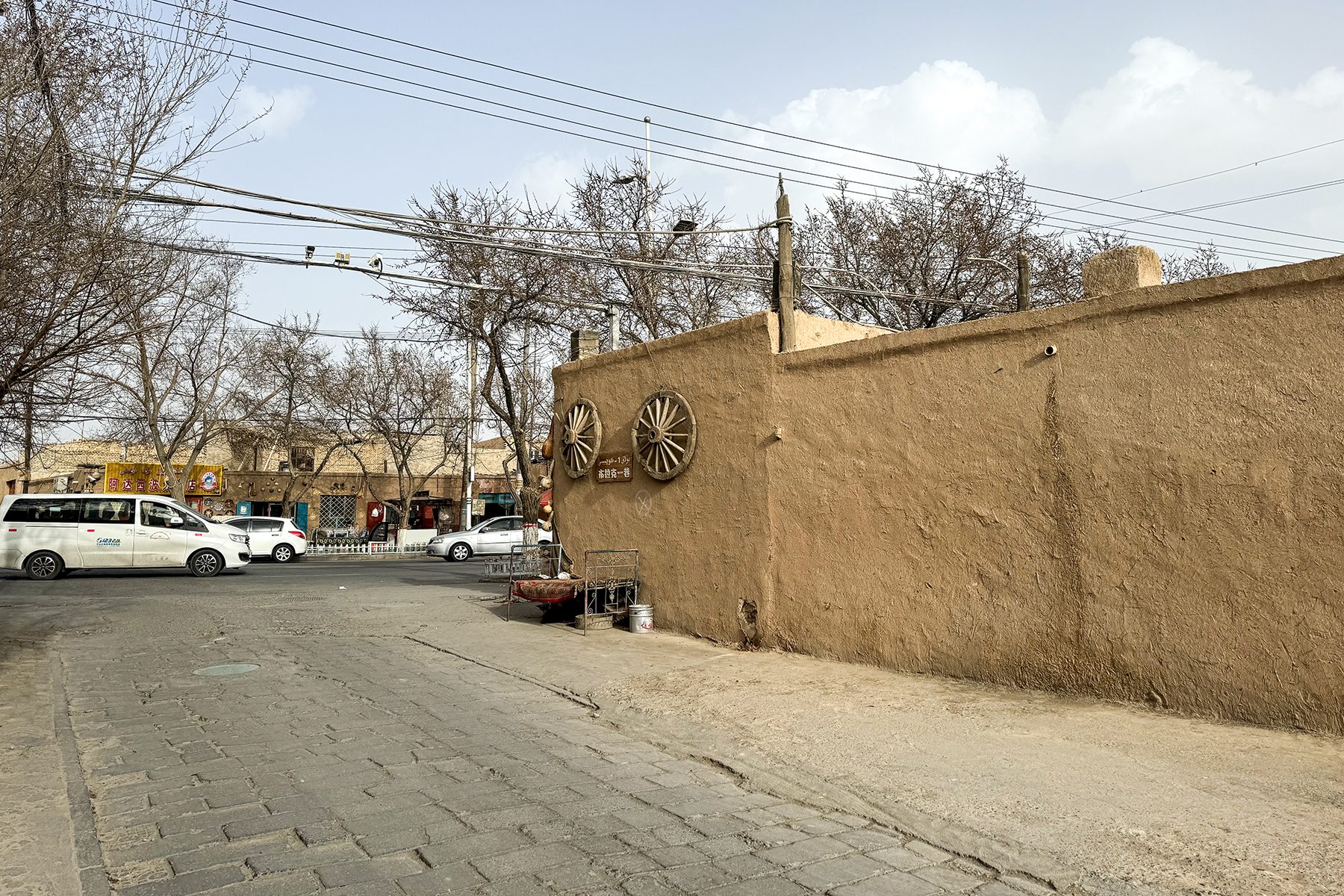
In Kuqa, colour catches the eye first. Doors come in blue, green and red. Walls hold the colour of earth. Grapevines reach out from courtyards, and a turn in a narrow lane can change the light completely.
In Kuqa, historic houses are not frozen in time. People still unlock the door, cook meals, fix roofs, and live everyday lives inside them.
Before It Is Heritage, It Is Somebody’s Home
To a traveller, an old beam, a carved door or an earthen wall gives a house its sense of age. To the people living inside, the same things are also a leaking roof, a weakened structure, a wall that must hold through winter, and a kitchen and bathroom that have to work every day.
Kuqa launched its “Save the Old Houses” programme in 2023, after a technical team had begun surveying traditional residences in the old city in 2021. One of the first pilot projects was a house that had been in use for about 130 years.
The aim was not to make it look new. Replace every old component and the building may become neat, safe and photogenic — but much of the history has been replaced as well. Leave everything untouched, and the family is left with the same leaks, safety problems and inconvenient rooms.
The Hardest Repair Is Knowing What Not to Replace
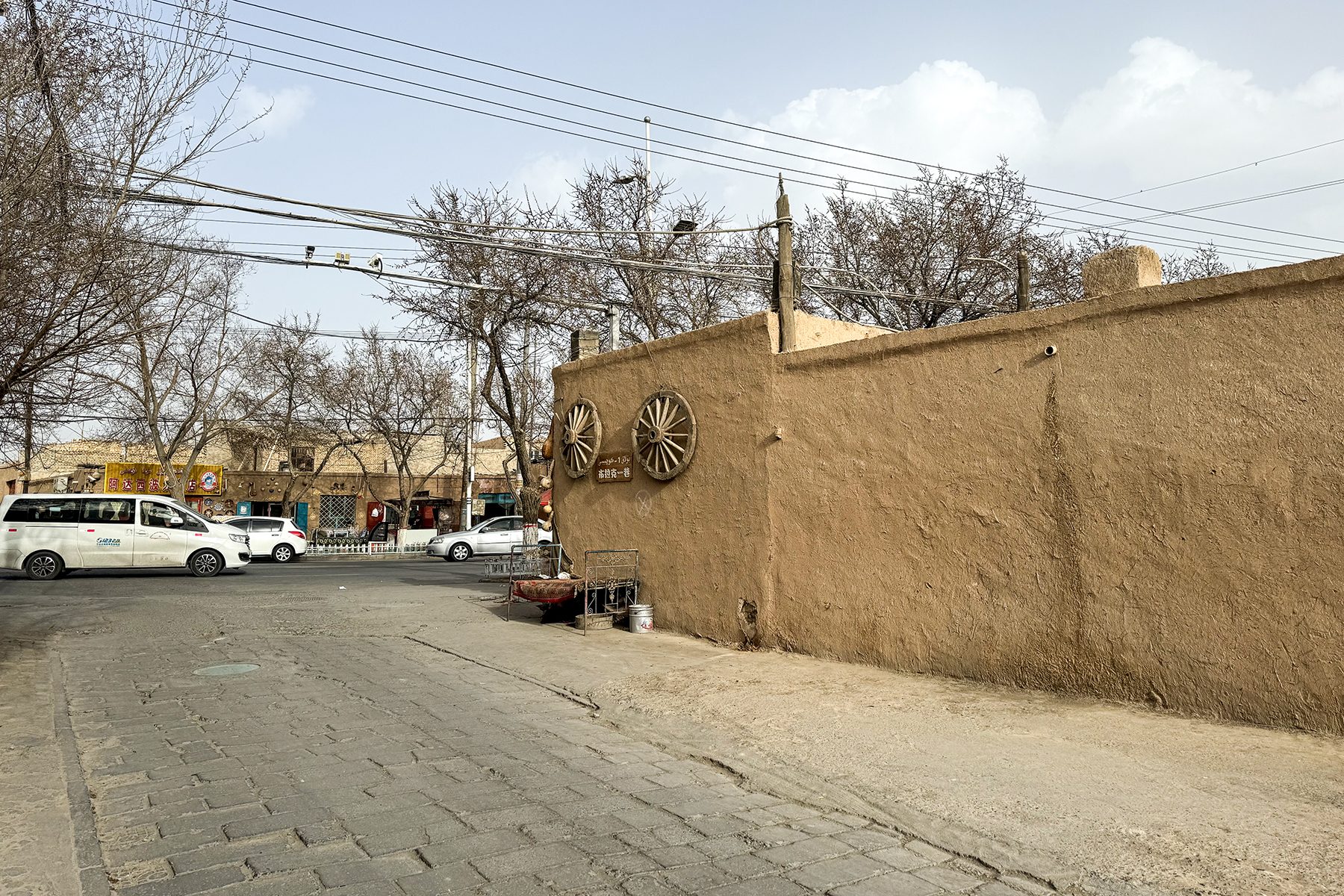
There is a simple principle behind much of the work: if an old component can be kept, do not replace it without need.
If only the foot of a timber post or beam has decayed, the whole piece does not necessarily have to go. Craftspeople can remove the damaged section, splice in new timber and reinforce the joint. New wood enters the building, but most of the original structure remains.
It sounds like a small technical choice. In practice, it is the difference between conserving an old house and building a convincing imitation of one. A historic street can look beautifully “traditional” after renovation and still have lost much of the material that actually survived the years.
The other challenge is knowledge. Older carpenters understand Kuqa’s timber-and-earth houses but may never have worked from modern conservation drawings. Younger workers can read plans and use digital tools, but must learn traditional joinery, carving and repair techniques. More than 150 craftspeople, aged from 25 to 75, were recruited from across Kuqa during the programme.
Restoration is not the art of making the old disappear. It is the craft of helping the old carry life forward.
Preserving History Does Not Mean Refusing Modern Life
One of the easiest mistakes in a lived-in historic district is to imagine that conservation means nothing can change.
Without reliable water, electricity, kitchens, bathrooms, waterproofing and basic safety, the cost of staying in an old house keeps rising — and the building is more likely to lose the everyday care that comes with continued use.
In 2026, China’s National Cultural Heritage Administration issued trial guidelines for the repair of ungraded residential heritage buildings. Public guidance on the document explicitly supports necessary adaptations — including air-conditioning, kitchen and bathroom upgrades, improved insulation and utility works — provided that heritage value is not diminished.
Kuqa’s pilot projects put that tension inside real homes. Keep the old beams where possible. Keep the carved timber. Keep the historic street pattern. At the same time, stop the roof leaking. Make the kitchen usable. Improve the bathroom. Find a way for modern services to enter without erasing the house they are meant to serve.
This is not simply a compromise between “old” and “modern”. It is a way of allowing an old house to continue doing what houses were made to do: be used.
An Old City Should Not Come Alive Only When Visitors Arrive
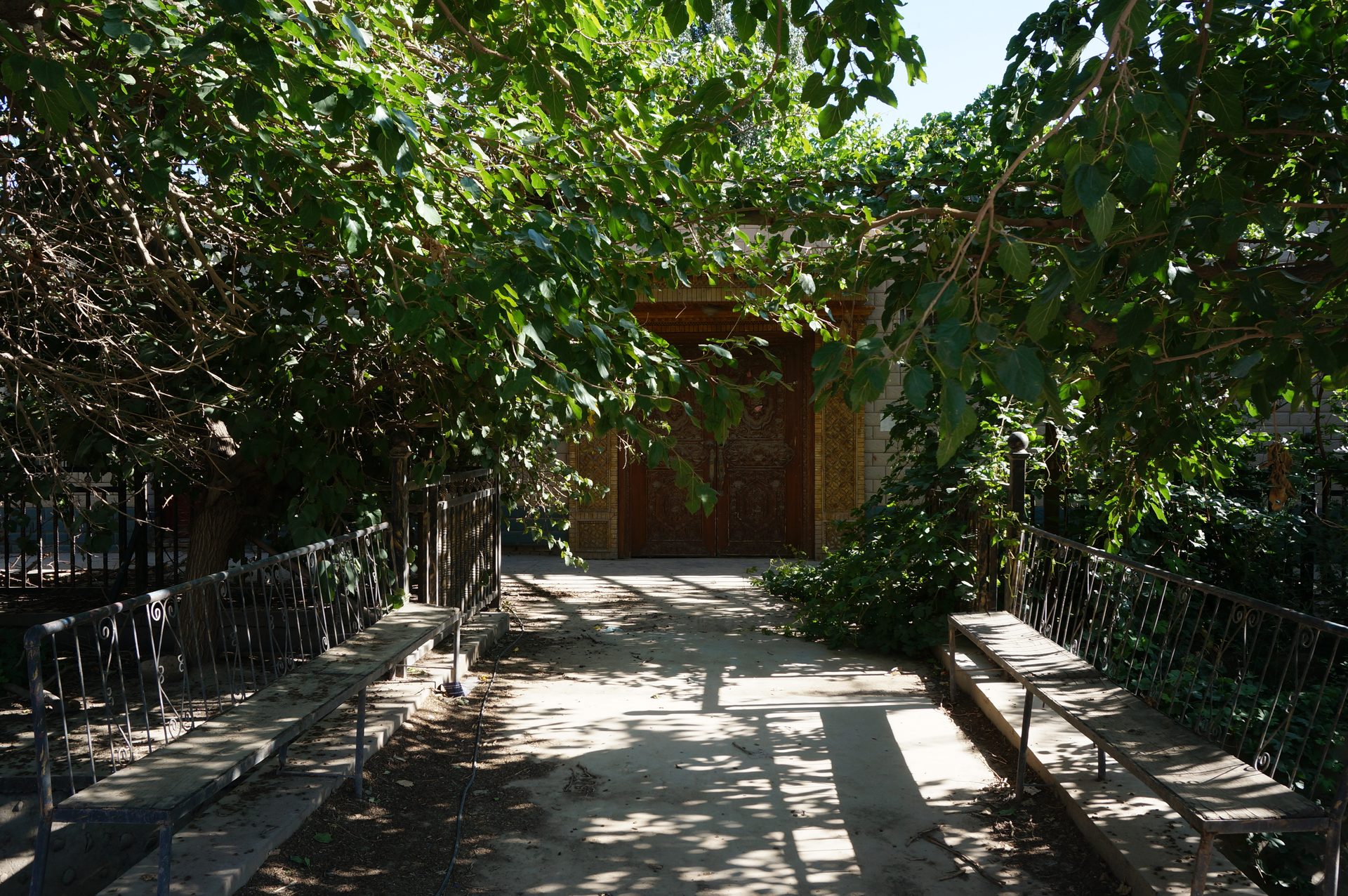
Historic districts around the world face a familiar risk: the buildings remain, but everyday life moves out. Streets become tidier, signs become more uniform, residents become fewer, and the neighbourhood is alive mainly during opening hours.
Kuqa offers another possibility worth watching. Some restored houses now hold guesthouses, photo studios, instrument shops, tea and coffee rooms, bakeries and craft stores. Behind other doors, families still sit in their courtyards. Tourism is changing the old city — inevitably — but the important question is not how many businesses arrive. It is whether ordinary life remains.
Look for the Join Between Old and New
The next time you walk through Kuqa old town, slow down a little. There is less to gain from collecting “sights” than from noticing how a working city carries its past.
Look at whether an old door is still used. Look for the point where new timber meets an older beam. Notice how wiring, water pipes and air-conditioning have been fitted around old fabric. Look through an open gate — when invited — and see whether the grapevine, daybed, tea table and kitchen still belong to an ordinary household.
And remember that some of the doors travellers find most beautiful lead into private lives. Do not enter courtyards without permission. Do not turn residents into scenery. Age does not make a house public property.
That restraint can make the city easier to understand. What you are seeing is not only architecture that survived. You are seeing the ongoing negotiation between time and the people who live with it.
THE POINT IS NOT TO FREEZE TIME
If a historic city is reduced to protected shells, we have saved buildings. When people can still live inside them, history remains part of the city.
That may be the most useful thing Kuqa can teach a traveller. Conservation is not the art of stopping time. It is the harder work of letting time move forward without asking an old house to disappear.
Notes & Sources
1. Xinjiang Daily / Aksu News: “库车老屋,旧里修出新光阴” (Old Houses in Kuqa, New Life in Old Walls), 4 Sep 2026. Source
2. Public guidance on the National Cultural Heritage Administration’s Trial Guidelines for Repair Approval of Ungraded Residential Heritage Buildings, Aug 2026. Source
3. Department of Housing and Urban-Rural Development of Xinjiang: Qiuci Alley, Sakesake Historic District, Kuqa, May 2026. Source
4. Social Work Department of the CPC Central Committee: community governance case from Qiuci Alley, Kuqa, 2025. Source