
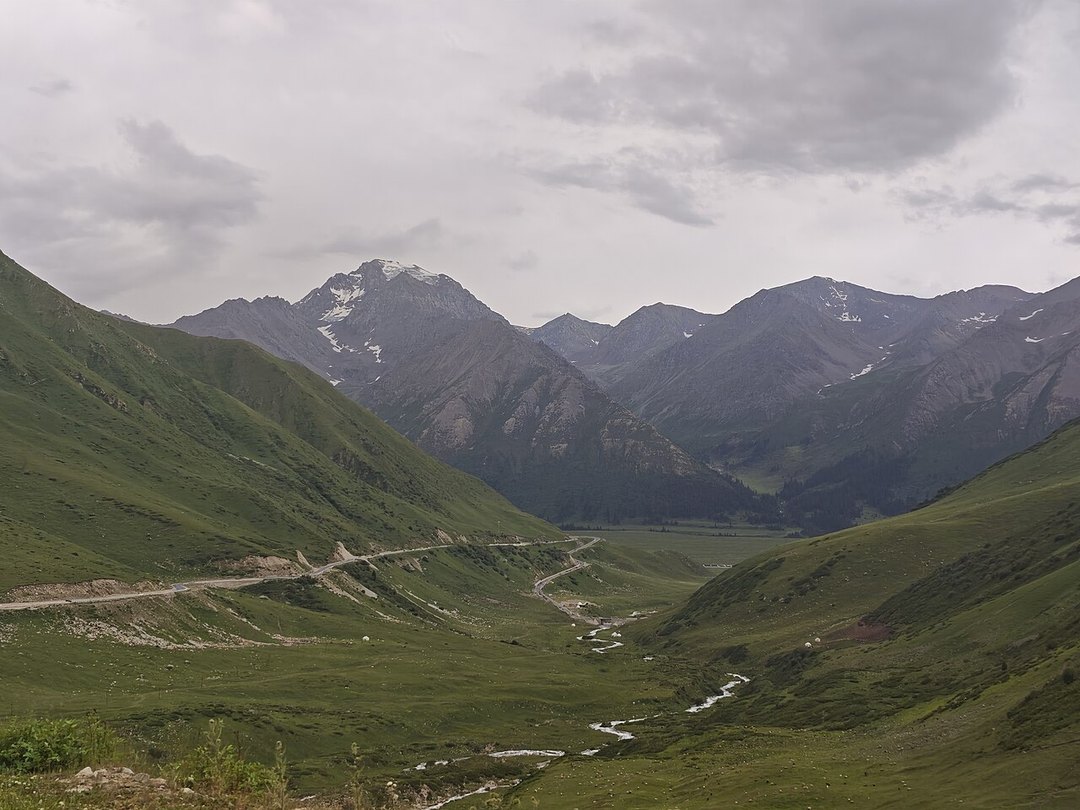
Sometimes on the road what you cross is distance; sometimes it is a season. The calendar says August, but your body experiences multiple seasons across Xinjiang.
The same August calendar moves at completely different speeds between Altay, the Ili Valley, the Tianshan and Turpan.
The Calendar Is Less Useful Than the Road
We like seasons to be orderly. June is summer. September is autumn. December belongs to winter.
Xinjiang keeps undoing that arrangement.
The distances are too large, and the land changes too much. A journey from the Altai Mountains towards the Tianshan and on into the great basins is not simply a move from one city to another. You are crossing altitude, valleys, grasslands, forests, dry country and mountain passes. A weather forecast belongs to a point on a map; travel is what happens between those points.
That is one of the quieter surprises of travelling here. A jacket that feels necessary on one side of a pass can feel absurd on the other. A few hours of driving may change not only the view, but the temperature, the air and the way the day feels.
Sometimes the weather has not changed at all. You have changed geography.
Autumn Arrives Before the Leaves Turn
When people picture autumn in northern Xinjiang, they tend to imagine the finished version: golden birches, yellow hillsides, perhaps fresh snow on the mountains.
But stay long enough and the first change is often much less dramatic.
It begins with light. The sun sits a little lower. Shadows stretch farther across the ground. A riverbank feels cooler than it did a few weeks earlier. The grass is still green, but it has lost some of its midsummer weight.
In places such as Hemu, autumn does not need to announce itself with colour. At first it can be something practical: a jacket left in the car again, a window closed earlier at night, the sudden chill that becomes obvious the moment the sun disappears.
By the time the birches turn gold, the season has already been there for a while.
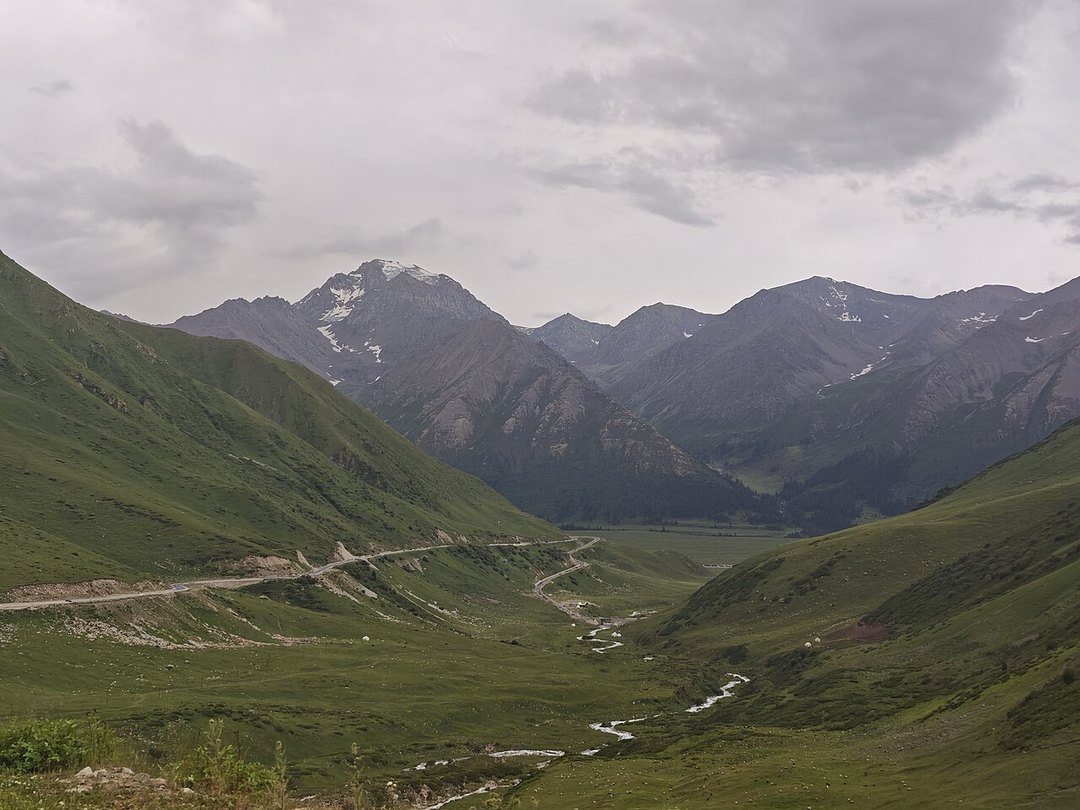
Hemu River, Altay · July 2026
When autumn settles in, colour finally catches up with the season
The Mountains Keep Their Own Time
To read the seasons of Xinjiang, it helps to look at the mountains.
The Altai rise in the north. The Tianshan run across the middle of the region. Farther south and west, high ranges close around vast basins and plateaux. They shape where water goes, how wind moves and how quickly temperatures can change over relatively short distances.
High ground and low ground keep different clocks. So do a mountain pass and a river valley, a shaded slope and an open grassland. Follow one road through enough of them and the season seems to rise and fall with the road itself.
That is why “What should I wear today?” is not always a simple question in Xinjiang. The answer may depend less on the date than on which mountain you plan to cross.
Ili Lets Summer Go Slowly
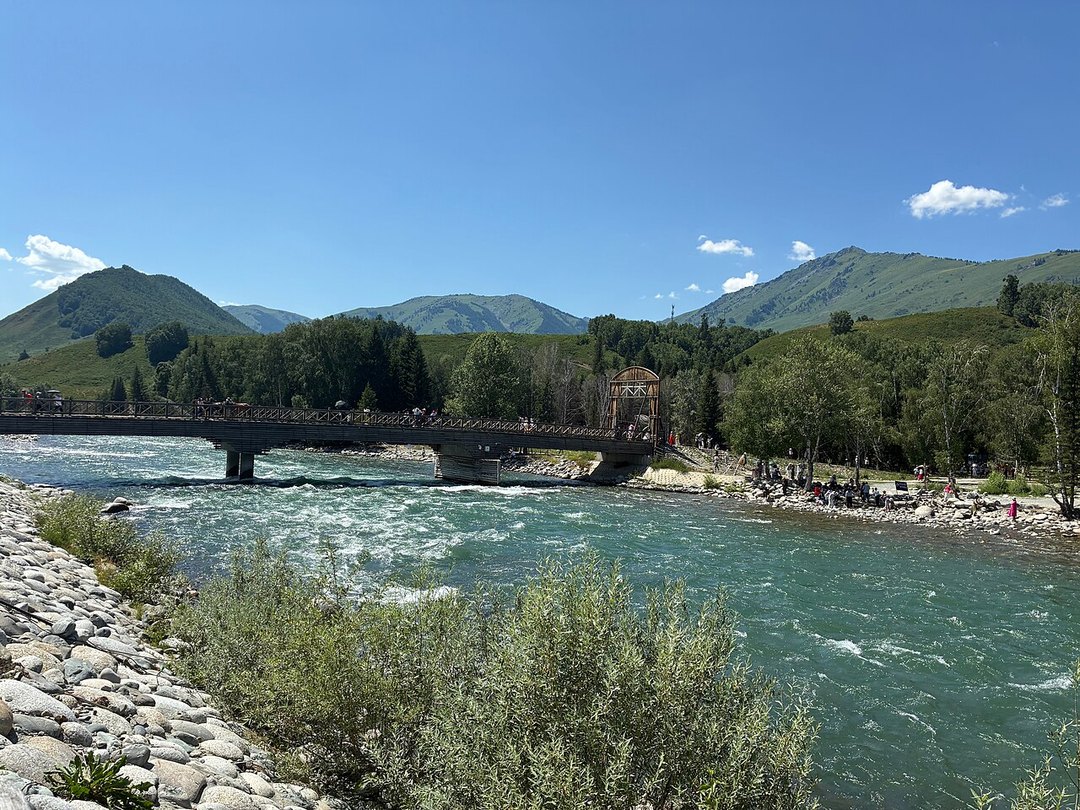
The Ili Valley has another rhythm altogether.
Water softens the landscape here. Forested slopes, open pasture and river country sit close together, and summer rarely leaves with a single dramatic gesture. It recedes.
The first signs are modest: lower light, longer shadows, colder mornings. Meadows move from one emphatic green into a wider range of tones.
Spend enough time travelling and you stop believing that a place exists only at its most photogenic. Ili in the full green of July is one version of the valley. Ili in late August, with thinner light and the first sense of the season turning, is another. Later still, when leaves fall and the grass fades, the shape of the land becomes easier to see.
The season is not simply changing the colour of the scenery. It is revealing a different landscape.
Mountains and pasture near Nalati, Ili · July 2026
Turpan Keeps the Heat
Then there is Turpan.
While northern Xinjiang is beginning to talk about autumn, the basin can still feel firmly attached to summer. Bare hills hold the heat. The light is hard and direct. The air has very little softness in it.
Under the grape trellises, however, the world changes. Leaves make shade overhead and fruit hangs beneath them. The contrast between oasis and dry mountain country is immediate.
To describe Turpan simply as hot is to miss the more interesting part of the story. What matters is how life has learned to make room for water and shade in a landscape where both are precious. Climate is not scenery here; it has helped shape the way people live.
Grapes beneath a trellis in Turpan · July 2026
So When Is the Best Time to Visit Xinjiang?
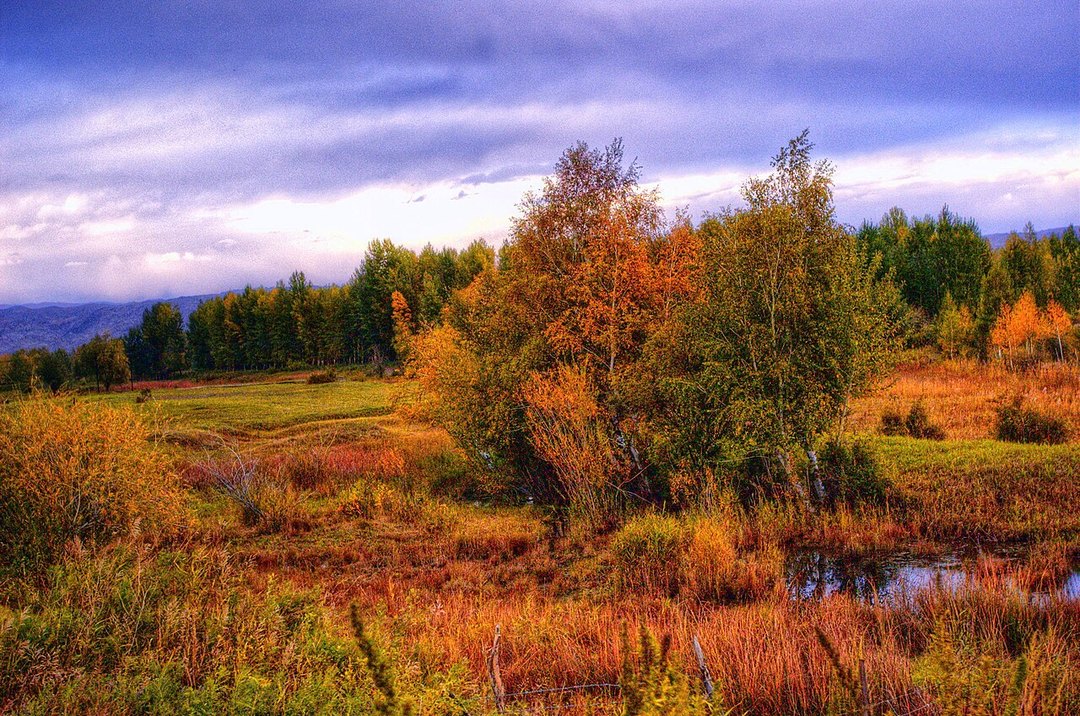
It is one of the questions travellers ask most often.
It is also a question Xinjiang does not answer very neatly.
If you want northern forests just beginning to turn, that is one journey. If you prefer an Ili Valley that is still green but already quieter than midsummer, that is another. If you want to walk beneath grape trellises while Turpan is still holding on to the heat, you will meet a different Xinjiang again.
None of them is the definitive version.
A better question may be: what kind of Xinjiang do you want to meet?
By the end of August, several seasons can exist here at once.
In the north, mornings begin making room for autumn. The high country feels the cold first. Ili still holds large stretches of green. Farther into the basins, summer has not yet decided to leave.
Xinjiang's scale, then, is not measured only in kilometres.
Sometimes, on the road, what you cross is distance. Sometimes, it is a season.
We travel in Xinjiang not simply to arrive at places, but to understand the landscape, the seasons and the lives that give those places meaning.
IMAGE CREDITS & LICENCES