
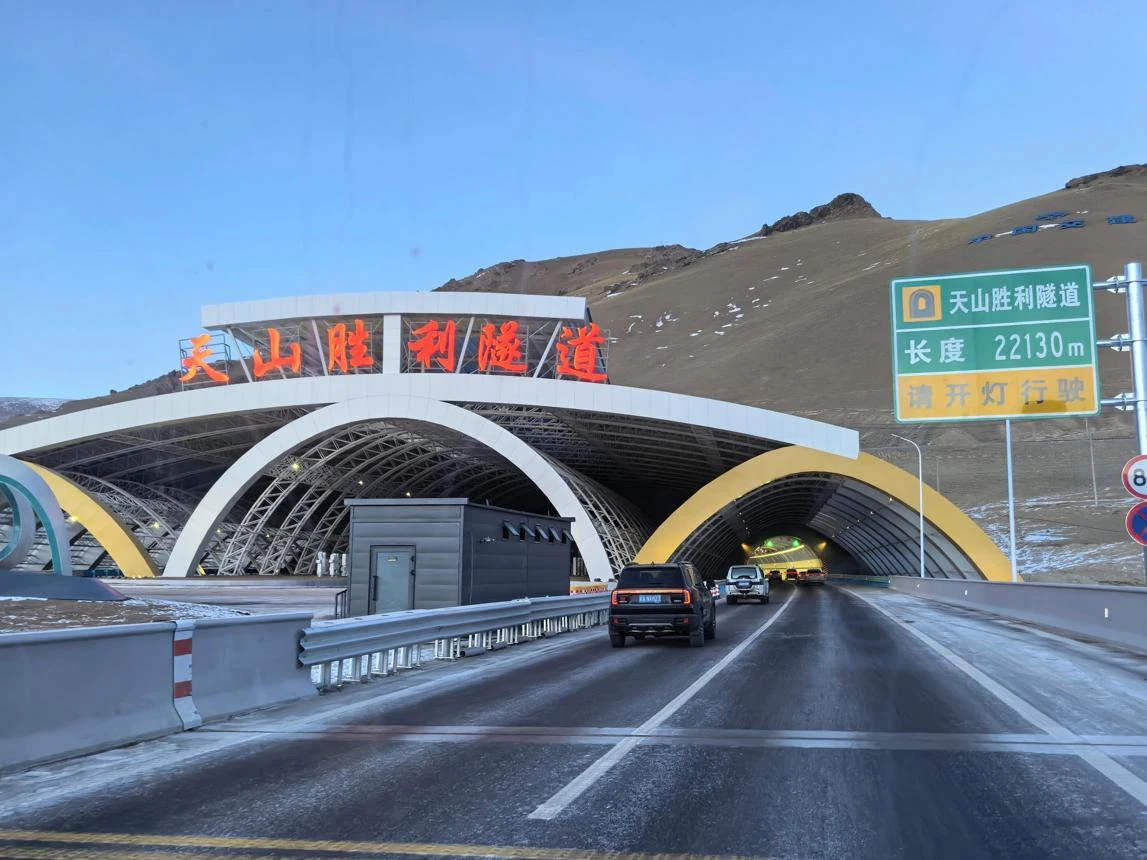
The Tianshan Shengli Tunnel corridor spans about 22.1 km between the Urumqi and Korla directions with year-round operations. Roughly twenty minutes inside the mountain replaces what was once a full day crossing the Tianshan range.
The road runs south with the Tianshan stretched across the horizon.
The range is long, and snow can linger high above. Seen from a distance, it is hard to believe that the journey ahead no longer requires you to climb over these mountains.
The road draws closer.
The tunnel entrance appears in the rock as a dark opening. Then lane markings, lights and signs come into focus. The amount of sky in the windscreen shrinks as the mountain fills the view.
Then the car goes in.
Within seconds, the sky is gone.
So is the mountain.
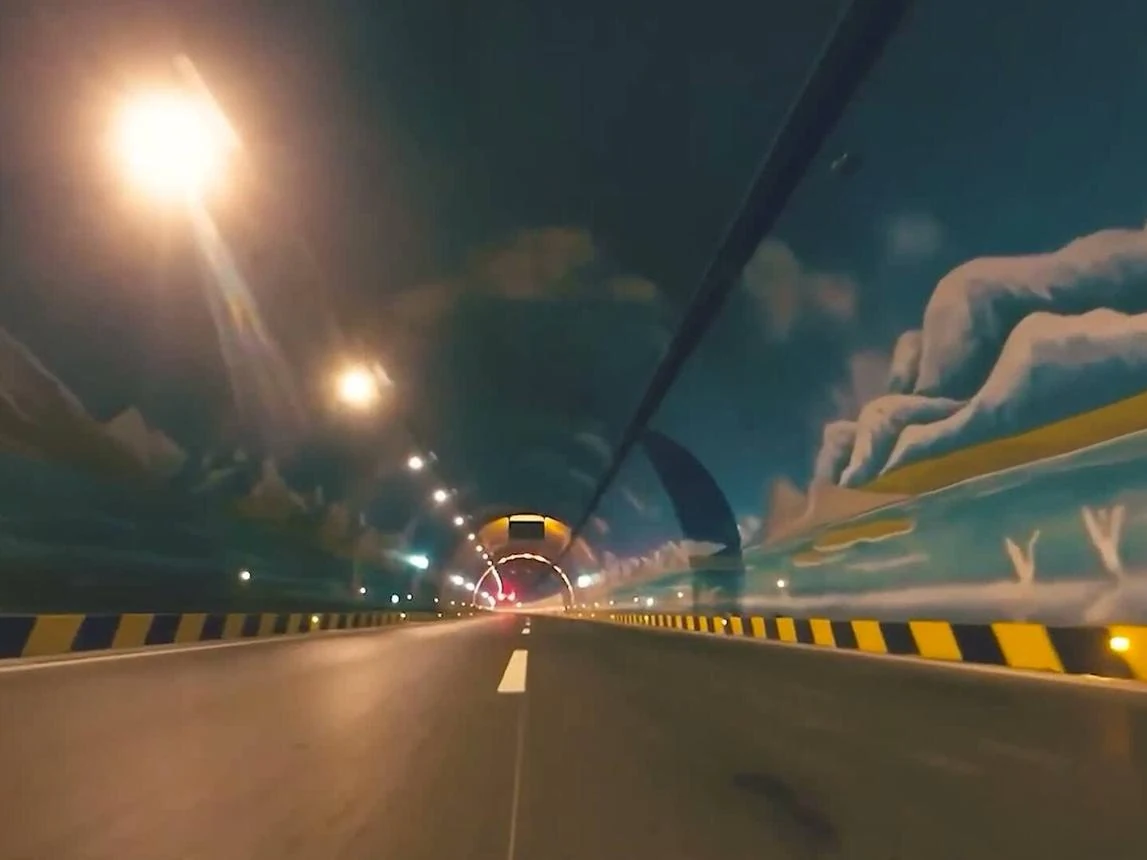
All that remains ahead is light, concrete, lane markings and the red glow of the car in front.
And yet, this is the moment you are travelling through the Tianshan.
Inside the Mountain, There Is Almost Nothing to See
A long tunnel changes the way distance feels.
Above ground, distance usually comes with reference points. A ridge moves closer. A river falls behind. A settlement disappears in the mirror. The colour of the sky changes. Inside the Tianshan Shengli Tunnel, most of those clues vanish.
The view becomes repetitive. Lights pass in sequence. The walls continue. The numbers on the navigation screen fall slowly. After several minutes, what you see does not look very different from what you saw near the entrance.
That makes 22.13 kilometres a strange kind of distance. It is not short, but the outside world no longer helps you judge how far you have travelled.
So you begin to notice time.
Five minutes. Ten. Fifteen. The exit still has not appeared.
This may be one of the most modern ways to cross a mountain: not by seeing more of it, but by seeing almost none of it for a while.
The Calmer the Journey Feels, the More Work Sits Behind It
For a driver, the best tunnel experience is simple.
The road surface is smooth. The lighting is steady. The air feels controlled. The car keeps moving. Nothing especially dramatic happens.
But making that sense of normality possible inside a mountain requires a great deal to happen out of sight.
The Tianshan Shengli Tunnel is 22.13 kilometres long. Its overall system includes two main traffic tunnels and a central service tunnel, together with vertical shafts and supporting infrastructure for construction, ventilation and operation. The route also passes through difficult high-altitude terrain and complex geological conditions.
Most travellers will not notice any of that.
They do not need to.
That is what makes modern infrastructure interesting. The more complete it becomes, the more ordinary the experience can feel.
The mountain is still there. You simply no longer need to feel its resistance at every moment.
The more complete the engineering becomes, the more ordinary the journey can feel.
The car keeps moving. The mountain disappears for a while.
The Exit Begins as a Point of Light
The most memorable part of a long tunnel is often not the entrance.
It is the exit.
At first, it is only a small patch of brightness far ahead. It does not look like the tunnel lighting. It is irregular, softer, unmistakably natural.
The car keeps moving. The bright patch grows. The walls continue to pass, but your eyes are already fixed beyond them.
Then the light intensifies.
The last stretch goes by.
The car leaves the mountain.
The sky returns all at once.
Slopes, road and open land reappear through the windscreen. For a moment, your eyes have to readjust.
And in roughly twenty minutes, something substantial has already happened: you have moved from one side of the Tianshan to the other.
No mountain pass. No long sequence of switchbacks. No gradual visual record of crossing the range.
You simply drive through darkness for a while, and when you emerge, the journey has shifted to the other side of the mountain.
What Has Really Been Shortened Is Time
The Tianshan Shengli Tunnel is part of the G0711 Urumqi–Yuli Expressway, which reduces the core Tianshan crossing to around twenty minutes and significantly shortens road travel between Urumqi and Korla.
The mountain has not moved.
The cities have not moved either.
What has been recalculated is time.
A first-time traveller may remember the figure of 22.13 kilometres, or notice the exact moment the car enters and the exact moment daylight returns.
Someone who uses the route regularly may eventually do little more than glance at the navigation screen.
Enter. Drive. Emerge. Keep going.
Large infrastructure becomes part of ordinary life when it stops demanding attention.
Its real effect is not a single dramatic experience. It is leaving later, arriving earlier, being able to travel farther in a day, and discovering that a distance once treated as a major obstacle can be planned differently.
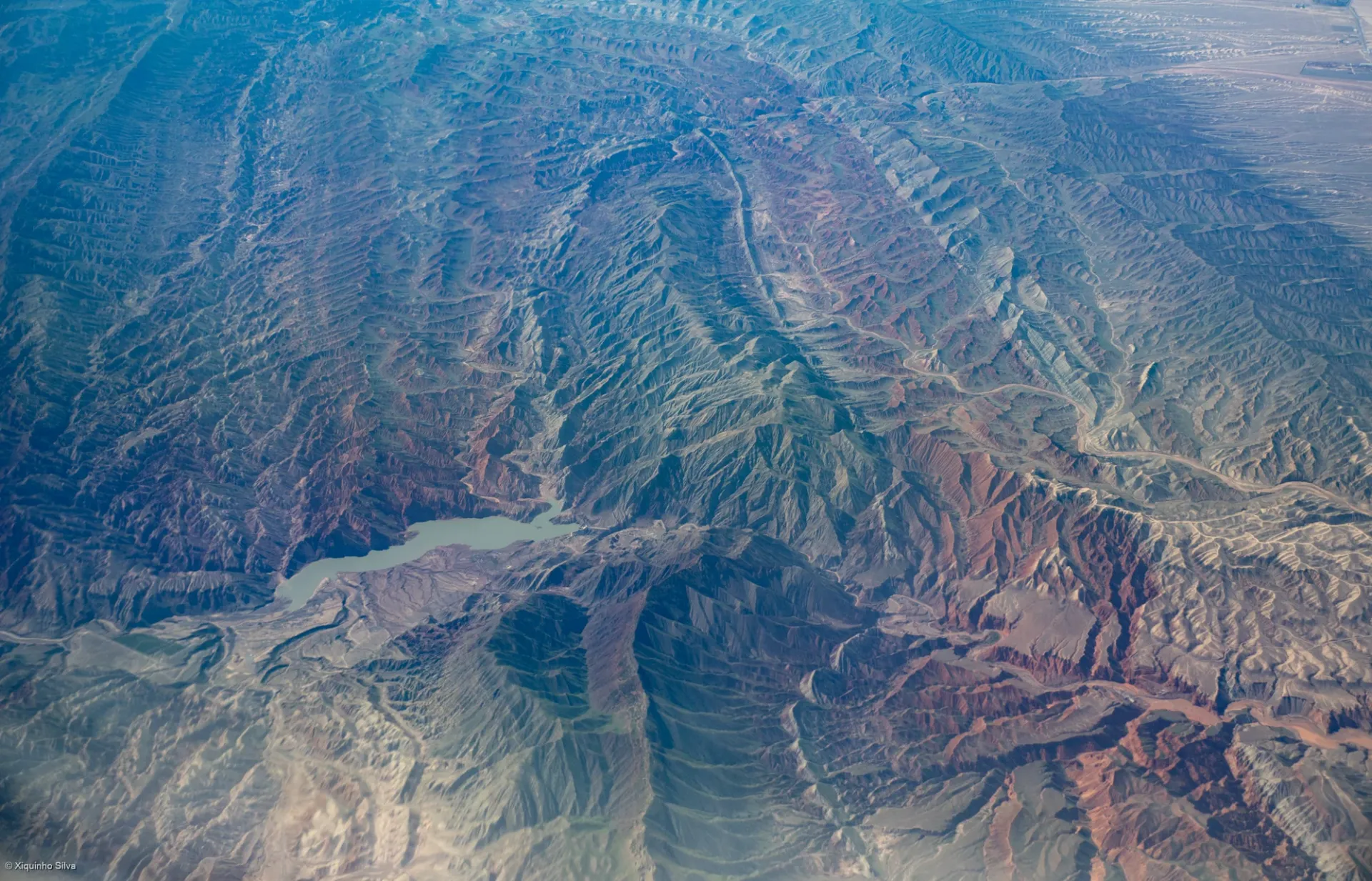
When the car emerges, the Tianshan is still there. The range has not become lower or shorter.
The 22.13 kilometres have simply created a new path through it.
What changes is the traveller's sense of distance.
Distance is not only kilometres.
Distance is also time.
The mountain has not become lower or shorter.What has been recalculated is time.