
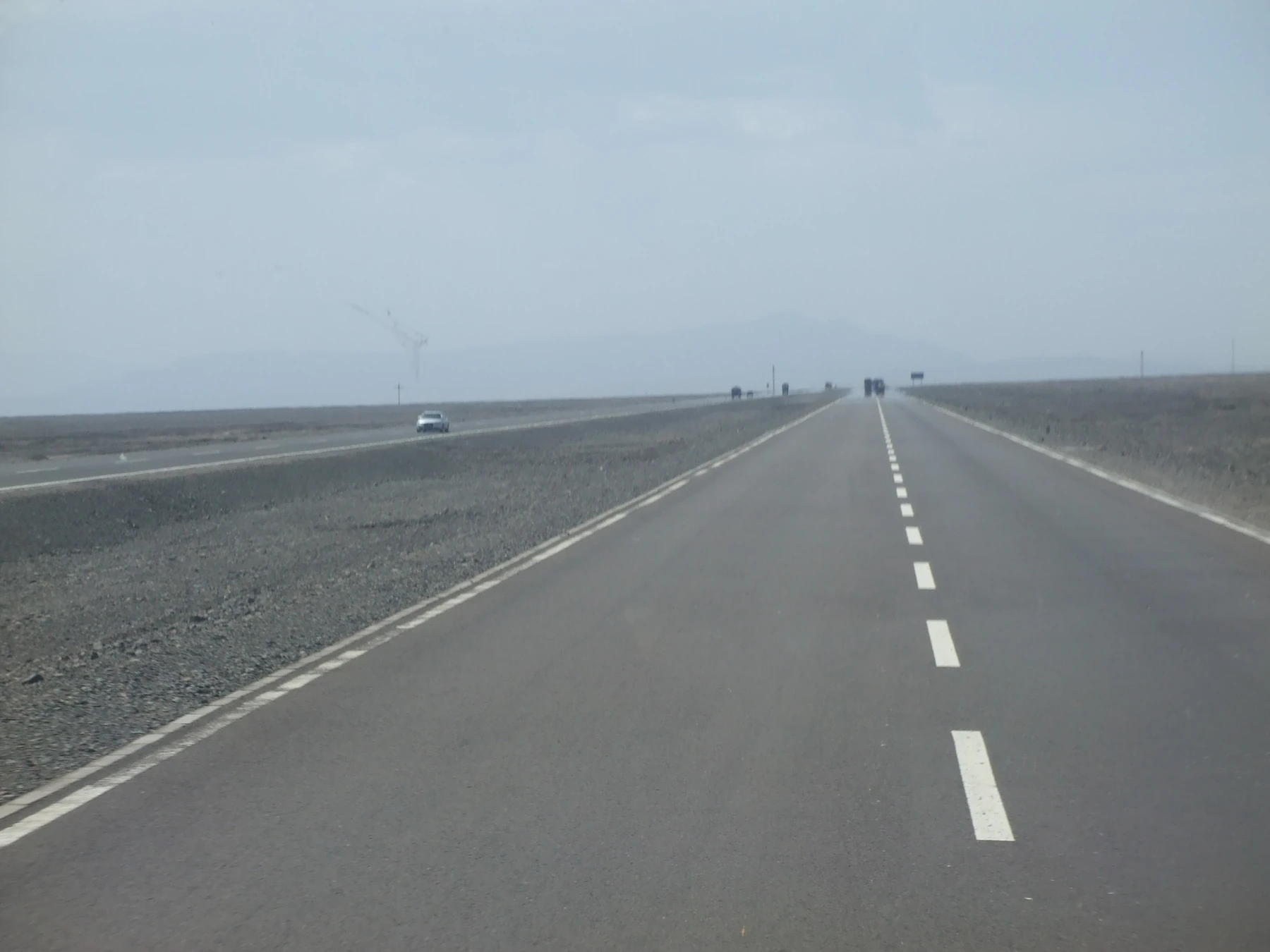
The S21 Altay–Urumqi Expressway crosses about 342.5 km through the Gurbantünggüt Desert with year-round operations. It turns what was once a multi-day northbound journey into roughly a three-and-a-half-hour drive.
When you leave Urumqi in the morning, the city has not yet fully fallen away.
The navigation screen says: Altay.
The name sits far to the north on the map.
For a long time, ‘going to Altay’ naturally suggested distance first — not somewhere you simply drove to in an afternoon, but a journey that had to be planned as a serious stretch of travel.
S21 changes precisely that expectation.
The city is still visible in the rear-view mirror, yet the remaining time is already falling at a steady rate.
A little over three hours later, you can be in northern Xinjiang.
The land has not become smaller.
But ‘far away’ has suddenly become a unit of time that can fit inside the same day.
The land does not get smaller. The waiting gets shorter.
This is a journey-rhythm strip rather than a route map. The formal map system remains deferred until the Roads & Corridors series is complete.
Urumqi Falls Into the Rear-View Mirror Quickly
The beginning of an expressway journey is rarely dramatic.
Slip road. Toll gate. Merge. The speed settles.
The density of Urumqi begins to thin and urban roads give way to more open space.
There are no continuous mountain bends like the Duku Highway, and no narrowing gorge gradually taking over the windscreen as on G314.
From the beginning, S21 is doing something very simple: heading north.
The car settles too.
A cup sits in its holder, a phone is charging, and the navigation screen reduces the journey to two immediate numbers: distance left and time remaining.
The expressway is 342.5 kilometres long. That is not a small number.
Yet on a straight road at a steady speed, it feels very different from the same distance on an ordinary long-distance highway.
The kilometres are still there.
They are simply disappearing faster.
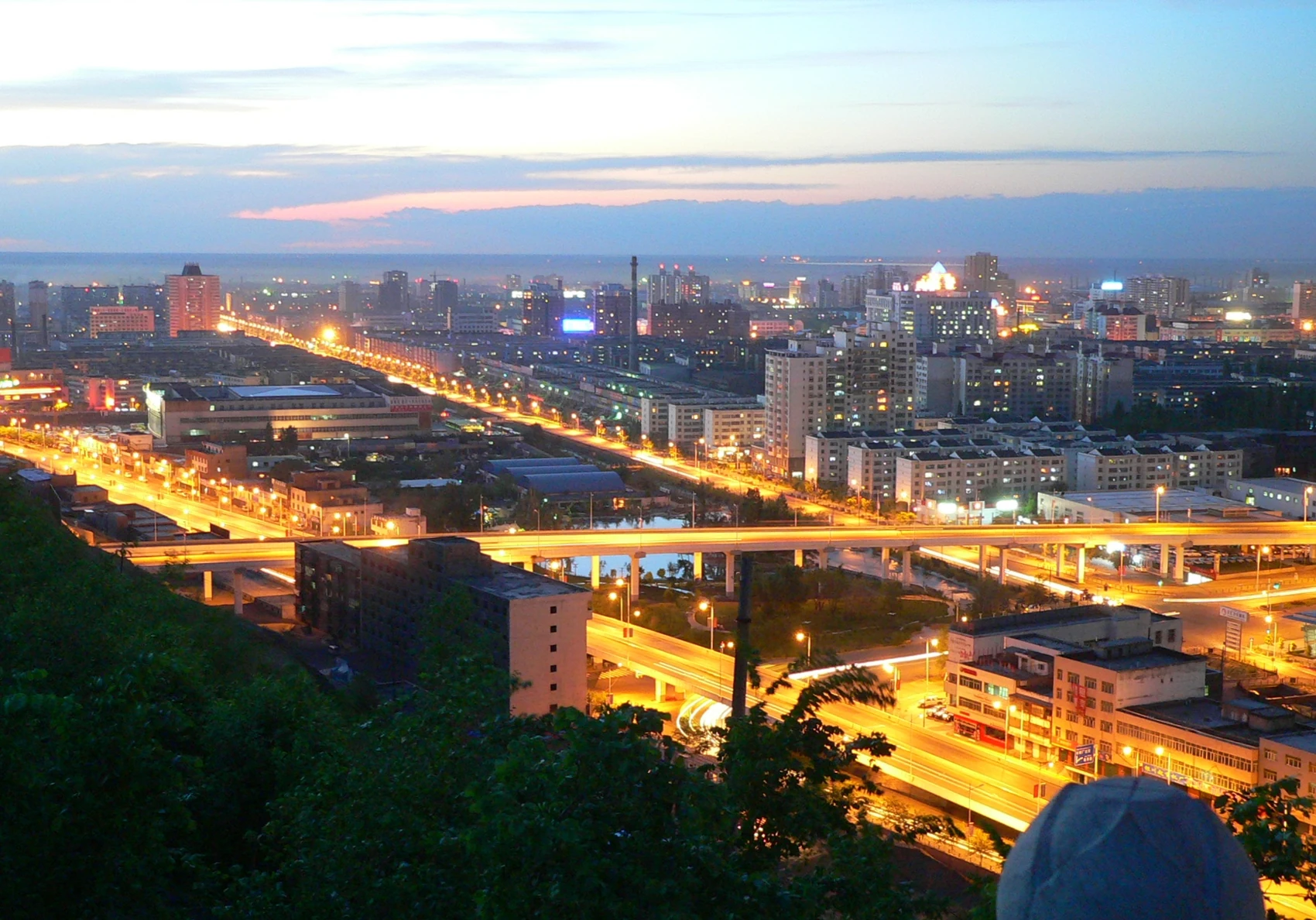
The Desert Has Not Shrunk. It Just Moves Backwards Faster.
Once the road is inside the Junggar Basin, the view becomes simpler.
The horizon stretches out.
The road points ahead.
Vegetation stays low, and large areas of gravel plain and desert take over the window.
S21 runs through the interior of the Junggar Basin and across the Gurbantunggut Desert. For a first-time traveller, the most interesting thing is not merely that there is desert outside.
It is watching such a large space being pushed steadily backwards at expressway speed.
This feels very different from crossing the Taklamakan.
There, repeated scenery can make time feel longer.
On S21, the repetition also lasts, but the road has a faster rhythm.
Barriers, signs, kilometre markers and service-area notices appear through the windscreen and fall behind almost immediately.
The landscape tells you: this land is enormous.
The speed keeps telling you: the next place is getting closer.
Both sensations exist at the same time.
What Really Gets Compressed Is the Waiting
An expressway is easy to describe as simply ‘faster’.
But what the traveller often feels most strongly is not speed itself.
It is the reduction in waiting.
A journey that once demanded more daylight, an earlier departure and a later arrival can now sit inside a much shorter section of the day.
The remaining time on the navigation screen stays within a few hours.
That changes how a day can be organised.
You can wake up in Urumqi.
Before midday, most of the distance can already be behind you.
By afternoon, you can be in Altay.
The structure of a single day has been rearranged.
S21 has not narrowed the Junggar Basin or made the Gurbantunggut Desert smaller.
It has simply returned some of the time that used to be spent ‘getting there’.
So what has really been compressed is not the land.
It is the amount of time people must wait between one place and another.
The land did not become smaller.
The time people must wait between two places did.
A Service Area Makes Speed Physical Again
After enough time on an expressway, it is easy to watch only the remaining time.
Two hours.
Ninety minutes.
Forty-seven minutes.
Then the car turns into a service area.
The door opens and wind comes in.
Someone heads for the toilets. Someone buys water. Someone walks around the car. Someone stands beside a parking space and looks into the distance.
Only then does it become obvious again that those rapidly falling numbers represented a real stretch of land.
S21 has several pairs of service areas along the route. On a map they are functional nodes. In the journey, they behave more like punctuation marks.
The expressway makes distance feel lighter.
Stopping lets the body pick the distance up again.
Drink the water. Get back in.
The navigation resumes its countdown.
The desert starts moving backwards again.
Farther North, the World Gains More Layers
A fast road does not have to mean that there is nothing to see between departure and arrival.
The northern half of S21 gradually proves that.
The desert does not occupy the entire view forever.
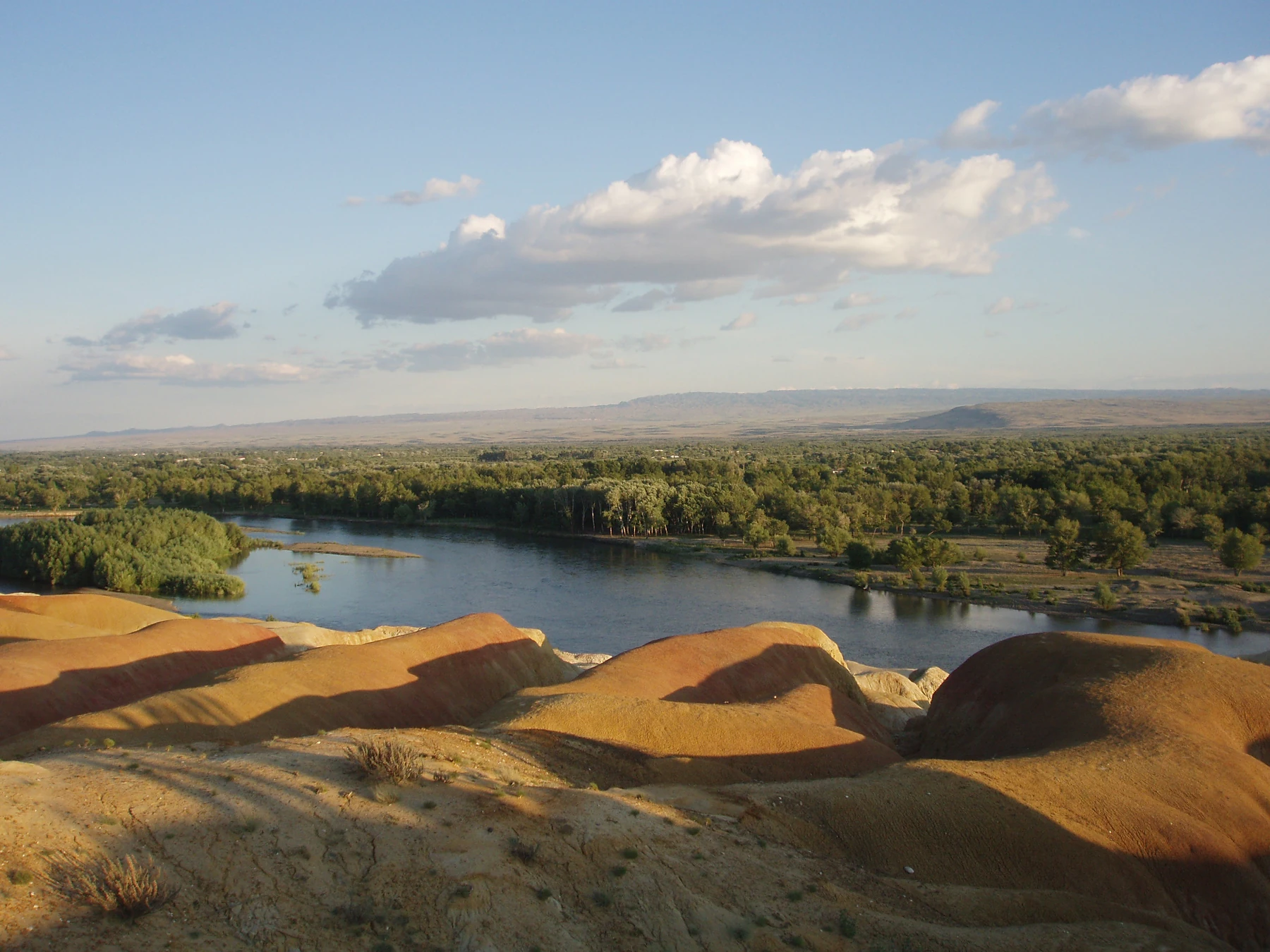
The colour of the ground begins to shift.
Vegetation becomes more present.
Rivers, wetlands, yardang landforms and more varied terrain begin to enter the geography of northern Xinjiang.
Closer to Altay, the mountains in the distance gain more presence.
The changes happen faster than they would on a slower road.
You may not have time to identify every one of them by name.
But the body knows that the world outside the windscreen is no longer the same one you left in Urumqi that morning.
That is one of S21's most interesting qualities.
The expressway has not removed the landscape in between.
It has compressed it into a shorter piece of time.
When You Arrive in the Afternoon, the Map Feels Slightly Strange
After arriving in Altay, looking back at the route can produce a faint sense of unreality.
That morning, you were still in Urumqi.
Between then and now, you crossed the Junggar Basin and travelled through desert, gravel plain and changing northern landscapes.
Now you are standing in Altay.
The distance is still there on the map.
The 342.5 kilometres have not disappeared.
The Junggar Basin is no smaller.
The Gurbantunggut Desert has not moved aside.
What has changed is the way people can use this geography.
A relationship between two places that once suggested ‘long-distance travel’ first can now fit into one morning and one afternoon.
That changes travel products, and it also changes the way travellers begin to understand Xinjiang.
Some roads make you feel distance more strongly.
S21 does the opposite.
Only after arriving do you suddenly realise how much land you have just crossed.
The land did not become smaller.
‘Far away’ simply acquired a new meaning.
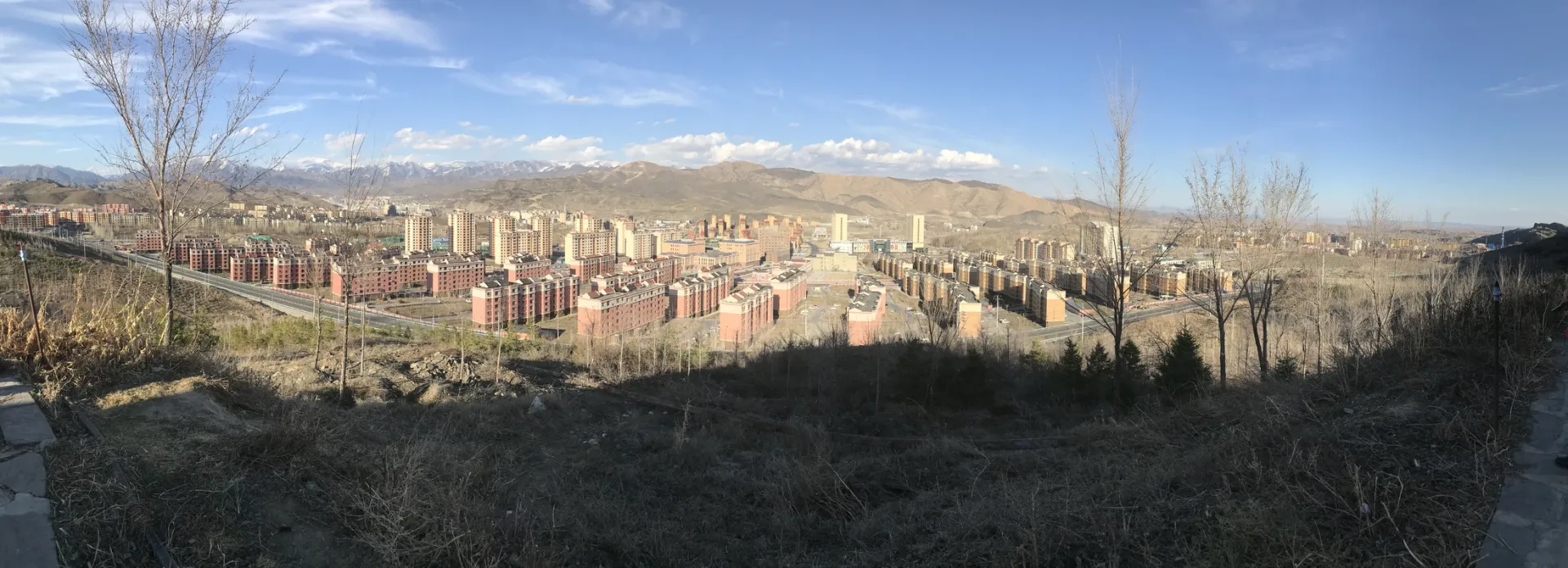
The Junggar Basin has not narrowed, and Altay has not moved closer to Urumqi.“Far away” has simply acquired a new meaning.