
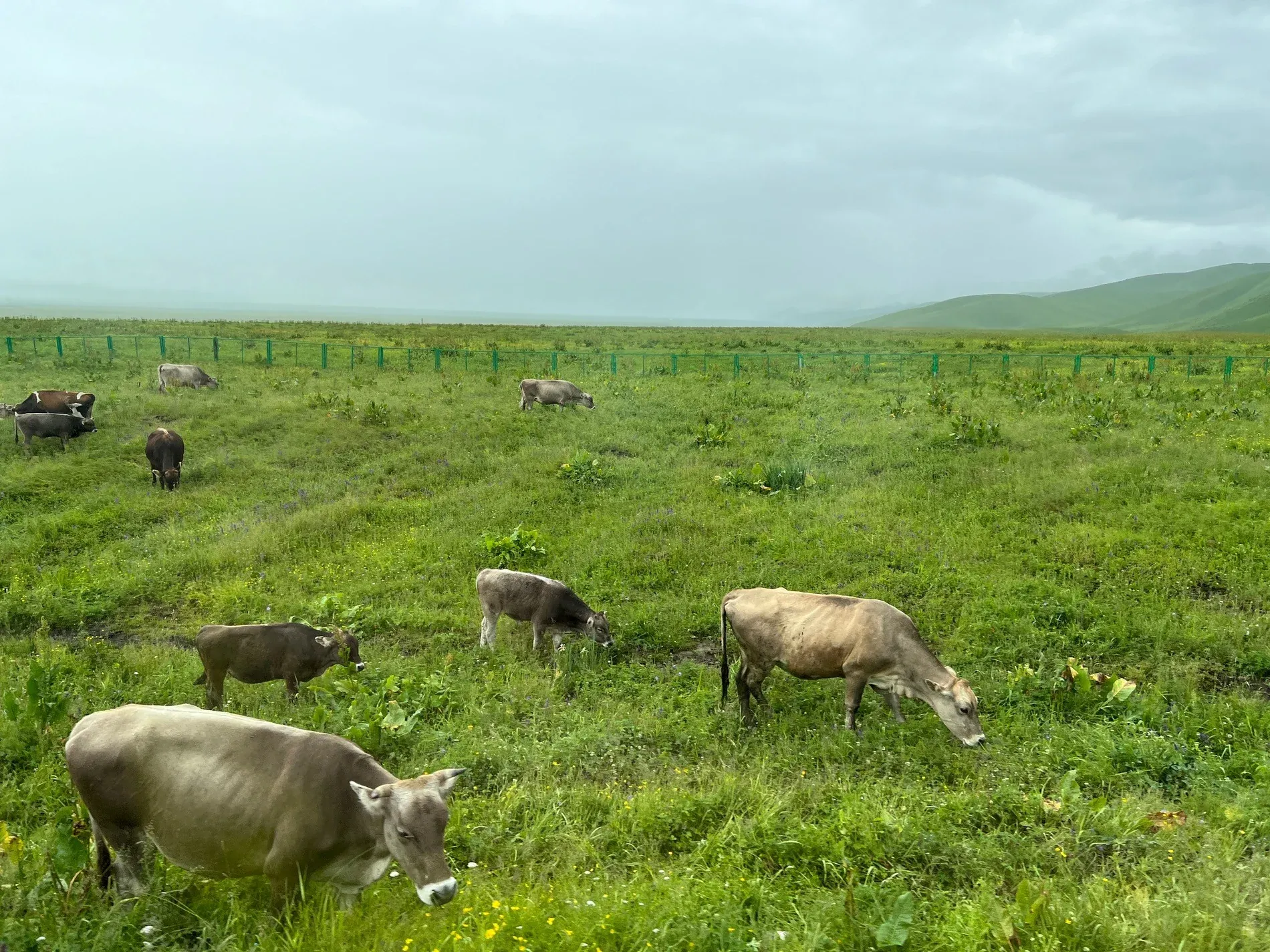
Garden City of Ili River
Yining & Ili Valley
Lush alpine meadows, Kazanchi blue courtyards, and Kazakh pastoral culture.
Yining sits in the Ili River Valley—lush grassland, rivers and Kazakh pastoral culture west of Sayram Lake and the Guozigou pass. It is the garden-city gateway to the Ili grasslands and seasonal roads such as the Yizhao Highway.
On entering the Ili River Valley, the first change is not necessarily the colour outside the window.
It is the traveller’s sense of scale.
Across much of the journey before this point, mountains have meant obstruction, the Gobi has meant distance, and water has been something that must be found. Beyond Sayram Lake, the road turns into Guozigou Valley and begins to descend. Spruce trees appear on the slopes. Water flashes along the valley floor. The land ahead gradually opens.
The green has not appeared from nowhere.
Until now, the mountains have simply kept it out of sight.
It is easy to imagine Ili as an accidental pocket of abundance: broad grasslands, flowing rivers and snow peaks resting quietly in the distance, as though the valley had always been complete in this form.
But the Ili River Valley is not a picture finished by nature alone.
It is a living system formed over a very long time.
The Tekes, Kunes and Kash rivers descend from different parts of the mountain country and feed the upper Ili River system. Snow peaks, forests, pastures, fields, villages and cities unfold along their waters. Deep inside the arid heart of Eurasia, the valley can feel like a humid island.
The mountains held the water.
People then spent centuries deciding how to live with it.
Travel Intelligence · 2026
Last reviewed · August 2026Grassland Is Not Empty Space
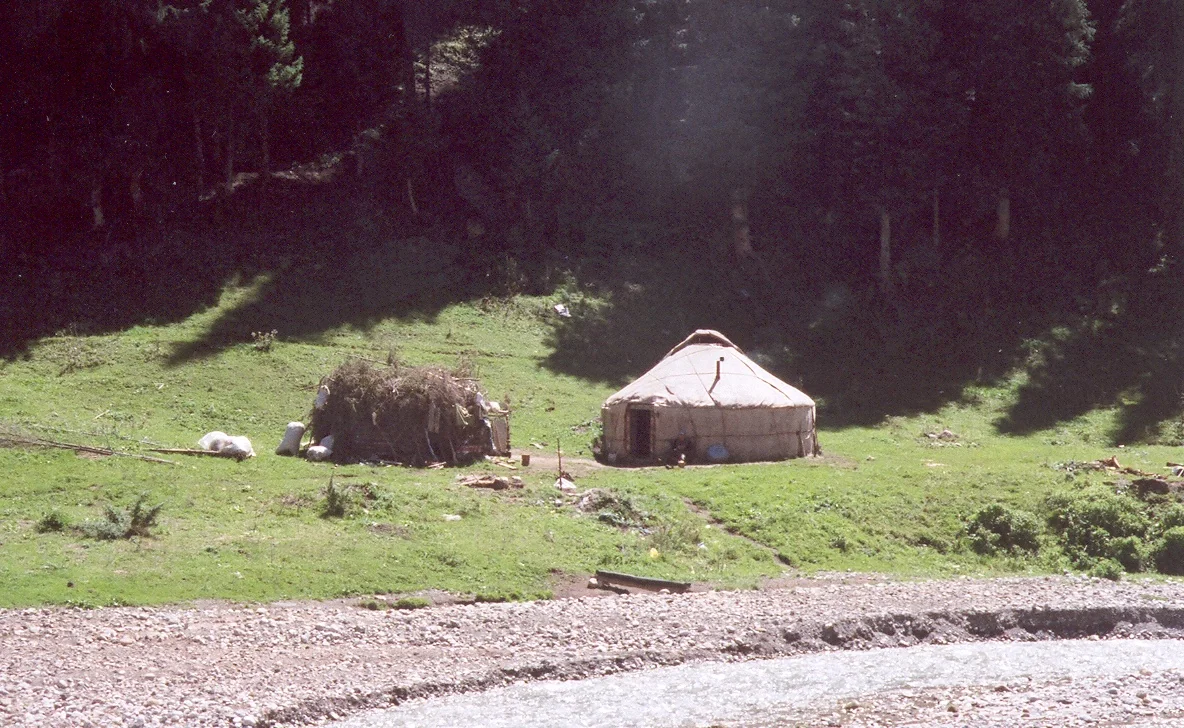
The first wide view across an Ili grassland can create a powerful illusion.
The eye moves over rolling slopes towards the snow line. Roads, houses and people appear small. Horses travel across the middle distance while the wind presses the grass in a single direction.
To the traveller, grassland often suggests freedom.
To those who live from it, grassland first means order.
Which ground is suitable in spring? Which valley offers shelter? Where is water more dependable at a particular time of year? When must livestock move, and how much fodder should be stored before winter? None of these decisions is visible in a photograph, yet they shape the year of a household.
Seasonal movement is not wandering without purpose. It depends on close judgement of terrain, climate, animals and time.
Pasture does not become inexhaustible simply because it looks vast. Rivers do not carry the same volume in every season. An early cold spell, prolonged rain or a change in road conditions may require an entire plan to be revised.
Grassland culture is therefore more than horses, yurts and clothing.
It is a method of reading land.
When a child learns to ride, the lesson is not only how to control speed. It also includes how to read the condition of a horse, how to approach livestock, how to notice weather, and when to stop.
This knowledge is rarely preserved in one complete book. It passes through shared work, family life and the seasons that return year after year.
Real continuity does not mean that a way of life has never changed.
It means that, through change, people still remember how to read the land.
Song Once Carried Memory
Across a large landscape, culture is not always written down first.
It can also be sung.
In the Kazak aytes tradition, akyns accompany themselves on the dombra and perform songs, long narratives and improvised verbal exchanges. A singer must do more than control voice and rhythm. The performance requires memory, observation, quick response and the ability to reshape language in front of an audience.
For a visitor today, the dombra is an immediately recognisable instrument.
For much of its history, however, song did far more than entertain.
Melody supported memory. Long narratives carried people and events. Improvised exchange allowed stories, judgement and public conversation to travel through places where no permanent stage was required.
The grassland did not erase history.
It gave history another way to survive.
Music now appears at festivals, in theatres, restaurants and tourism performances. Amplification changes the reach of a voice; a mobile phone can send a performance far beyond the people gathered around it.
Forms change.
What matters is not that a song should always be performed exactly as it once was.
What matters is that people remain willing to speak about the present through music, and to place new experience inside inherited forms.
Continuity is not repetition.
It is the ability of the past to remain useful in explaining the present.
The Valley Was Never Cut Off from the World
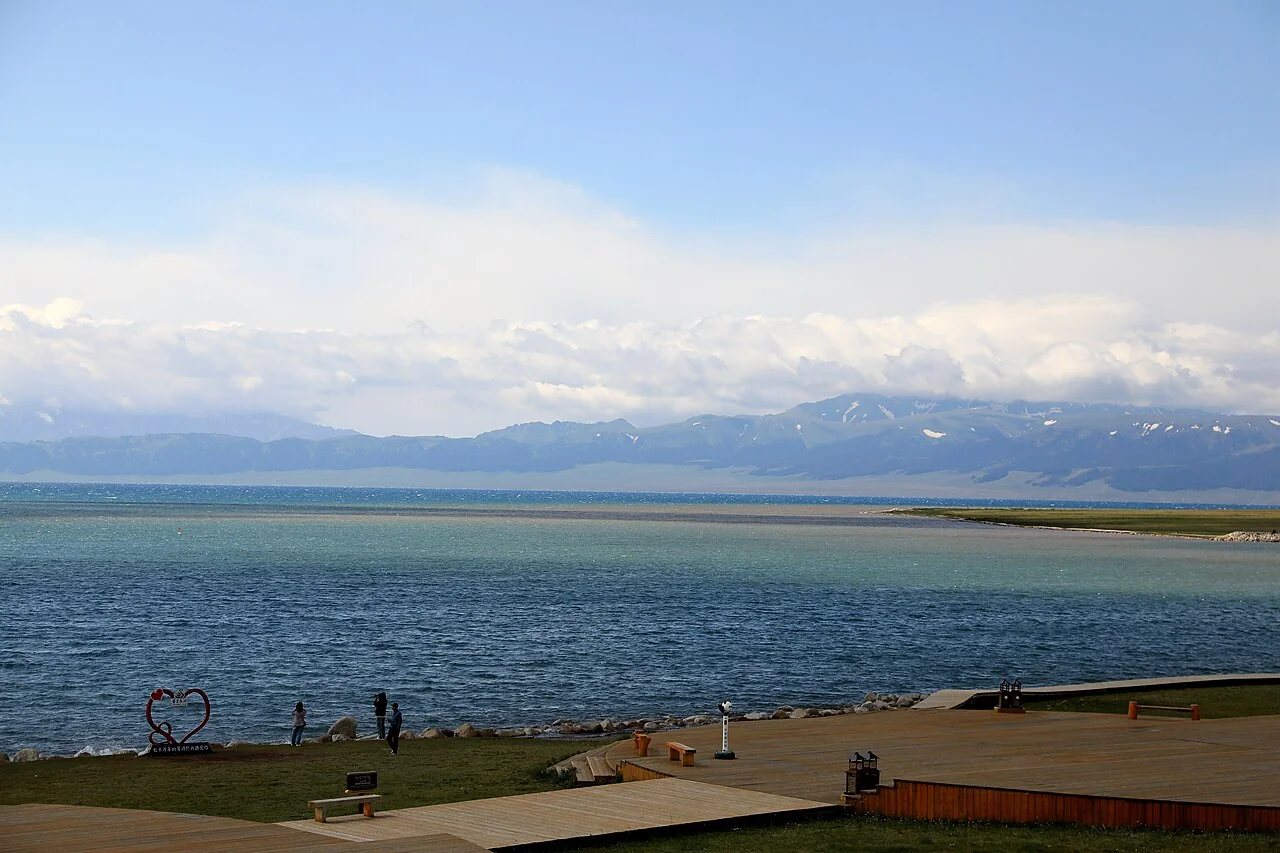
The Tianshan Mountains surround Ili, but the valley has never been sealed away.
Mountain passes restricted movement. They also determined where movement could take place.
Guozigou Valley links the Ili basin with the country east of Sayram Lake. Horgos sends roads towards Central Asia. The Xiata Ancient Trail crosses the high mountains from the Zhaosu side towards southern Xinjiang. Rivers enabled settlement; passes ensured that people continued to arrive.
At different times, pastoralists, farmers, traders, soldiers, craftspeople and migrating families entered by different routes. Some passed through. Some remained. Others needed several generations before the valley became the place they called home.
Travellers often describe Ili as ancient.
Its more revealing historical quality may be movement rather than age.
Crops, foods, instruments, building practices and ways of organising life entered the valley and met knowledge already present here.
Ili culture therefore has no single source.
It resembles the river system itself.
Different currents arrive from different directions, meet over time and continue onwards.
The Valley Opens to the West
The descent from Guozigou Valley into the Ili River plain offers one of the clearest geographical transitions in Xinjiang.
Within the gorge, the road still holds close to the mountain. Beyond the pass, the space broadens. Fields, orchards and aromatic crops around Huocheng appear beside the road. The wild-fruit forests around Daxigou and Fushou Mountain preserve another layer of the mountain environment, while the sandy country near Tukai is a reminder that Ili’s green has not abolished aridity. Water has altered the fate of particular pieces of land.
Farther west lies Huiyuan.
Today it can feel like a quiet town. For a substantial period during the Qing dynasty, however, Huiyuan was an important political, military and commercial centre in Ili. The remains of its walls, former administrative compound and street plan record not only architecture, but a period when the valley was being governed, defended and connected through an organised urban system.
Huiyuan makes one point especially clear: a city is not the opposite of the grassland.
Cities managed routes, trade and waterworks. They drew in merchants, craftspeople and families. Pastures supplied animals and other resources; farms supplied grain; urban markets connected both to wider systems of exchange.
Farther west again is Horgos.
Here the road crosses an international boundary and freight continues into Central Asia. The institutions and scale of the modern port bear little resemblance to an old caravan route, yet the geography is familiar. Ili still opens westward.
The mountains surround the valley.
They have never prevented it from facing the wider world.
The Tekes River Leads towards the High Country
South of Yining, beyond the Ili River, the land rises again.
The Yining–Zhaosu road crosses the mountain country near Baishi Peak before entering the Zhaosu basin. Weather often changes before the scenery does. A snow peak that was clear a few minutes earlier may disappear behind cloud. Every pass still carries the same message: reaching the high country is not merely a matter of driving farther.
The grasslands around Zhaosu feel more open than the Ili River plain.
There are pastures here, but also extensive fields. Horses are the most visible part of the landscape, yet horse culture cannot be reduced to the image of animals running across grass.
Keeping a horse involves breeding, training, fodder, illness and long-term care. The traveller sees speed and strength. The breeder sees temperament, condition and the costs of the next season.
From Zhaosu, the Xiata Ancient Trail follows a river valley deeper into the Tianshan Mountains. Today, hikers come for glaciers, forest and water. Earlier travellers first had to decide whether the pass could be crossed at all.
The pass has not moved.
What has changed is the equipment, speed and purpose of those who cross it.
Following the Tekes River east and north brings Tekes County, Qiongkushitai, Kalajun and the Kuokesu canyon into view. They are often treated as separate destinations: a county town with an unusual radial plan, a village in a mountain valley, rolling grassland and a deeply cut canyon.
Seen from higher ground, they are stages in the same process.
Water leaves the mountains, passes through meadow and pasture, cuts into rock, and eventually reaches land broad enough for villages, fields and towns.
The traveller watches the scenery change.
The river continues one task: carrying mountain water towards places where human life can take root.
The Kunes River Joins Forest and Grassland
The eastern side of the Ili River Valley has a different character.
From Gongliu, the routes towards Chaxi, Tarim and Kuerdening do not lead to three unrelated scenic areas. They pass through a continuous transition from lower river valleys to mountain forest.
Schrenk’s spruce climbs the slopes. Meadows open between woodland. Rivers occupy the lower ground. Kalajun–Kuerdening, one of the components of the UNESCO World Heritage property Xinjiang Tianshan, is significant not because of a single grassland or forest, but because it preserves an unusually complete sequence of mountain ecosystems.
Nature does not divide forest, pasture and farmland into separate worlds.
Altitude, moisture and season bring them into view one after another.
Human life is no more neatly divided. One household may include someone who looks after livestock, someone who runs accommodation in a village, someone who works in a county town and someone who sells produce online.
Pastoral work, farming, tourism and urban employment can all belong to the same family.
Farther east, Xinyuan’s apricot valleys in spring and Nalati in summer receive much of the traveller’s attention.
A short flowering period can make a valley famous for a few days.
The grower lives through the entire year: pruning, cold weather, fruit set, harvest and sale continue long after the visitors have gone.
Nalati brings grassland, roads and tourism together on a larger scale. Riding, music and festivals enter the itinerary; pastoral imagery is arranged in forms that are easier to see and purchase.
Display is not automatically false.
It is part of contemporary economic life.
The greater risk is that the traveller sees only the performance and forgets the households, production, roads and seasons beyond it.
The Kash River Keeps a Quieter Side of the Valley
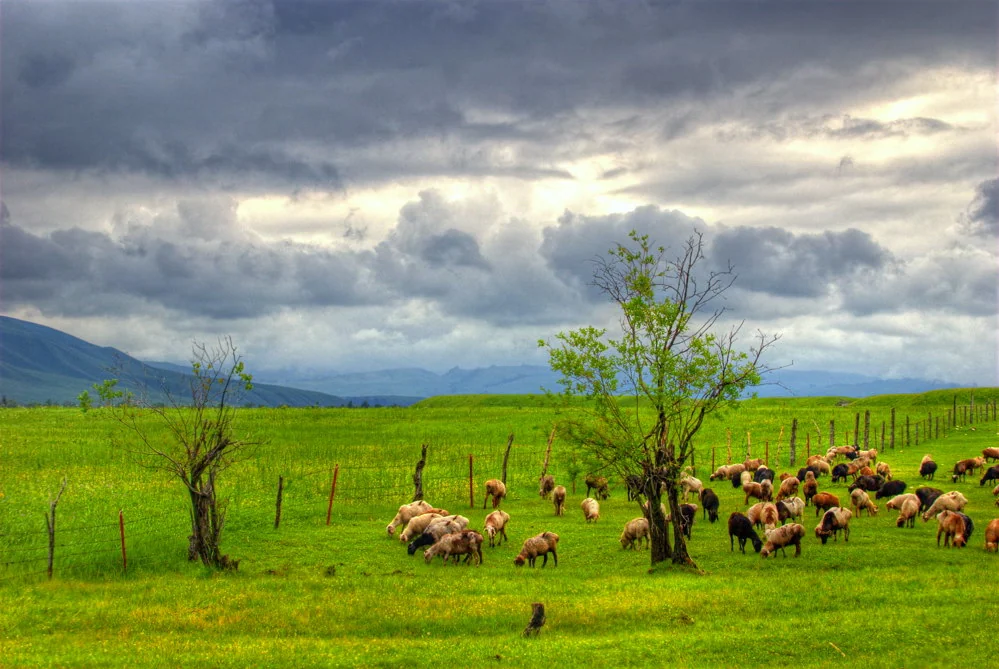
On the northern side of the Ili River Valley, the Kash River enters the plain from the direction of Nilka.
Tangbula, Mengket and the pastures and villages distributed along the river do not have the same concentrated tourism industry as Nalati. The road follows the valley while water, spruce and grassland repeatedly exchange places.
This country does not need to be called a hidden paradise.
The value of a place should not depend on other people having failed to hear of it.
What matters along the Kash River is how clearly the valley continues to function outside the large scenic areas.
Vehicles carry fodder, tools and household supplies. Family members move between pasture, village and county town. Roads and communications have entered grassland life, but the seasons still determine when many tasks begin and when they must end.
The traveller sees sheep crossing open ground and may think of freedom.
The household must also consider weather, animal health, education, income, division of work and the pasture available for the next season.
Modern tools have not automatically erased tradition.
At times, vehicles, communications and more reliable public services are precisely what allow a way of life to continue.
The true opposite of tradition is not modernity.
It is the loss of the ability to adapt.
All Roads Return to Yining
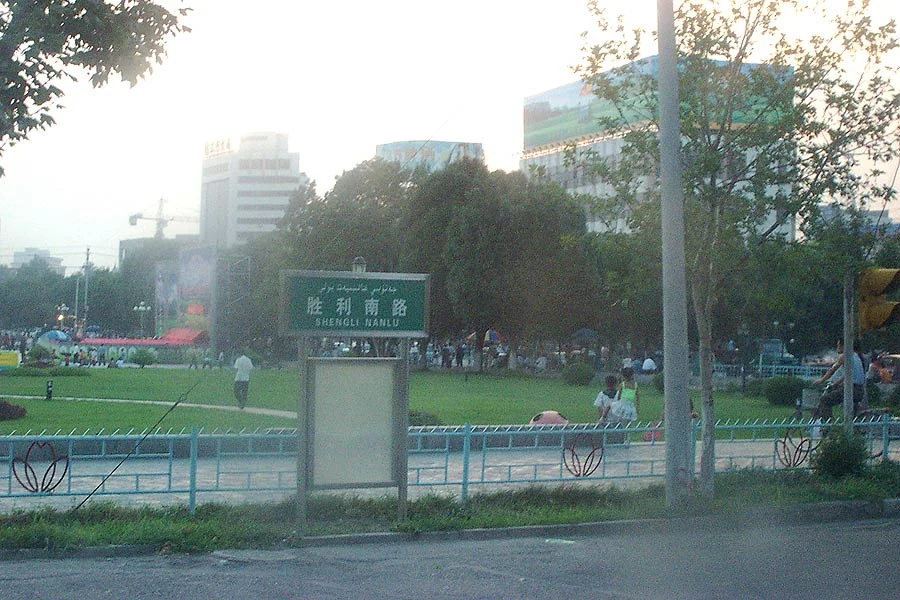
After travelling through the mountain country, returning to Yining changes the way the city appears.
At first it may have been little more than an airport, a hotel and the starting point for the grasslands.
Now its central place in the valley becomes easier to understand.
Horses from Zhaosu, aromatic crops from Huocheng, fruit from Xinyuan, and dairy and livestock products from the pastoral country move towards the city. People from surrounding counties, villages and pastures come to study, receive medical care, work and trade.
Yining is not where the grassland ends.
It is a city formed where pasture, farmland, roads and modern life meet.
Liuxing Street and the Kazanqi neighbourhood make some of these layers visible. Houses, food, music, languages and family histories have shared adjoining streets over long periods.
A visitor may understand cultural diversity as the coexistence of several costumes, dishes and performances.
Everyday coexistence is usually less theatrical.
It happens between neighbours, in schools, across market counters and through the repeated use of the same streets by different families.
The most important culture of a city is not always what it can display.
It is whether different people can form dependable everyday relationships within it.
A Thousand Years of Continuity Never Form a Straight Line
Speaking of Ili’s long cultural inheritance can produce a misleading picture.
It can suggest that present-day life has arrived unchanged from one moment in antiquity.
The real history is far more complicated.
People moved in and out. Routes prospered and declined. Cities and trading centres shifted. Pastoral life adopted new vehicles, music entered new stages, family careers moved beyond farming and livestock, and tourism reshaped villages and urban neighbourhoods.
Ili has not lost its culture because it has changed.
Its culture was formed through change.
Continuity does not require the rejection of new life.
It means that within new circumstances people can still recognise where water comes from, understand why season matters, remember what a song once carried, and know how roads brought different communities into the same valley.
The past has not remained inside museums.
It lives in place names, melodies, household knowledge and judgements about land.
It also enters the decision of a young person: whether to leave the valley, or whether to return after years away.
A place does not preserve culture by looking permanently as it once did.
It preserves culture when, after each change, it can still answer one question:
Why do we live here?
Leaving the Ili River Valley
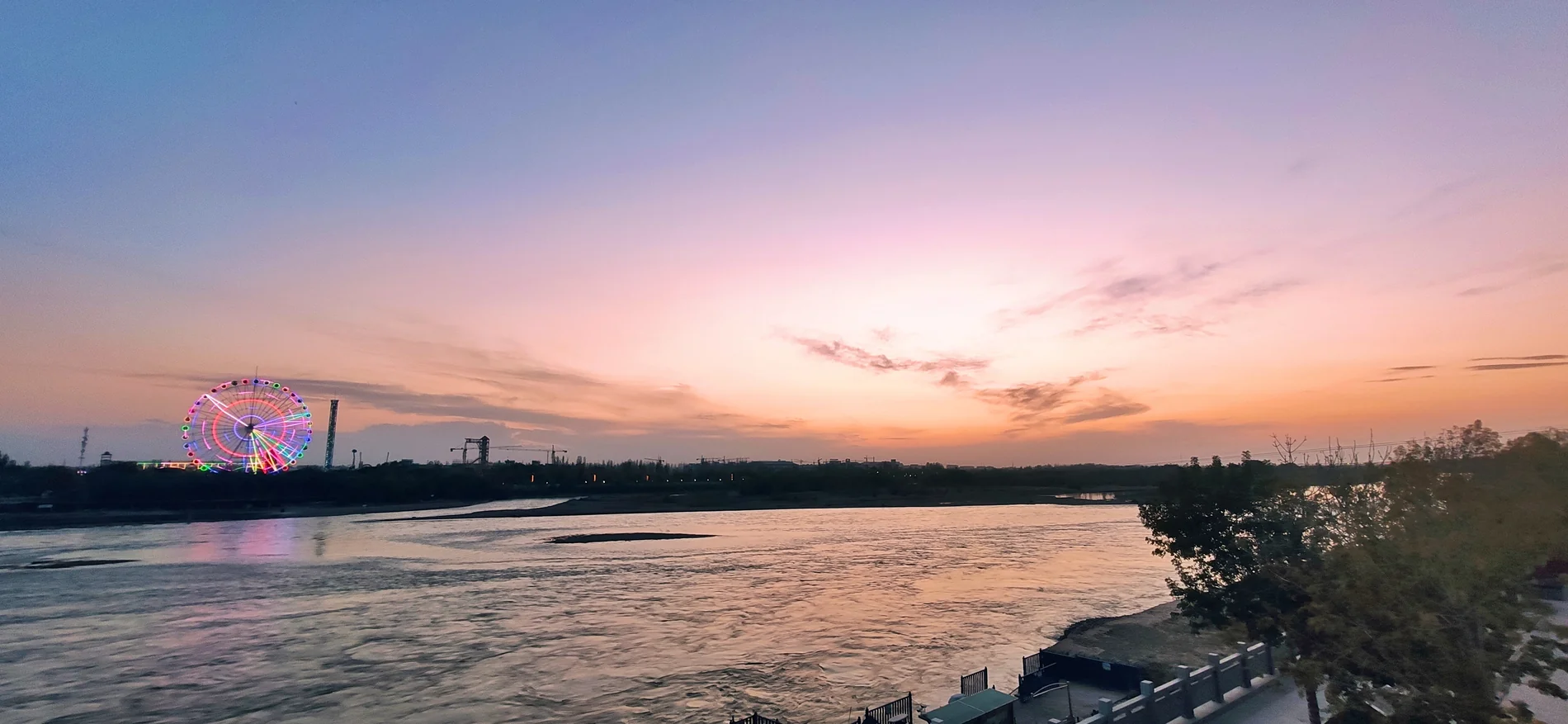
A traveller leaving the Ili River Valley usually carries away a great many colours.
White snow peaks. Blue water. Dark forest. Gold fields of wheat and rapeseed. Grasslands whose greens seem impossible to repeat under different light.
Some place names may begin to merge.
Xiata, Qiongkushitai, Kalajun, Chaxi, Kuerdening, Nalati, Tangbula and Mengket may eventually become groups of similar valleys and roads in the memory.
Yet if the journey has been slow enough, another map remains.
It is not arranged by attractions.
The Tekes River brings old routes, horses and pasture from the southern high country.
The Kunes River links forest, villages and farmland.
The Kash River preserves quieter roads and seasonal movement.
Together, the waters enter the Ili River system, cross the plain and its cities, and continue west.
Between them, people herd, farm, build, trade and sing.
They also keep renegotiating their relationship with season, road and distance.
This is the particular character of the Ili River Valley.
It is not a grassland held forever in summer light.
Nor is it a pastoral song preserved outside time.
It is a land enclosed by mountains and continually open to the world.
Water descends from the high country.
Roads continue towards distant places.
Different people arrive and leave part of their lives here.
The traveller first remembers the scenery.
On leaving, the deeper understanding may be this:
The Ili River Valley is abundant not only because the Tianshan Mountains held the water.
It is abundant because, over a very long time, people have continued to make room for different ways of living on the same land.
Image Credits & RightsView details
Creators, source pages and applicable licences for verified images used on this page are listed below. Images are used for editorial display on this page only, subject to the stated licence or rights-holder permission.
- Nalati Grassland and cattle | Yoshi Canopus | CC0 1.0
- Yurt in the Ili River Valley | Hou Shuang | CC BY-SA 3.0
- Shore of Sayram Lake | Fumikas Sagisavas | CC0 1.0
- Sheep on Tangbula Grassland | lwtt93 | CC BY 2.0
- Shengli South Road, Yining | Toasterhead | Public Domain
- Evening along the Ili River, Yining | Charlie Qi | CC BY-SA 4.0