
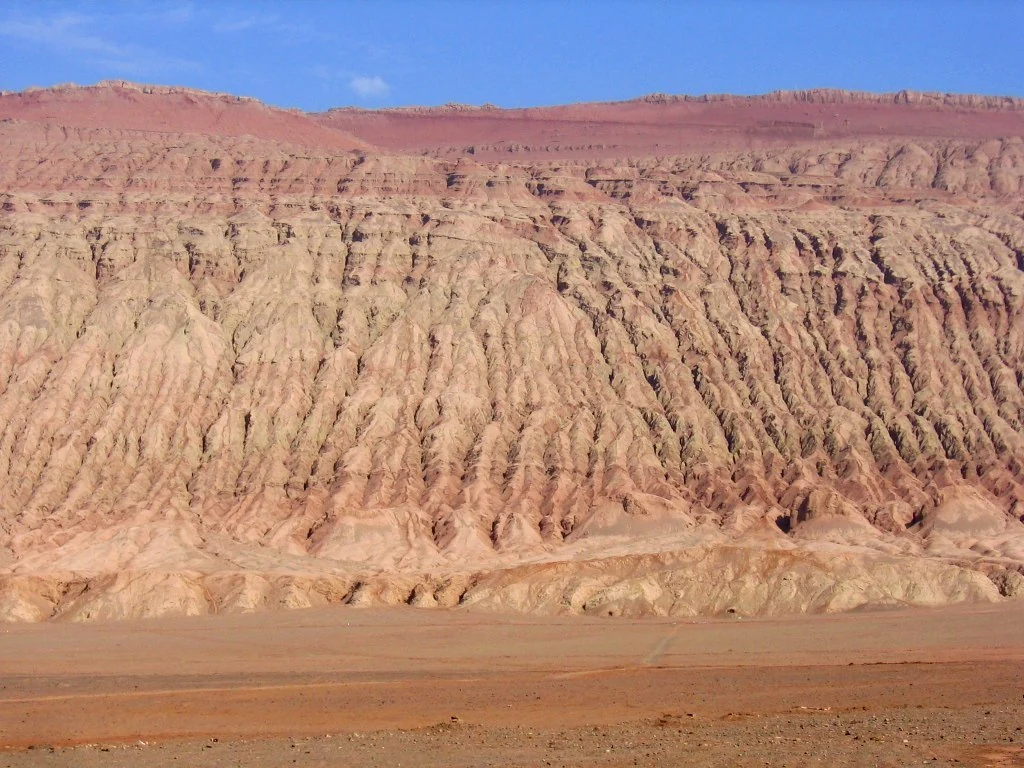
Silk Road Oasis
Turpan
From Jiaohe and Gaochang to Xuanzang, discover how real history became memory, literature and legend.
Turpan lies in the Turpan Basin—one of China’s lowest and hottest oases—where karez irrigation, grape culture, Jiaohe and Gaochang ruins, and the Flaming Mountains layer Silk Road memory over living desert-edge geography.
Many Chinese travellers know the Flaming Mountains before they have ever been to Turpan.
They know Sun Wukong, the Monkey King. They know Princess Iron Fan. They know that a magical palm-leaf fan can extinguish the flames so that the monk and his companions may continue west.
Arriving in Turpan therefore produces a peculiar sensation: a mountain that seemed to belong to a novel suddenly stands in the real world.
The road follows red-brown ridges. Gullies run from the crest towards the plain. Under the midday sun, the rock appears almost without shadow. Visitors step out, raise their phones and quickly find the image they expected.
These are the Flaming Mountains.
But Sun Wukong never came here.
Neither did Princess Iron Fan.
Xuanzang, the seventh-century Buddhist monk, was real. The monk of Journey to the West was a literary figure reshaped by centuries of storytelling. A historical journey gradually entered folklore and fiction; the Flaming Mountains, in turn, moved from geography into collective imagination.
A traveller standing here is therefore looking at two mountains at once.
One belongs to geography.
The other belongs to story.
And Turpan becomes more interesting from this point onwards.
Because long before the legend existed, there were already cities here.
Travel Intelligence · 2026
Last reviewed · August 2026Before the Legend, There Was Jiaohe
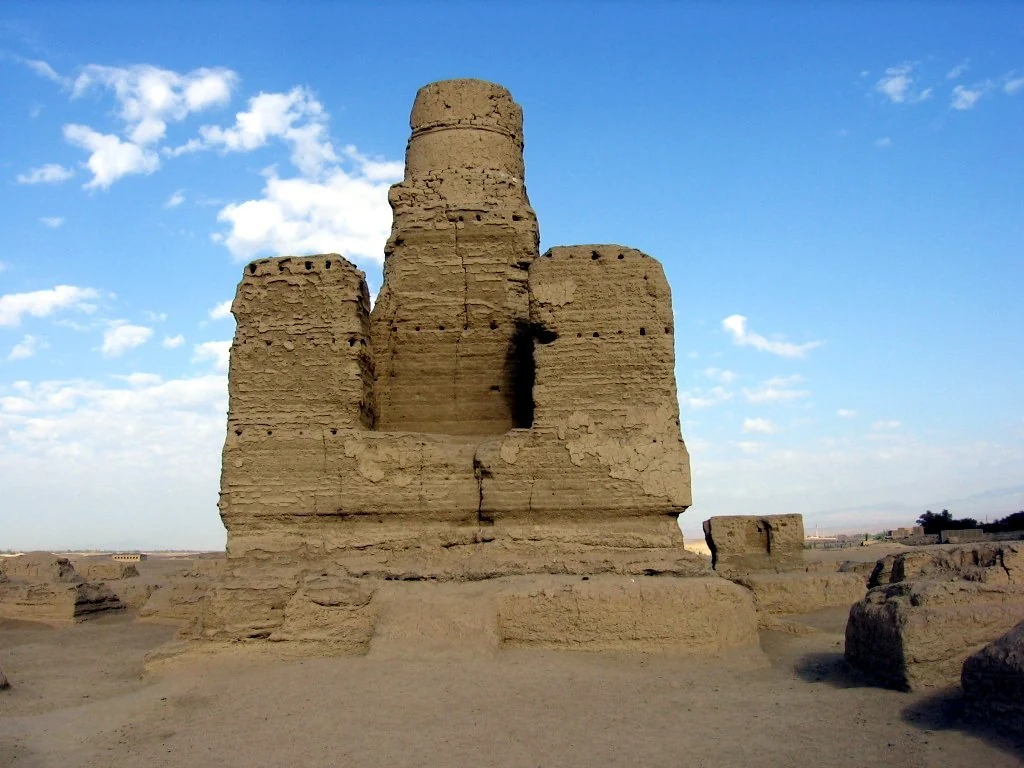
West of the Flaming Mountains, the land opens again.
Jiaohe Ancient City stands on a high terrace cut by river valleys. From a distance it does not immediately resemble a city. It looks as though the land itself has risen one level above the surrounding plain.
Only after entering do the streets begin to appear.
Roads run between earthen walls. Roofs are gone. Religious compounds, courtyards, houses and other urban spaces can still be distinguished, although almost every colour has returned to earth.
Jiaohe is one of the component sites of the UNESCO World Heritage property Silk Roads: the Routes Network of Chang'an-Tianshan Corridor. UNESCO formally lists it as the Site of Yar City. What survives here is not an isolated monument but part of a network that once connected cities, religious centres, passes, tombs, post stations and trading settlements.
Yet standing inside Jiaohe, the phrase 'World Heritage' can feel almost too large.
A city, while it is alive, does not wake each morning thinking that it is creating history.
Someone leaves home early. Someone sells goods. Someone enters a temple. Someone deals with the administration of the town. Children move through adults. A household waits for somebody who is late.
Travellers arriving at the gates need water, a place to sleep and news of the road ahead.
Today we see walls.
History therefore seems quiet.
History was never quiet.
The people who made the noise have simply gone.
What matters in Jiaohe is not only one building or another, but the scale of the entire city: why did a road pass here, why were houses concentrated there, why did religious space occupy this part of the terrace?
A society that has disappeared can still tell later visitors how it once organised everyday life.
Ruins do not preserve death.
They preserve the shape that life once took.
Gaochang: When the World Entered by Road
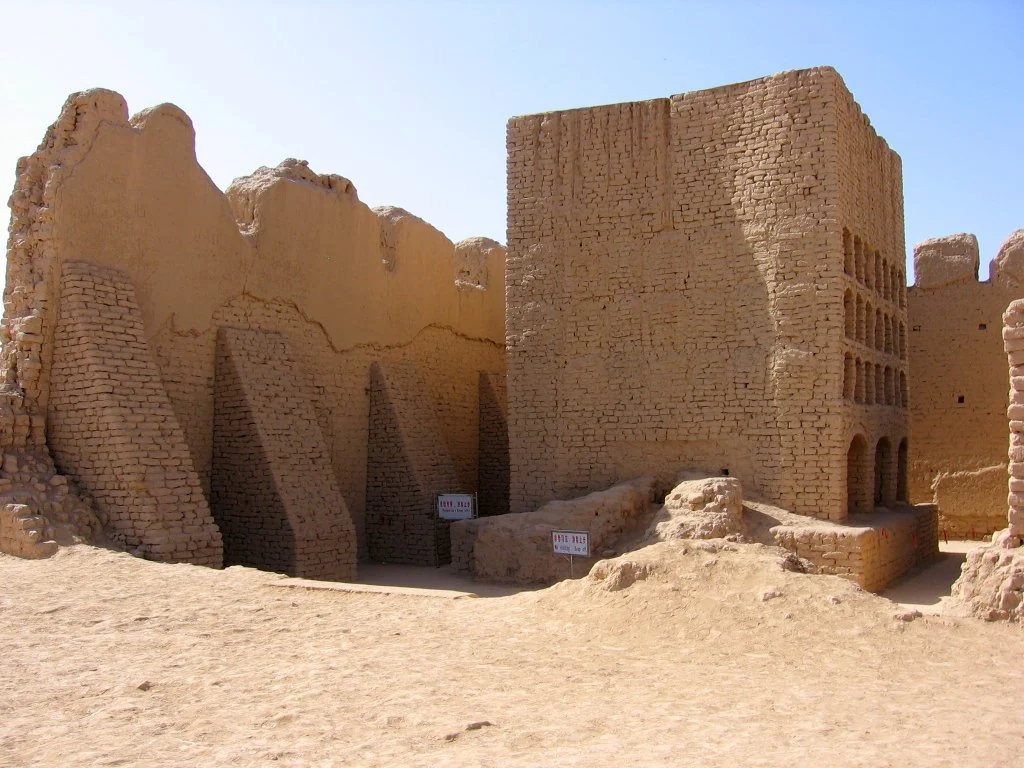
If Jiaohe shows how a city was lived in, Gaochang tells a different story: how a city changes because roads keep bringing the outside world to its gates.
Gaochang Ancient City is larger.
The Flaming Mountains remain visible in the distance, but among the ruins it is difficult to grasp the whole city at once. Walls, religious structures and different urban zones spread across open ground, as though time has slowly dismantled a city and left behind only its most resistant parts.
Yet Gaochang once belonged to a world much busier than these ruins suggest.
The Silk Roads were never a single straight route from China to Europe.
They were a changing network.
Routes shifted with war, political power, the rise of new cities, the safety of a mountain pass, the reliability of water and the attraction of a successful market.
Silk was only one of the things that moved.
Goods, religions, knowledge, technologies, art and ways of living travelled as well. UNESCO formally lists Gaochang as the Site of Qocho City, and its evidence of Buddhism, Manichaeism and Nestorian Christianity is part of the larger story of religious and cultural exchange along the corridor.
The most revealing image of Gaochang is therefore not a lone camel caravan entering the gate.
It is the repeated arrival of strangers.
They spoke different languages. They carried different goods. They used different scripts. They believed different things and ate different food.
Some stayed for days.
Some stayed for years.
Some remained long enough for their children to be born here.
That is the real complexity of a Silk Road city.
It repeatedly had to answer one question:
When something unfamiliar arrives, how does it become part of everyday life?
Xuanzang: A Real Traveller Who Entered a Novel
In the seventh century, the Buddhist monk Xuanzang reached Gaochang during his westward journey.
That belongs to history.
He was not travelling in search of demons, and there was no Monkey King at his side.
He was a monk undertaking a demanding journey across political borders, languages, climates and great distances. The historical road required negotiations, endurance and repeated decisions about how to continue.
Xuanzang's stay in Gaochang and his relationship with its ruler, Qu Wentai, became part of the memory of the journey. Centuries later, the historical pilgrimage was repeatedly retold in popular narrative and literature, eventually becoming one of the principal historical inspirations for Journey to the West.
Turpan therefore contains a remarkable overlap.
The historical Xuanzang passed through Gaochang.
The fictional Tang monk reached the Flaming Mountains.
They appear to be the same person.
And yet they are not.
One belongs to the seventh century.
The other belongs to a literary universe created centuries later.
Culture brought the two periods together again.
This is often how legend works.
It does not always begin with invention.
Sometimes a real event is told again and again.
Each generation adds its fears, wishes, humour and imagination.
Eventually, a real person walks into a story.
History does not disappear.
It simply finds another way to travel.
Bezeklik: Ideas Change Shape When They Travel
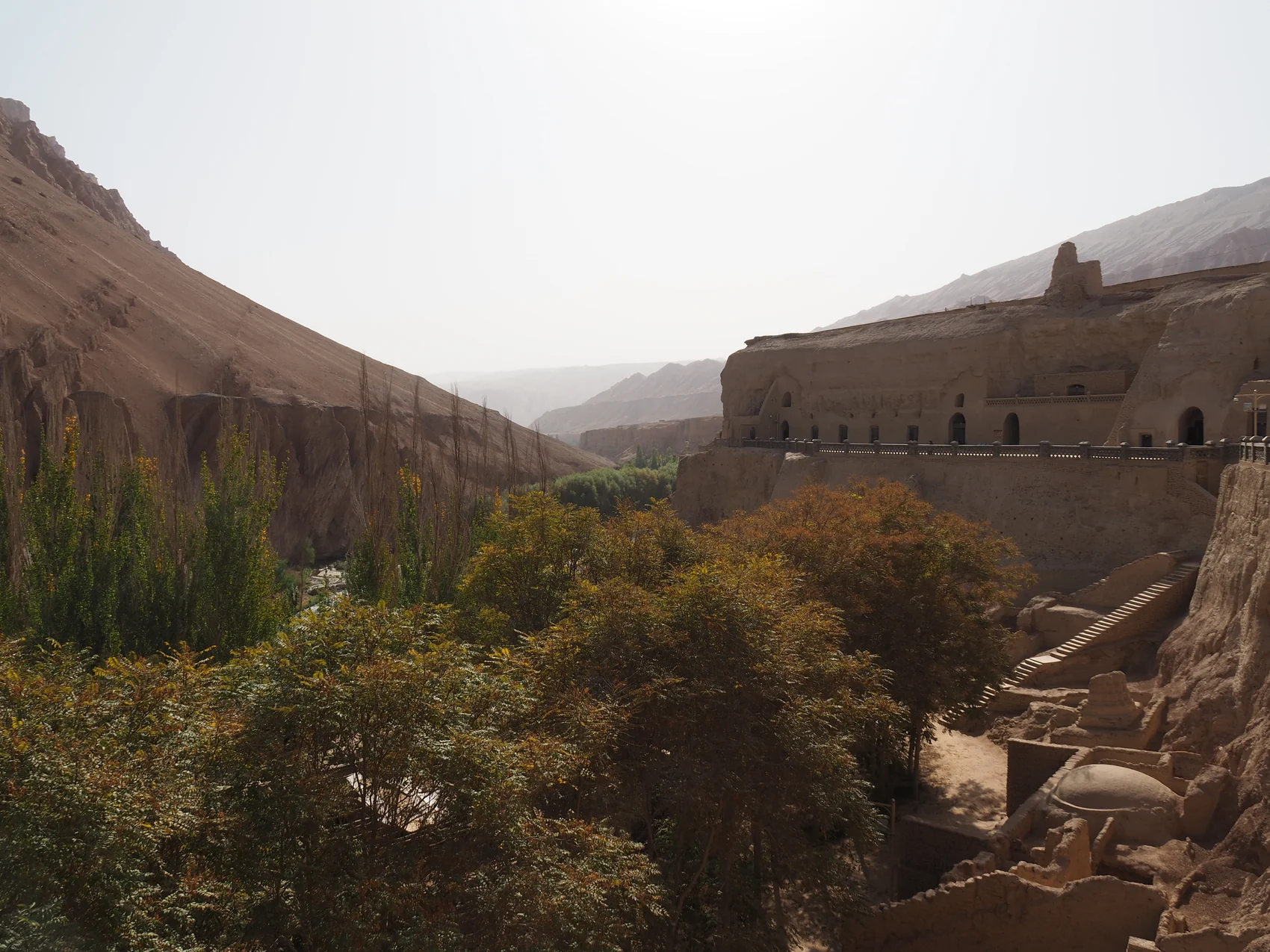
Beyond Gaochang, the valleys of the Flaming Mountains narrow again.
The Bezeklik Thousand Buddha Caves sit within this austere landscape. From a distance the openings almost disappear into the cliffs.
It is difficult to imagine that these quiet spaces once belonged to an intellectual and religious network stretching across Asia.
Buddhism was not completed in one place and then carried intact to another.
Ideas change when they travel.
Texts have to be translated.
Unfamiliar concepts need new words.
Stories must be retold.
Faces, clothing, gestures and styles of painting change with place and period.
Some of the deepest consequences of the Silk Roads took place at this level.
A commodity moves from one pair of hands to another.
An idea enters the mind.
A horse, a bolt of cloth or a piece of jewellery can be worn out, broken or buried.
An explanation of the world can continue travelling for as long as people remain willing to believe, debate or reinterpret it.
The most useful question at Bezeklik is therefore not simply: what do these murals depict?
It is:
Why did ideas from distant places take on these forms after reaching Turpan?
A culture that never leaves its birthplace does not have to answer that question.
Only a culture that has travelled leaves traces like these.
Astana: History Also Leaves Behind a Child's Homework
Grand histories of the Silk Roads can easily make ordinary people disappear.
Gaochang invites talk of cities. Xuanzang invites talk of religion. The Silk Roads invite talk of civilisations meeting.
But eras are not made from large words.
They are made from people.
The Astana Cemetery near Gaochang preserved documents, textiles, food and everyday objects that allow later generations to glimpse how people dressed, ate, worked and organised ordinary life.
One document is especially difficult to forget.
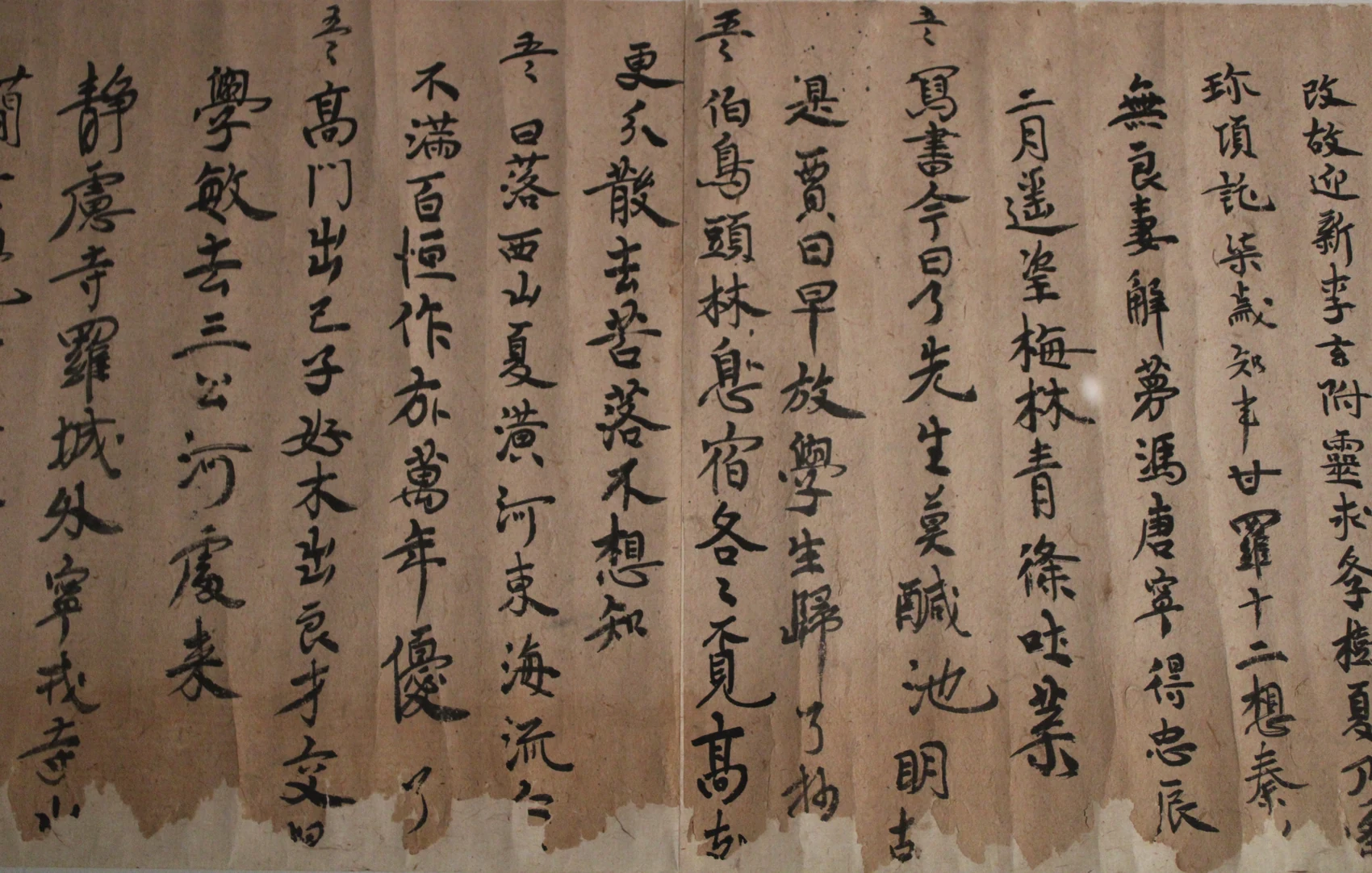
In AD 710, a twelve-year-old student named Bu Tianshou copied a school exercise.
Among the texts was Zheng Xuan's commentary on the Analects.
Then, near the end of the paper, he left something that sounds nothing like a museum label.
He had finished his work.
He wanted the teacher to stop keeping the pupils so late and let them go home.
More than thirteen centuries later, a child's impatience suddenly makes him feel close.
This is one of archaeology's most powerful moments.
History ceases to be a dynasty.
It is not a war or an abstract Silk Road.
It is a pupil who is tired of writing.
He wants school to end.
After reading that, empty streets at Gaochang look different.
There were once children here who did not want another lesson.
People had things to buy.
Someone wrote a letter.
Someone prepared dinner.
Someone worried that a child had not yet come home.
The people of the past were not a different kind of human being.
Their world is simply no longer ours.
Water and Grapes: Civilisation Must Become Everyday Life
Even the largest story eventually has to return to ordinary life.
A Silk Road city needed water.
So did travellers, monks, residents, animals and fields.
Turpan's karez wells use vertical shafts and underground channels to carry groundwater towards oasis settlements and farmland. Much of the journey happens below ground before the water returns to the surface where it is needed.
Stories of the Silk Roads naturally focus on merchants and famous travellers.
But cities depended on people whose names rarely survive.
They dug shafts, maintained channels, cleared underground passages and learned where water could be found.
Every great story requires ordinary life to remain possible.
By afternoon, Turpan has another way of reducing grand history to human scale.
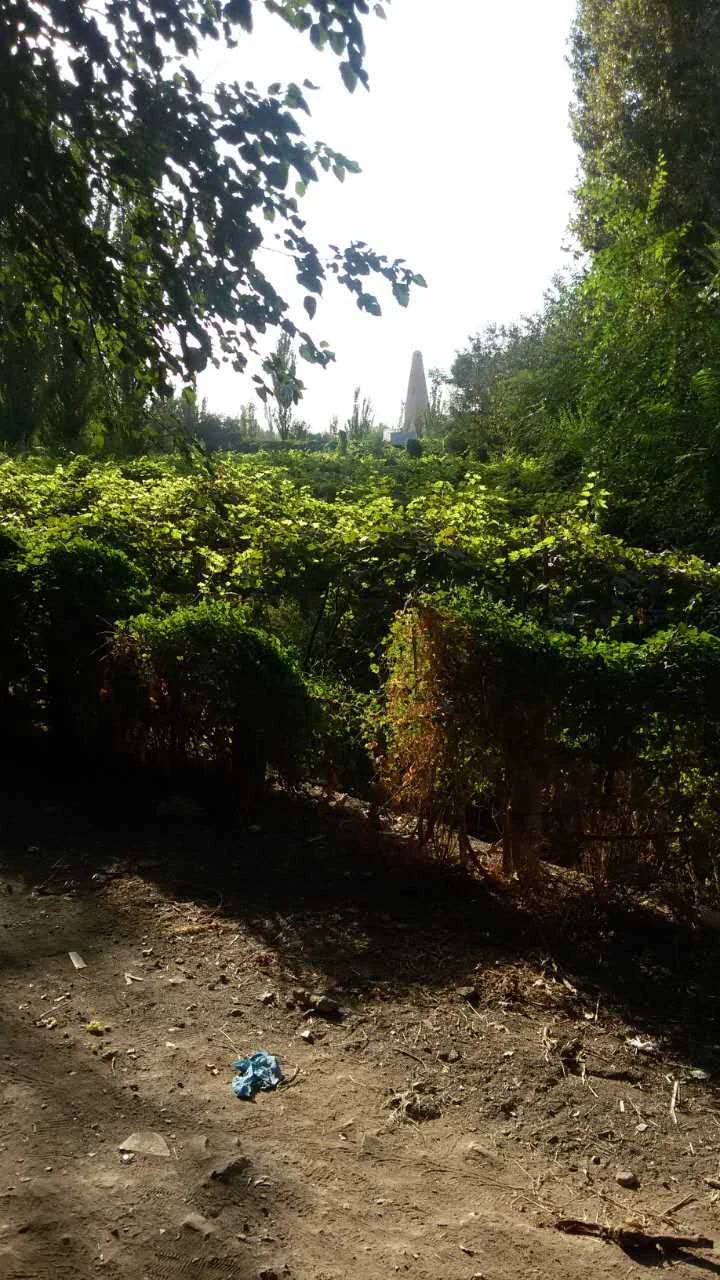
It becomes a bunch of grapes.
Vines cast shade across a courtyard. Sunlight passes between leaves. Fresh fruit arrives on the table.
The traveller sitting underneath rarely continues thinking about Gaochang, Xuanzang or the transmission of Buddhism.
The grapes are simply sweet.
That is as it should be.
Cultural exchange eventually becomes ordinary.
It leaves more than ruins, religions and ancient documents. It changes what people grow, what they eat, how land is used and how something once foreign becomes part of local life.
Thousands of years of exchange can end in something completely unremarkable.
A taste.
Civilisation does not exist only in palaces and temples.
Eventually it must enter kitchens, fields and the fruit a child can reach from a vine.
Tuyugou: Not Every Past Becomes a Ruin
Jiaohe no longer has residents.
Gaochang survives as ruins.
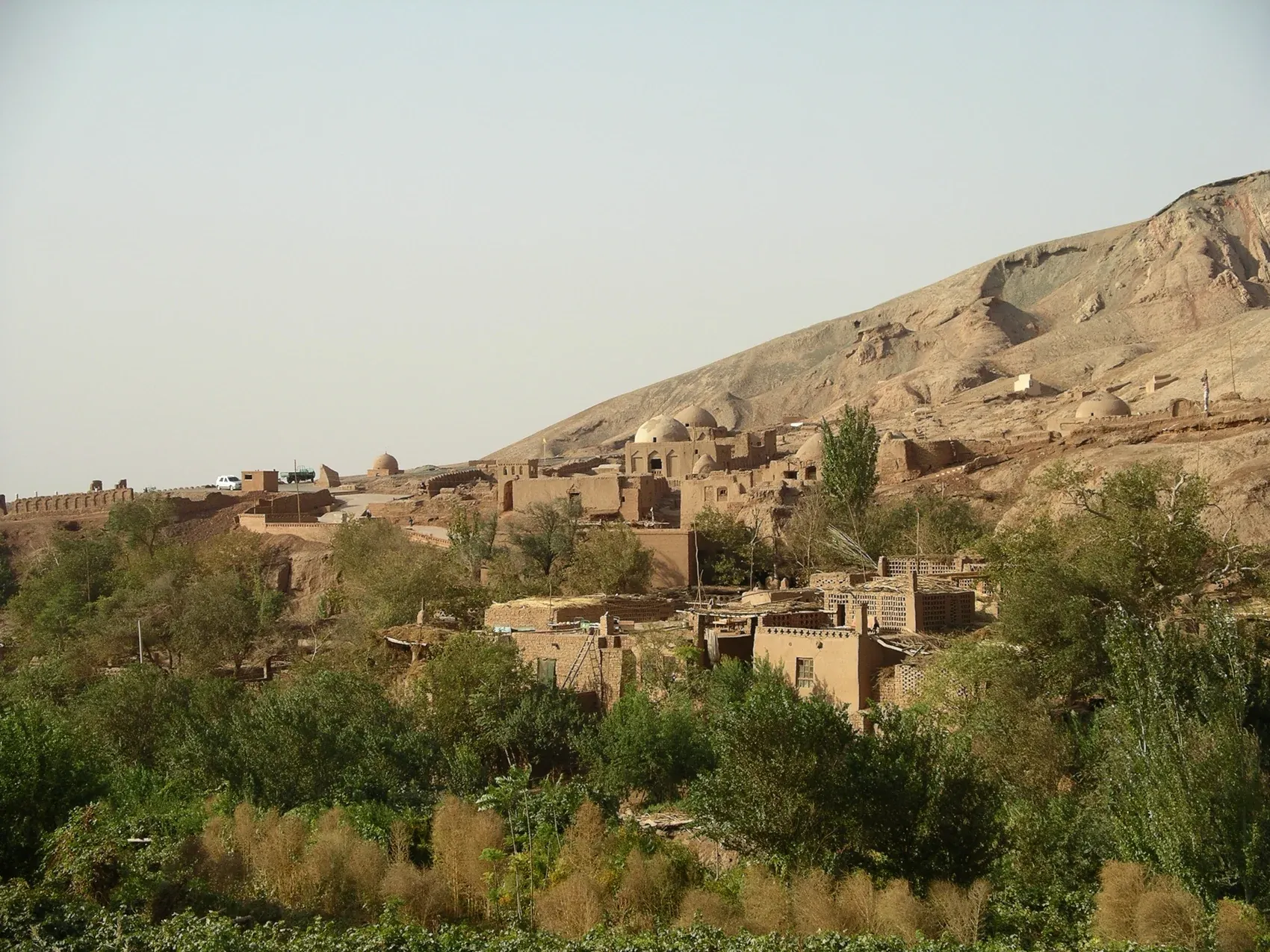
Farther into the valleys of the Flaming Mountains, Tuyugou feels different.
The mountains are still bare.
But a village appears among trees and cultivated land.
Roads pass houses. Grapevines enter courtyards.
Life continues.
The contrast reveals that there are at least two kinds of old place.
One belongs to archaeology.
Its residents have gone, and the main tasks are preservation, research and interpretation.
The other is still inhabited.
Children need schools.
Houses need repairs.
Families need income.
People use new cars and phones and change the functions of rooms.
Visitors often want an old village to remain exactly as it was.
Visitors leave after a few days.
Residents have to continue living there.
The useful question is therefore not whether a village has rejected modern life.
It is whether a place shaped over generations by water, roads, homes and family relationships can retain its human scale while new forms of life keep entering.
This is the difference between living tradition and a museum.
Living tradition has to permit change.
Otherwise only the appearance survives.
Returning to the Flaming Mountains
At the end of the journey, the road often passes the Flaming Mountains again.
The red-brown ridges have not changed.
The gullies still resemble flames.
The first time, the traveller thought of Sun Wukong.
Now other images return as well.
Beyond the mountains lies Gaochang.
Farther away is Jiaohe.
Within the valleys are Buddhist cave sites.
Underground channels once carried water towards cities and fields.
Nearby cemeteries preserved contracts, textiles, food and the impatience of a child who had had enough of school.
Only now do the Flaming Mountains become truly interesting.
Not because a novel transformed them into legend.
But because the real history was already complicated enough.
A monk really did travel through this region.
Cities really prospered.
Languages and beliefs from different places really met.
People painted cave walls.
People maintained underground water channels.
People grew grapes.
A child did his homework.
Centuries later, other people kept retelling distant journeys.
They added new characters, new dangers and new imagination.
Eventually, a monkey arrived at the Flaming Mountains.
History had entered legend.
Legend then changed the way later travellers looked at the real landscape.
After leaving Turpan, the Flaming Mountains may still be the first thing the traveller remembers.
Legends are easier to remember than dates.
But after walking through Jiaohe and Gaochang, another understanding may remain.
What makes Turpan remarkable is not simply that a mountain became part of a famous story.
It is that, for centuries, real people passed through this basin.
They brought languages, beliefs, art, techniques and food.
Some things disappeared.
Some remained.
Others became stories in the hands of people who came later.
History leaves ruins.
Life leaves traces.
Culture leaves memory.
And legend keeps a landscape alive in the imagination.
Image Credits & RightsView details
Creators, source pages and applicable licences for verified images used on this page are listed below. Images are used for editorial display on this page only, subject to the stated licence or rights-holder permission.
- Flaming Mountains | Colegota | CC BY-SA 2.5 ES
- Jiaohe Ancient City | Colegota | CC BY-SA 2.5 ES
- Gaochang Ancient City | Colegota | CC BY-SA 2.5 ES
- Bezeklik Thousand Buddha Caves | Laika ac | CC BY-SA 2.0
- Bu Tianshou's school exercise, AD 710 | Zunkir | CC BY-SA 4.0
- Turpan Grape Valley | Muzzleflash | CC0 1.0
- Tuyugou | T Chu | CC BY 2.0