
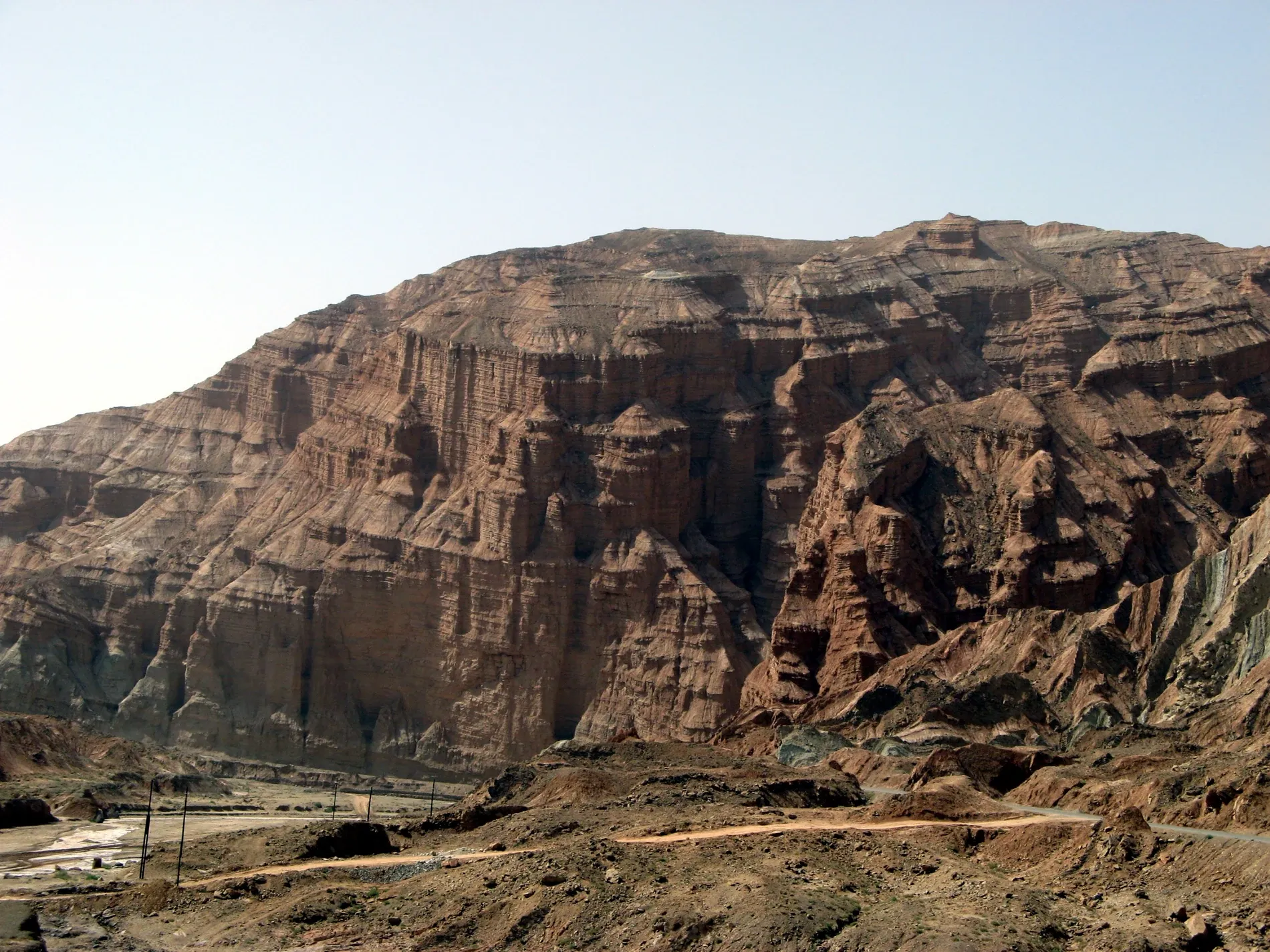
Tianshan Oasis
Kuqa
From the Tianshan oasis of ancient Kucha to Kizil's murals, music, Subash and the lived old town of modern Kuqa, explore how distant stories were translated, drawn, heard and reshaped.
Kuqa is a Tianshan oasis city above the northern Tarim Basin, where ancient Kucha’s murals at Kizil, music and old-town life translate distant Silk Road stories into stone, sound and everyday streets.
Approaching Kuqa from the direction of Aksu, the Tianshan Mountains gradually become less of a horizon and more of a presence.
First they are a distant line. Then the rock begins to show itself in red, brown and pale grey folds, as if geological time had been pushed upwards and left exposed.
To the south, the land opens again towards the northern edge of the Tarim Basin.
The city lives between these two geographies.
Modern Kuqa does not immediately announce its antiquity.
There are taxis, schools, restaurants and shops. Shade falls across old walls. Someone steps through a courtyard gate; someone else sits outside a small business. Farther out, roads lead towards rail lines, industrial areas and newer districts.
Only when a traveller keeps moving — towards Kizil, Subash or the eroded mountain country to the north — does another name begin to surface.
Kucha.
The ancient oasis kingdom is widely known in Chinese historical writing as Qiuci; today's city is Kuqa.
The more interesting question, though, is not simply how old Kucha was.
It is why so many things that arrived from far away seem to have found new ways to speak once they reached this oasis.
Travel Intelligence · 2026
Last reviewed · August 2026Why an Oasis Had to Learn to Understand the Distant
Ancient Kucha stood on the southern side of the Tianshan Mountains.
Mountains to the north.
Basin and desert margins to the south.
On a modern map, geography like this can look remote.
Older routes followed another logic.
Where there was water, pasture, an oasis and somewhere to stop, the distant world could keep arriving.
Merchants.
Envoys.
Performers.
Craftspeople.
Scholars and travellers.
Some brought goods.
Some brought instruments.
Some brought stories.
Others brought concepts for which the local language may not have had a ready-made expression.
A road can deliver something to a place.
That is only the beginning.
What happens when a story arrives and nobody yet has the right words for it?
How does an unfamiliar idea become intelligible?
How does something foreign become part of local expression without remaining exactly what it was before?
These questions reveal more about ancient Kucha than the simple statement that it was an important Silk Roads oasis.
Translation Is Not the Exchange of One Word for Another
Kumarajiva is one of the names most closely associated with ancient Kucha.
A conventional biography can reduce him to dates, journeys and achievements.
The more interesting subject is translation itself.
A word in one language may have no exact equivalent in another.
An idea may depend on habits of thought, metaphors or experiences that do not exist in quite the same form elsewhere.
What does a translator do then?
Choose the nearest word?
Create a new expression?
Preserve a foreign sound?
Or rebuild the idea through a different sentence?
The hardest part of translation is not knowing what a word means.
It is making meaning possible in another world.
Translation, then, is not transport.
It is re-expression.
Once a distant idea has been translated, it has already entered a new cultural environment.
It acquires different words.
A different rhythm.
Sometimes a different emphasis.
Seen this way, Kucha connected more than routes.
It connected different ways of making the world understandable.
Kizil: Sometimes a Wall Has to Speak
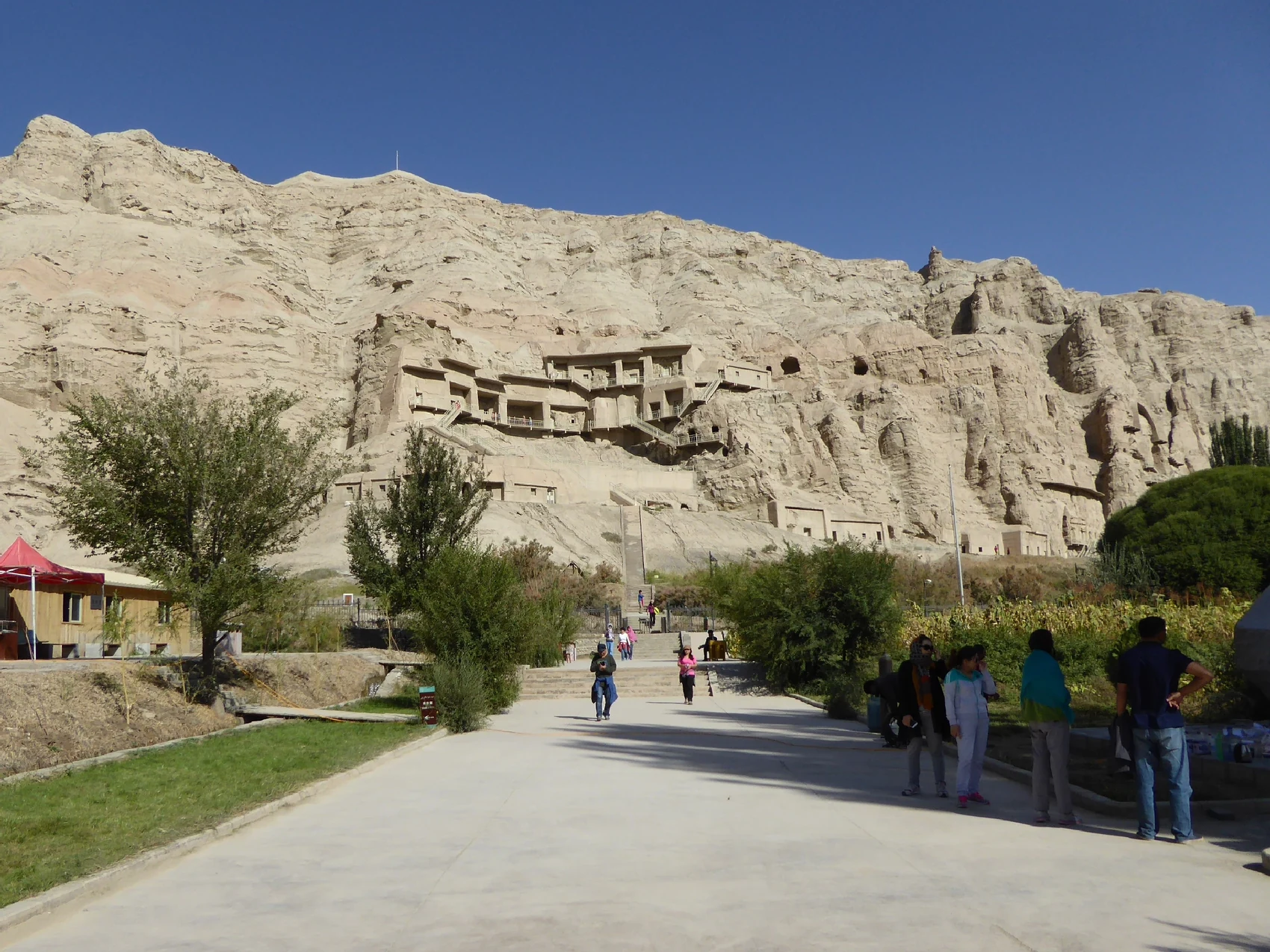
West of Kuqa, caves begin to appear in the mountain face.
Today the Kizil Caves are an archaeological and artistic landmark.
A visitor often notices colour first.
Blue.
Green.
Earth red.
Fragments of line.
Figures.
Animals.
Stories broken into scenes.
But there is a more useful question than whether the paintings are beautiful.
Why did stories need to be painted on walls?
In a world where literacy could never be universal, images were a language of their own.
Gesture, clothing, animals, architecture and the order of scenes could help a viewer understand what had happened and what might happen next.
The murals have a clear place within the archaeology and art history of ancient Buddhist culture.
Yet a traveller can also recognise something more universal in them.
Human beings have always looked for ways to make complicated stories visible.
Kizil preserves more than ancient pictures.
It preserves an old impulse to communicate.
When words are not enough, people draw.
A Wall Can Hold a Very Distant World
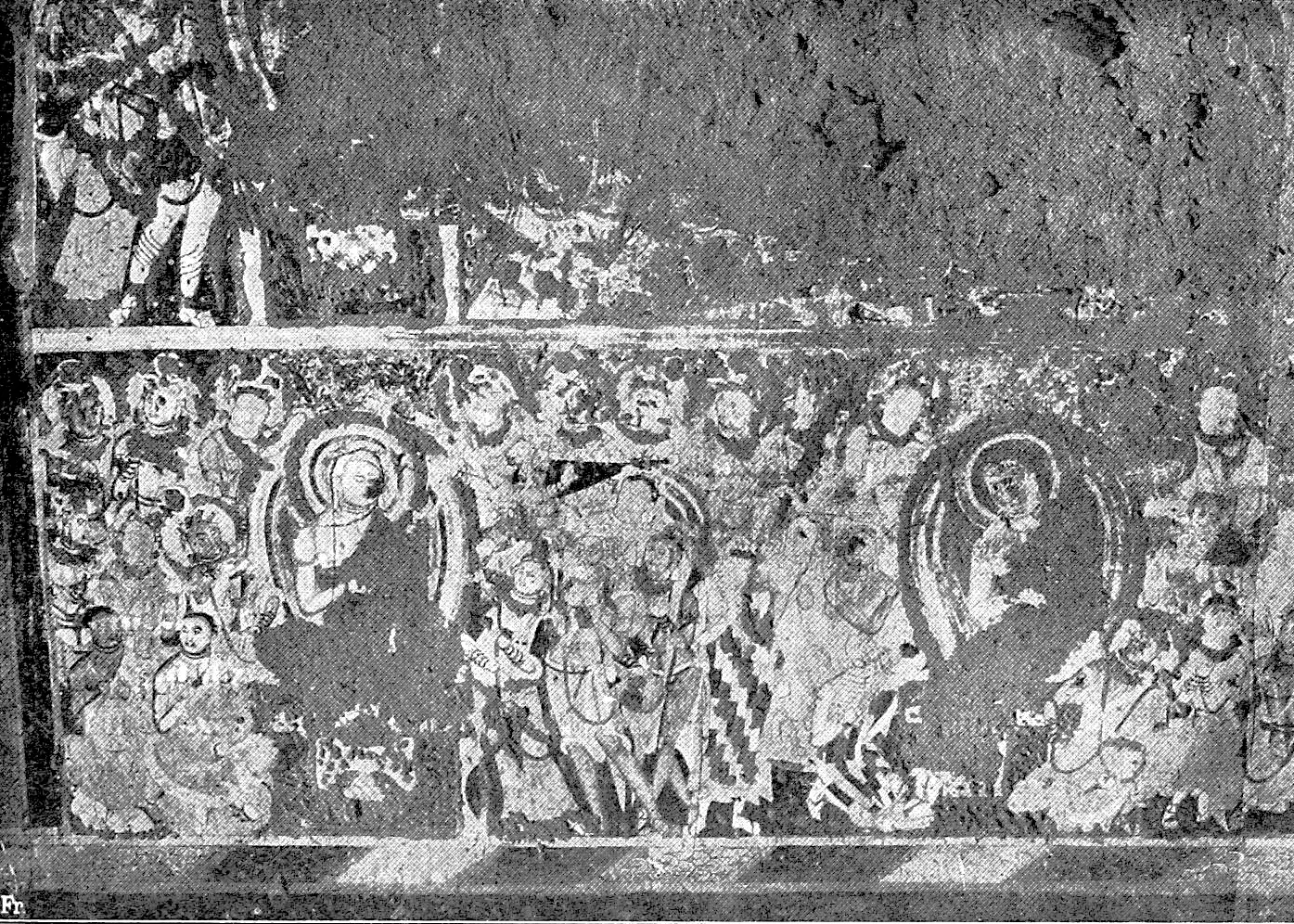
The power of the Kizil murals also lies in the fact that they do not look like the product of an isolated world.
Clothing.
Composition.
Colour.
Musical instruments.
Decorative forms.
Together they give historians evidence of long-running artistic contact across the Silk Roads.
Ideas and visual habits arrived from different regions, but they were not simply copied unchanged.
Artists worked with new walls, new audiences and a new local setting.
They made choices again.
That makes painting surprisingly close to translation.
One works with words.
The other with colour, line and form.
The most revealing question on the Silk Roads is therefore not only where something came from or where it travelled next.
It is what it became after arrival.
Some Things Need Translation. Others First Need to Be Heard.
Kuqa has another language: sound.
Music and dance are difficult to remove from any serious account of ancient Kucha.
Turn the subject into a history of music and the page quickly fills with dynasties, court systems and technical names.
A traveller can begin somewhere simpler.
Why does sound travel so easily?
Two people may not share a language.
They can still hear rhythm.
See movement.
Feel when a melody quickens.
Recognise a pause.
Notice when a performance pulls a whole room towards the same moment.
Musicians, instruments and performance practices associated with Kucha entered wider currents of music and dance in ancient China.
Sound, however, did not remain trapped in antiquity.
Modern Kuqa still has living music and dance traditions, including Kuqa sanam, recognised in China's national intangible cultural heritage system.
Old instruments, hand drums, weddings and celebrations belong to contemporary life rather than archaeology.
That creates a useful parallel.
Some things have to be translated.
Some stories have to be drawn.
Music first has to be heard.
Modern Kuqa Does Not Live in the Age of Kucha
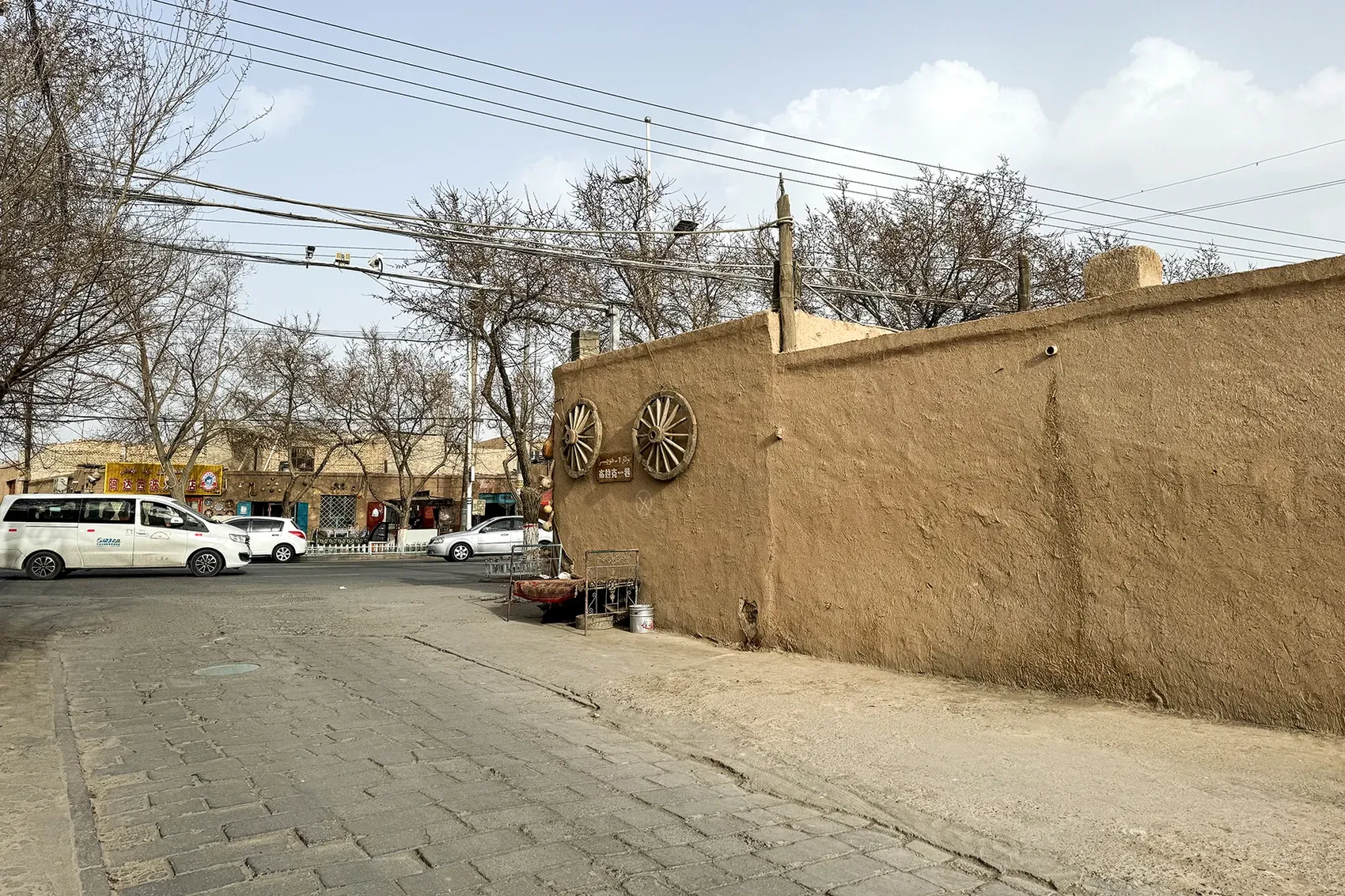
Return from the archaeological sites and time accelerates immediately.
Someone is buying naan.
Someone passes on an electric scooter.
Restaurants prepare for dinner.
Children leave school.
A taxi moves through an intersection.
Behind old walls are power lines, plumbing, air conditioning and mobile reception.
Travellers come looking for Kucha.
Residents are dealing with today.
Work.
Income.
Education.
Housing.
Whether a shop has had a good month.
Whether tomorrow begins early.
This may be the most important boundary in writing about any historic city:
The past can explain where the present came from.
The past cannot replace the present.
Kuqa is not an open-air museum built to preserve Kucha.
Kucha is one layer in a city that has lived through many different times.
The Hard Part of an Old Town Is Not Making It Look Older
Travellers tend to like old towns.
Narrow lanes.
Courtyard walls.
Timber doors.
Shade.
A scale different from standardised modern blocks.
For the people who actually live there, a house has to answer other questions first.
Is it warm enough in winter?
Is the water supply reliable?
Does the bathroom work well?
What about fire safety?
Can older relatives live here comfortably?
Does the family still want to stay?
Kuqa has continued to survey and repair traditional houses while improving infrastructure in parts of the old town.
The difficult task is not to make a street look more historical.
It is to allow a space shaped by history to remain recognisable while continuing to function as a place to live.
Visitors value the marks left by time.
Residents need the present.
Good conservation should not require either one to disappear.
Subash: Sometimes a Story Is Reduced to Space
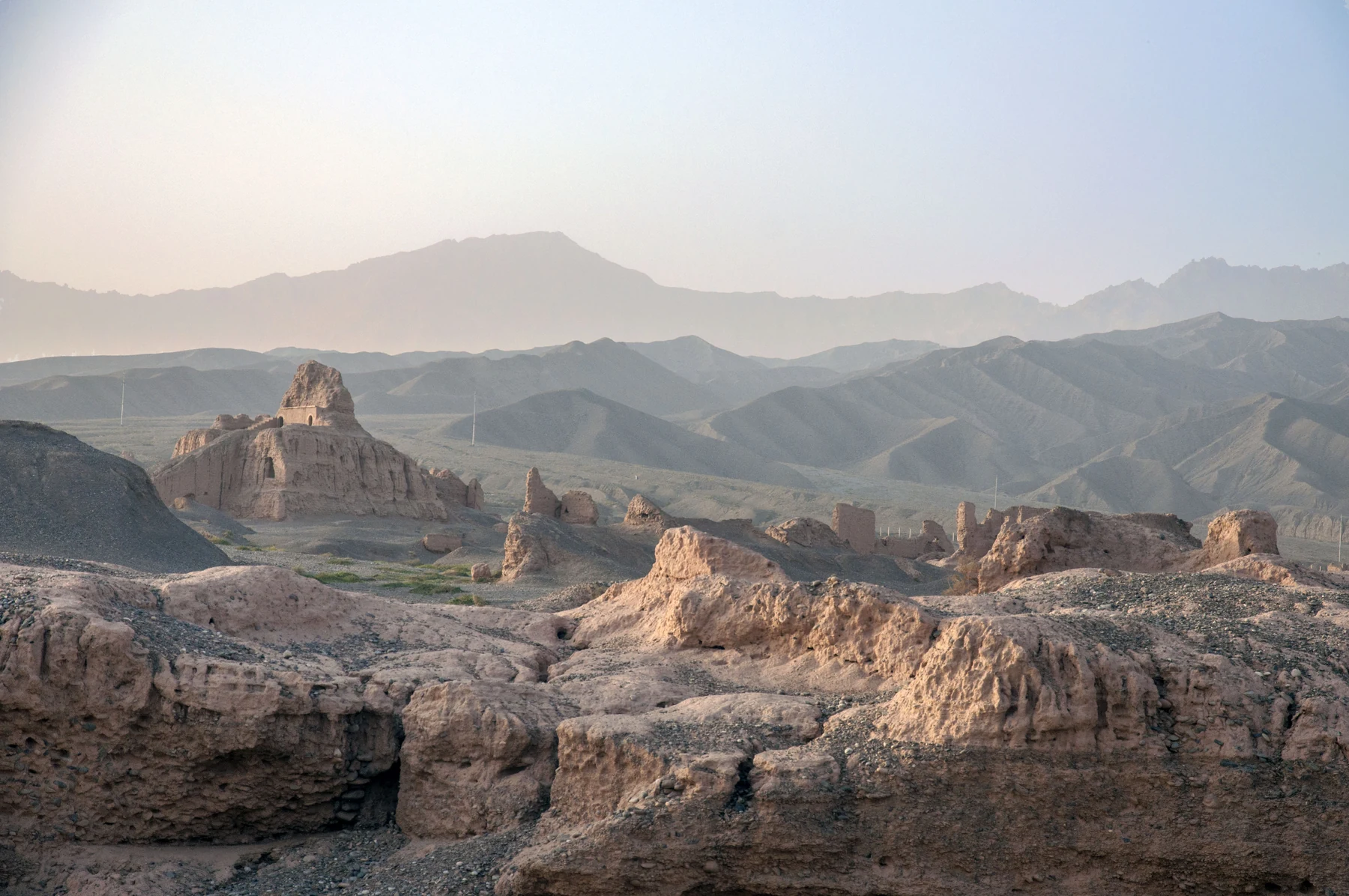
Near Kuqa there is another kind of ruin.
Subash.
If Kizil can still speak through images, Subash is quieter.
Walls.
Raised earth.
The outline of vanished buildings.
Wind.
The site was once a large Buddhist monastic complex and is now one of the components of the UNESCO World Heritage property Silk Roads: the Routes Network of Chang'an-Tianshan Corridor.
A traveller does not need to turn the visit into a lesson in religious history.
There is a more immediate question.
How does a place once filled with people become mostly space?
After people leave, buildings survive for a while.
After buildings deteriorate, the shape of the ground remains.
Eventually a wall, an old route and the place where wind passes through begin to stand in for an entire period of time.
This is what ruins do so strangely well.
They make time visible.
The Tianshan Pulls Every Story Back to Geography
Kuqa can easily become crowded with history.
Kucha.
Caves.
Translation.
Music.
Ruins.
Drive north towards the Tianshan, however, and all of those cultural stories suddenly shrink.
Rock walls rise.
Strata bend and fold.
Water and wind cut their way through stone.
Human roads can only go where the land allows them to go.
The mountains offer a useful correction.
Before Kucha, there were mountains.
Before stories, languages and music could arrive, an oasis first needed water.
A route first needed somewhere passable.
Cultural exchange was never an arrow floating across a map.
A person had to walk.
A horse had to travel.
Goods had to be carried.
People needed water, food and somewhere to stop.
Only then could an oasis begin to hear the distant world.
Every distant story had to arrive somewhere first.
Kuqa Has the Sound of Machinery Too
Visit only the old town and archaeological sites and another illusion becomes possible.
That Kuqa mainly belongs to the past.
At the city's edges, other sounds are constant.
Lorries.
Rail.
Industrial sites.
Machinery.
New roads.
Kuqa is also a modern transport and industrial node in southern Xinjiang.
This does not compete with the ancient story.
It simply makes the city more complete.
A real city does not stop entering modern life because it possesses important heritage.
Older routes brought merchants into an oasis.
Today's railways and roads move another system of goods, workers and production.
The tools changed.
The speed changed.
The city still performs a familiar function.
It lets things pass through.
Things Arrive Here and Change a Little
Before leaving Kuqa, place a few days of travel side by side and they do not immediately look like one story.
A wall at Kizil.
A courtyard in the old town.
A piece of music.
A ruined wall at Subash.
Folded rock in the Tianshan.
A lorry on a modern road.
Yet all of them circle the same question.
What happens when something from far away reaches a new place?
Some words need a new expression.
Some stories are painted on walls.
Some sounds are heard by another audience and enter new music.
Some buildings lose their original use and become ruins.
Some old houses are adapted for another generation of life.
Culture is not the perfect transfer of an object from point A to point B.
That is logistics.
Cultural exchange is more complicated.
Arrival.
Understanding.
Change.
Then movement again.
People passing through Kucha centuries ago probably did not imagine themselves as agents of 'cultural transmission'.
They were travelling.
Perhaps they carried away a phrase.
A way of drawing.
A rhythm.
A melody.
Things that arrived in Kucha rarely remained exactly as they had been.
They were heard.
Understood.
Said differently.
Drawn differently.
Played differently.
Then they moved on.
Perhaps what Kuqa has preserved is not one fixed culture.
It is a capacity:
to let the distant arrive,
to find a way of making it intelligible,
and then to let it continue its journey.
Image Credits & RightsView details
Creators, source pages and applicable licences for verified images used on this page are listed below. Images are used for editorial display on this page only, subject to the stated licence or rights-holder permission.
- Tianshan foothills between Kuqa and Kizil (cover) | G41rn8 | CC BY-SA 4.0
- Kizil Caves exterior | Hiroki Ogawa | CC BY 3.0
- Historical record of a Kizil mural | Albert Grünwedel | Public Domain
- Kuqa old town street, 2024 | Windmemories | CC BY-SA 4.0
- Subash ruins | Scott Newman | CC BY-SA 2.0