
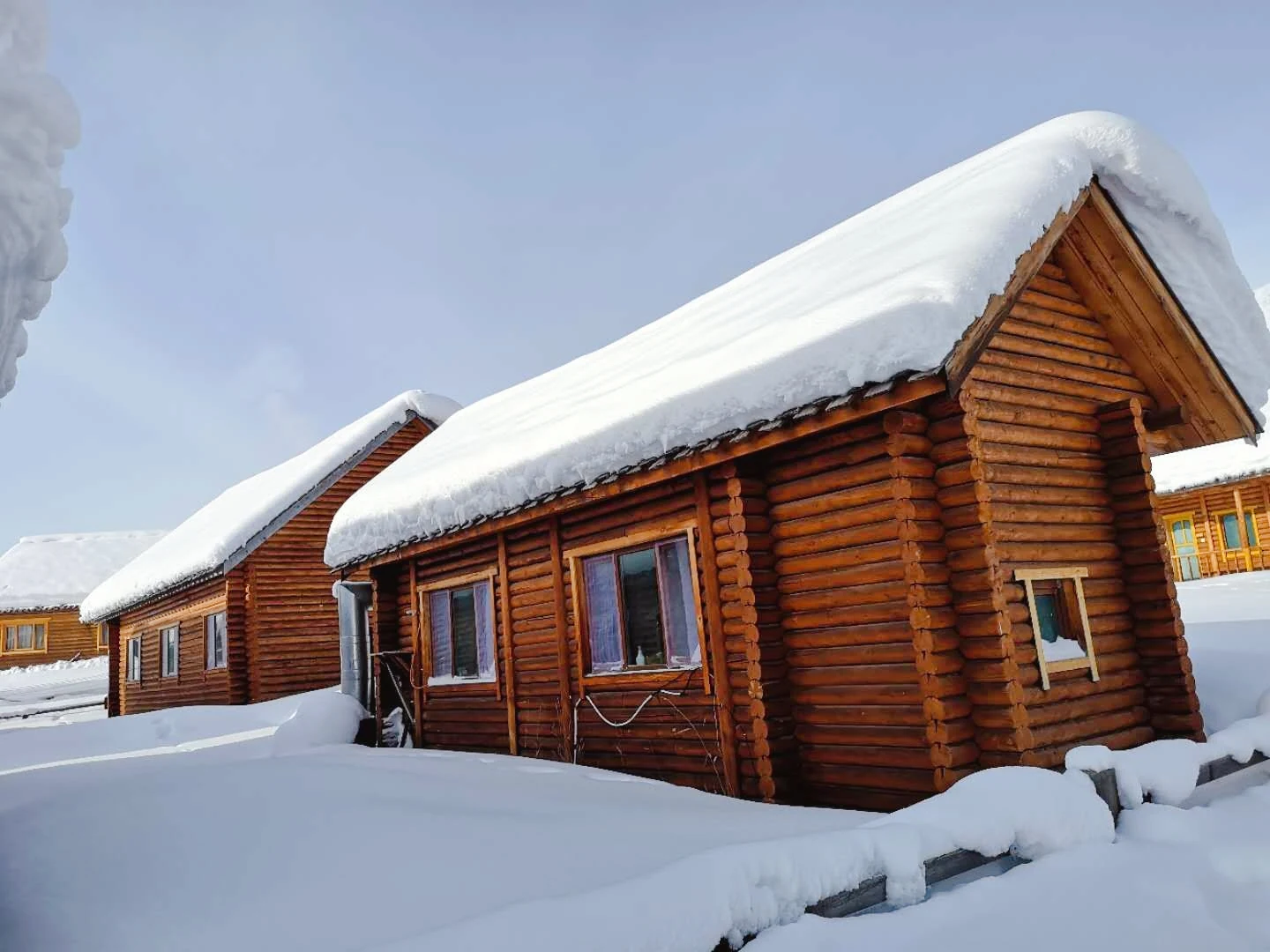
Northern Mountains
Altay
Follow the Irtysh through Altay's forests, pastures, villages and deep snow, from Kanas and Hemu to dombra music, seasonal migration, fur skis and the industrial memory of Koktokay.
Altay is northern Xinjiang’s forest-and-river country along the Irtysh, gateway to Kanas, Hemu and deep winter snow. Pastoral movement, skiing and seasonal colour shape how travellers read the Altai Mountains—not as a single viewpoint but as living northern geography.
In winter, the Irtysh River at Koktokay does not look like a river preparing to cross a continent.
Snow sits along the banks. Dark water shows through the white. The Altai Mountains rise beyond the town, where roads and buildings still carry traces of a mining age.
Decades ago, people came here looking for what lay beneath the ground. Long before that, people moved through these valleys looking for water, pasture and ways through the mountains.
Most travellers arrive today for something else.
Forest. Snow. Skiing.
Or perhaps because a song, a television drama or an autumn photograph has already made Altay familiar before they have seen it.
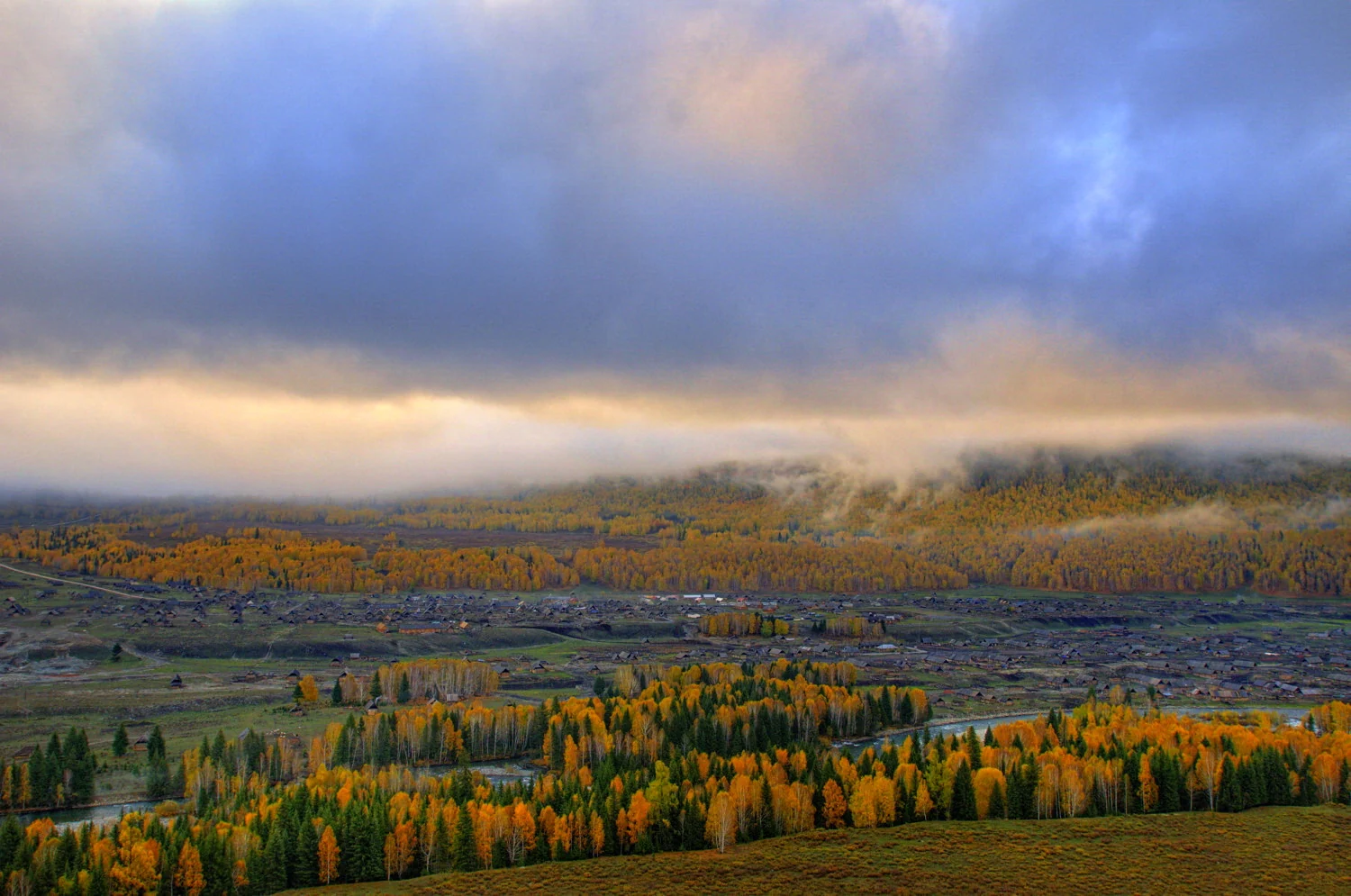
The green water of Kanas, the log houses of Hemu, birches turning gold, deep winter snow: together they have created a recognisable image of northern Xinjiang.
Follow the Irtysh for a while, however, and the region begins to look less like a photograph.
Almost everything here is moving.
Water moves.
Livestock move.
People move with the seasons.
Snow falls in winter and leaves again as water in spring.
What endures is not stillness, but the knowledge people have built around movement.
Travel Intelligence · 2026
Last reviewed · August 2026The River Knows Which Way Is North
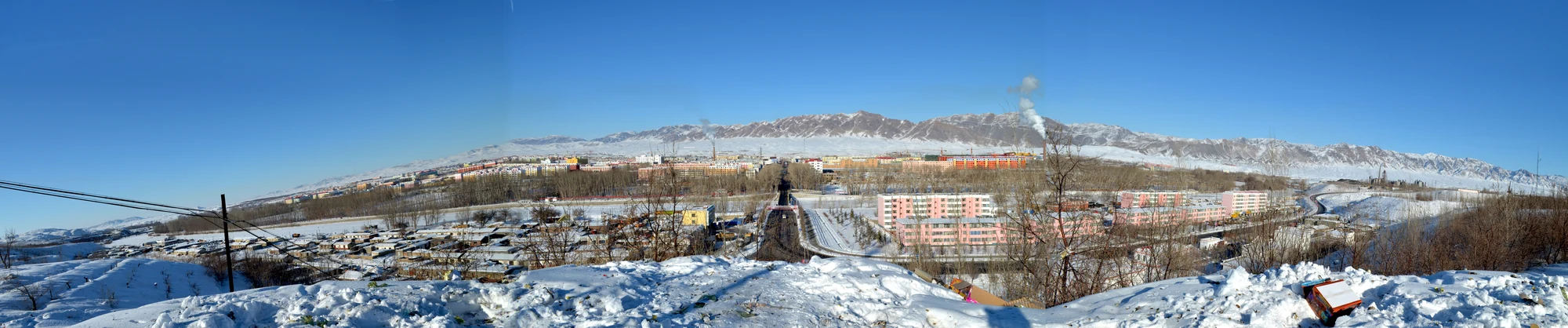
The Irtysh begins gradually in the snow, ice and streams of the Altai Mountains.
In spring, the snow loosens.
At first there is only a thin run of water.
It slips from stone and slope into gullies, then into wider valleys.
Eventually, people call it a river.
From Altay it continues into the vast river system that ultimately drains towards the Arctic Ocean.
A traveller does not need to spend the journey thinking about that distant sea.
The more revealing question is what the river creates before it gets there.
Valleys.
Wetlands.
Pasture.
Forest.
Settlements.
Water for animals.
Places where people can remain.
Maps reduce rivers to blue lines.
Real rivers are closer to moving corridors of life.
Roads often follow them.
Pastures depend on them.
Villages gather near them.
Even the density of the forest is a reminder that northern Xinjiang follows a very different hydrological logic from the Xinjiang many visitors first imagine.
Altay Does Not Need to Be 'Another Switzerland'
Travellers often understand an unfamiliar landscape by comparing it with somewhere they already know.
Snow peaks and lakes become Switzerland.
Forests become Canada.
The comparison is easy.
It is also a little disappointing.
It means we have not yet learned to look at the place on its own terms.
Altay contains one of China's most distinctive stretches of Euro-Siberian taiga ecology.
Forest, river valley, steppe, lake and mountain snow meet here in combinations that feel dramatically different from much of Xinjiang.
The landscape does not become meaningful because it resembles Europe.
It already belongs to the northern mountain world of Eurasia.
That northern character is not only a matter of temperature.
It is also a matter of light, growing season and time.
Autumn arrives quickly.
Winter lasts.
Pasture has to be used when it is available.
Snow does not merely alter scenery; it alters movement.
In a city, time is divided into nine o'clock, lunchtime, Friday and next month.
In a pastoral landscape, another calendar matters just as much: when grass begins to grow, when snow settles, when animals can move higher, and when they must come down again.
Here, time is still partly measured by season.
There Is Time in the Altai Older Than Tourism
Travellers now enter Kanas and Hemu on paved roads.
Earlier people left something other than travel guides.
Rock art.
Stone figures.
Deer stones.
Burial sites.
Routes that can no longer be reconstructed neatly on a modern map.
Many different communities have lived and moved through the Altai grasslands over long periods.
They left images of animals, hunting, riding and ordinary life.
The most compelling question is not always which modern label should be placed on every trace.
It is the sudden recognition that valleys which look empty today were never simply empty.
Before cars, there were horses.
Before tarmac, there were tracks.
Before satellite navigation, people had to remember the shape of mountains, the position of water and the timing of seasons.
Remote is a word used by people looking from somewhere else.
For generations of people who lived here, this was not the edge of the world.
It was the world.
At Kanas, Colour Is the First Thing People Notice
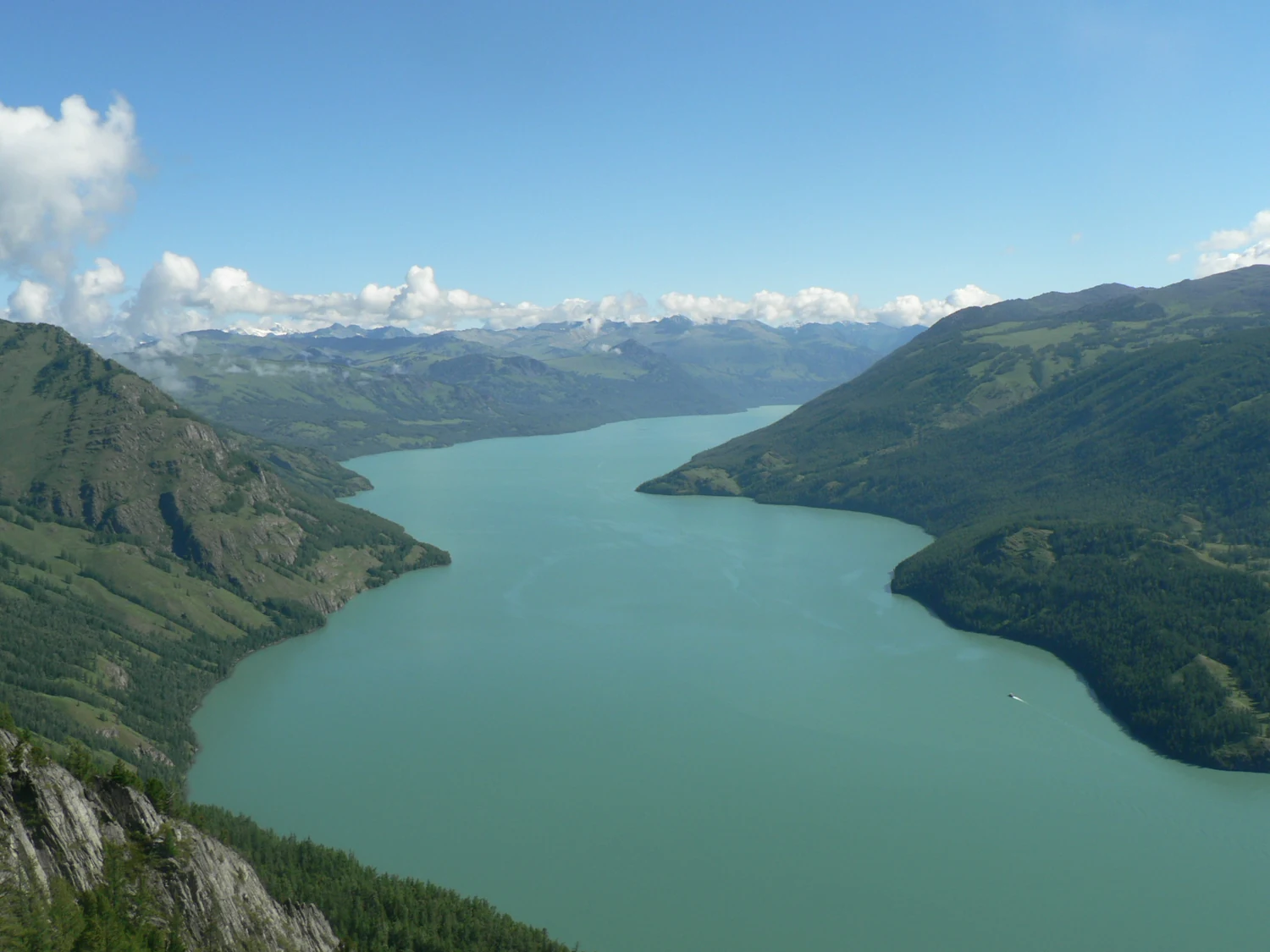
At Kanas, conversation quickly turns to colour.
What colour is the lake today?
Blue?
Green?
A darker grey under cloud?
When does autumn reach its best moment?
There is nothing wrong with these questions.
Beauty is a perfectly good reason to travel.
Kanas becomes more interesting, though, when the lake stops being the whole story.
Water comes out of the mountains.
It enters the lake.
Then it leaves again.
Forest rises along the slopes.
Birch and conifer change their balance with elevation, exposure and moisture.
A change in weather alters the colour of the entire valley.
Kanas is not a blue bowl placed decoratively among mountains.
It still belongs to a river system.
To forest.
To an ecology much larger than the boundary of a scenic area.
The best moment may come when the traveller stops asking what colour the lake is and begins noticing other things.
Water.
Wind.
Birds.
Hooves.
And, sometimes, music somewhere near the wooden houses.
In the Forest, Culture Has Its Own Sound
Altay's culture is poorly served by being reduced to costume and festival.
Sound is often a better place to begin.
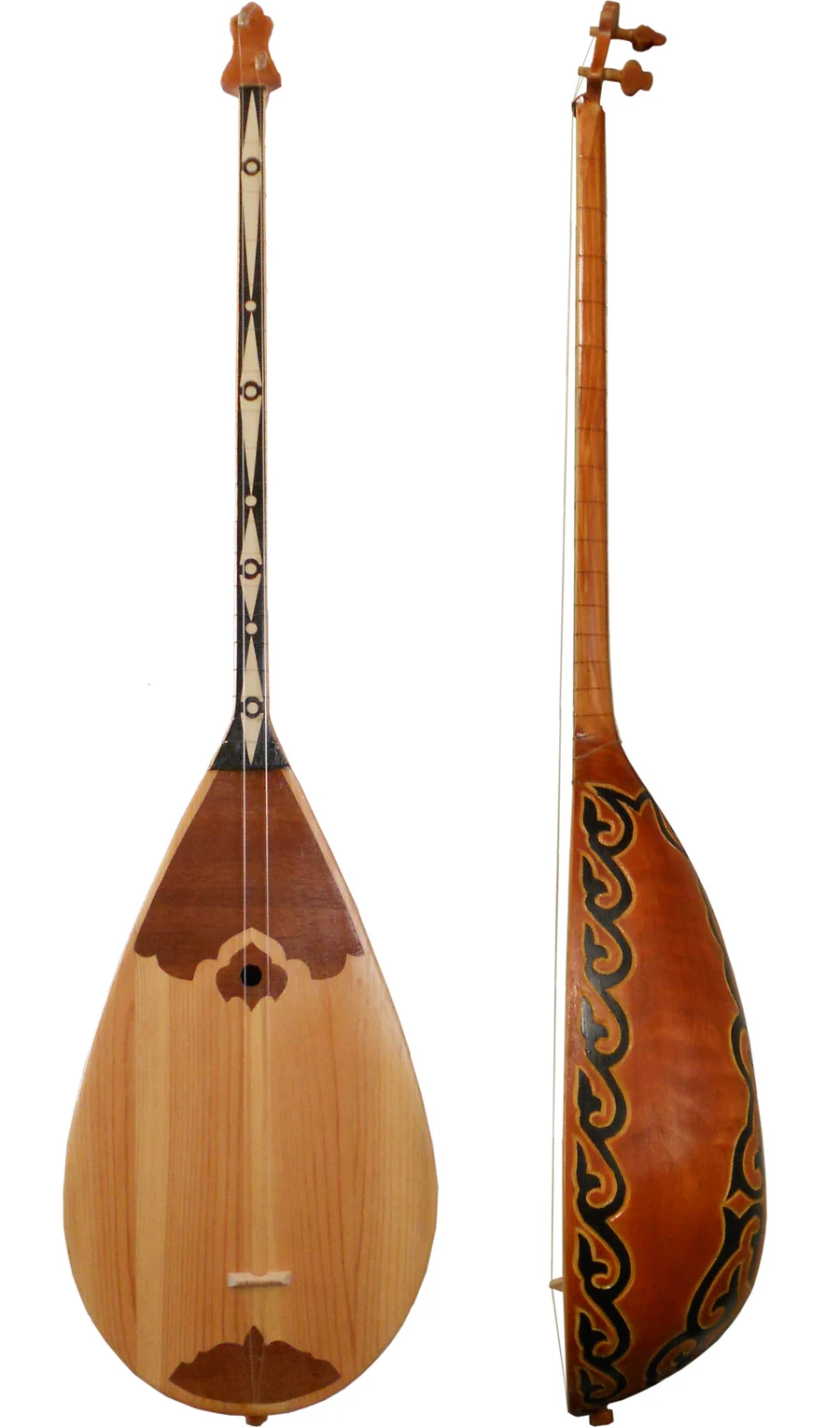
The dombra is one of the defining instruments of Kazakh musical culture in the region.
Two strings do not look complicated.
What they can carry is.
Song.
Story.
Improvisation.
Humour.
A public contest of language and intelligence.
In Aitysh/Aitys, performers improvise spoken or sung verse to traditional accompaniment, answering one another in real time.
Musicality matters.
So does speed of thought.
A line comes towards you and you have to know how to catch it.
History, jokes, local life and whatever has just happened may all enter the verse.
That is why a living tradition is not simply an old song preserved unchanged.
Quite the opposite.
It survives because it can speak about the present.
An old instrument can sing about pasture or cars, courtship or the events of the day.
Change is not necessarily evidence that tradition has been damaged.
Sometimes change is part of how tradition remains alive.
Around Kanas and Hemu, Tuvan musical traditions add another sound to the forest valleys.
The interesting thing is not to call them mysterious.
It is to listen for the different rhythms that different ways of living have produced within the same mountain world.
The Most Interesting Thing About Hemu May Not Be the Morning Mist
Most first-time visitors to Hemu already know what they want to see.
Log houses.
River.
Morning mist.
Smoke.
Yellow forest in autumn.
All of it is real.
The problem begins when a landscape has been photographed so often that we start expecting reality to obey the photograph.
Hemu is first a village where people live.
Before tourism became a major part of the local economy, a house primarily had to be a house.
Winter meant cold, storage and difficult movement.
A road was first a way to leave or come home.
Today some wooden houses are guesthouses.
Coffee machines have entered the valley.
Suitcases and skis lean beside doors.
Some mornings begin with checking bookings rather than preparing for pastoral work.
It is easy for a visitor to say that Hemu is no longer what it used to be.
But whose past do we mean?
Visitors want a village to remain unchanged because we are going to leave.
Residents have to live here through an entire year.
They are under no obligation to preserve our nostalgia at the expense of improving their own lives.
The better question is not whether Hemu has remained sufficiently old.
It is how a lived village, a tourism economy and family life negotiate the use of the same valley.
Travellers See a Pastoral Migration. Herders See a Year.
Meeting livestock on the road during a seasonal move is one of those moments that makes visitors reach for a camera.
Sheep take over the carriageway.
Horses pass close to the car.
People follow on horseback, by motorbike or in vehicles.
A traveller may feel that they have encountered the 'real Xinjiang'.
For the family moving animals, it is work.
Livestock need to reach the right ground.
Pasture has its own timing.
Water has its own geography.
Weather does not stop because somebody wants a photograph.
Modern seasonal movement is not an untouched copy of life centuries ago.
Trucks, cars, motorbikes and phones are part of it.
Weather information arrives differently.
Journeys can be shorter.
What has not entirely changed is the reason for moving.
Grass needs time to recover.
Animals still need appropriate seasonal pasture.
The continuity lies less in a picturesque form than in knowledge of land.
Movement looks romantic from the roadside.
In practice, it begins with knowing when you cannot stay.
Snow Was a Problem of Movement Before It Became a Sport
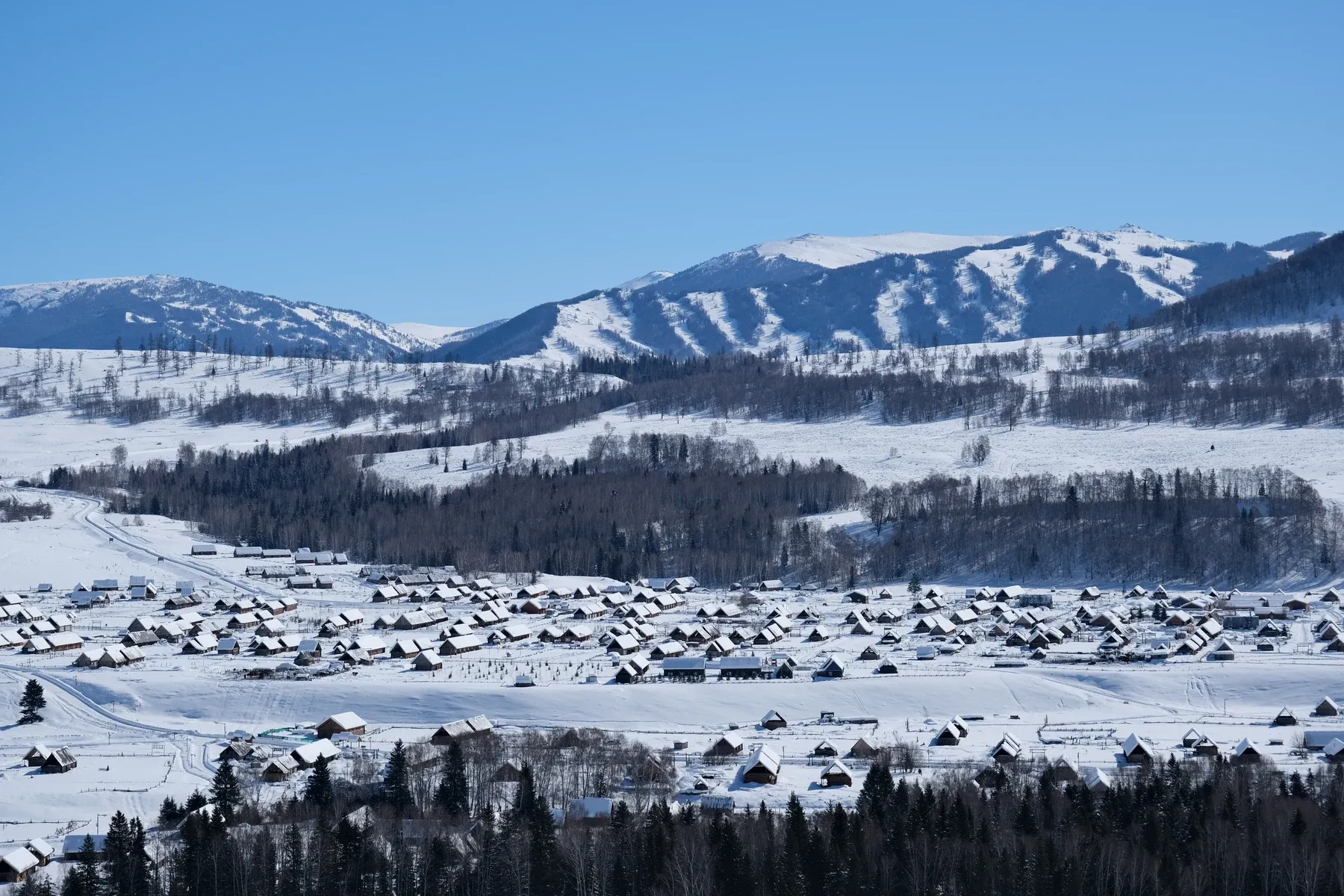
Winter gives Altay an entirely different geography.
Today snow immediately suggests ski resorts.
Lifts.
Pistes.
Goggles.
Cafés.
Altay is now one of China's most important ski destinations.
Push the timeline back, however, and skis first belong to another category.
They are a solution.
Rock art discovered in Altay depicts hunters moving on ski-like equipment, and the region preserves a tradition of making wooden skis covered with animal fur.
Claims about the single 'birthplace of skiing' are best left to archaeologists and historians of the sport.
The more useful question for a traveller is simpler:
Why would people here have needed skis so early?
The answer is outside the window.
Deep snow.
Long winter.
A landscape in which roads did not always look as they do now.
Fur-covered skis were not invented to chase speed records.
They helped people get somewhere.
Place them beside a modern resort and the contrast is striking.
Today people travel across China, and sometimes much farther, to find Altay's snow.
Earlier inhabitants had to find ways through it.
The natural condition is the same.
The human meaning has changed.
Winter Once Pushed Places Farther Away. Now It Brings People Back.
Some of Altay's most revealing modern changes are happening in winter.
Deep snow once meant greater transport difficulty.
A harder road.
A village that felt farther away.
Now the same snow attracts people.
Some skiers stay for much of a season.
Some work remotely and ski when the working day allows.
Guesthouses, restaurants, ski shops, instructors and new jobs grow around winter tourism.
Modernisation has not made Altay snow less.
It has changed what snow can mean.
A difficult condition has acquired another economic life.
But a coffee machine does not abolish winter.
A winter destination depends on work that most visitors never see.
Road clearing.
Power maintenance.
Communications.
Weather forecasts.
Safety decisions.
The Altay-Hemu Highway has improved access, while snow, ice and mountain weather still determine how safely roads can operate.
Infrastructure has not removed season from Altay.
It has made it possible to keep more of daily life connected while the season still sets the terms.
Winter has not become shorter.
People's winter has changed.
Koktokay Tells Another Northern Story
If Altay were only pasture, forest and skiing, it would still be incomplete.
Return upstream along the Irtysh and Koktokay adds another sound to the region.
Mining.
Machinery.
Workers.
Industry.
The No. 3 Mine shaped the town's twentieth-century history.
From the middle of that century, rare-metal mining here became part of China's modern industrial development.
The immense open pit remains, a human-made landform with some of the visual force of a natural gorge.
This history makes the cultural idea of Altay more complicated.
There were not only herders.
There were miners.
Not only timber houses.
Also workers' housing, workshops, power infrastructure and industrial roads.
Not only old pastoral routes.
Also the geography of twentieth-century industry.
Places become interesting when one label is no longer enough.
'Pristine Altay' is too simple.
'Pastoral Altay' is too simple as well.
The real region includes pasture, mine, forest, town, village and ski resort.
The Irtysh runs past all of them.
After a Place Is Discovered by the Camera
A book, a song, a television series or a short video can suddenly move a place on the mental map of millions of people.
The essay collection My Altay, and the television drama adapted from it, introduced the name to audiences who might never previously have searched for it.
Somewhere that once felt too far away begins to feel possible.
This is what cultural work does first.
It does not immediately change the place.
It changes the imagination of people elsewhere.
The harder part comes later.
When travellers begin to follow that imagination into Altay, reality has to meet the image created of it.
Visitors want to find the life they saw on screen.
Residents are busy living the present.
Visitors want quiet.
Villages need income.
Visitors may prefer an old wooden house.
A resident may prefer better heating and a decent bathroom.
There is no need to resolve this into a sentimental answer.
The tension is part of contemporary Altay.
Perhaps mature travel begins here:
Not by asking a place to conform to our imagination.
But by allowing reality to be more complicated than the image that brought us there.
The River Moves On. The Seasons Return.
When spring arrives, snow in the Altai Mountains begins to melt again.
The same snow that slowed vehicles in winter becomes water.
It enters gullies.
Then the Irtysh.
It passes Koktokay.
Pasture.
Settlements.
Then continues towards places farther away.
Rivers rarely return.
People live in another kind of time.
Summer pasture grows again.
Animals move again.
Hemu receives another season of visitors.
A dombra is played again.
Children may prefer music on a phone.
Some people continue with livestock.
Some run guesthouses.
Some work at ski resorts.
Some leave to study.
Others return from cities.
When the next snow comes, another group of travellers will arrive.
They may come for Kanas.
For skiing.
For a drama they once watched.
Or simply because they saw the name Altay on a map and wondered what lay so far north.
Once here, they may discover that Altay is not a place where people escape modern life.
People here work, change, choose and look for better lives just as people do elsewhere.
There are simply other clocks still visible here.
When water begins to run.
When grass appears.
When snow closes a road.
When to move.
When to wait.
Cities divide time into hours.
Altay still keeps another clock.
It hangs in the mountains.
Falls into the river.
Grows in pasture.
Becomes snow in winter.
And water again in spring.
The river moves on.
The seasons return.
Altay lives between the two.
Image Credits & RightsView details
Creators, source pages and applicable licences for verified images used on this page are listed below. Images are used for editorial display on this page only, subject to the stated licence or rights-holder permission.
- Winter houses in Altay (cover) | Huangdan2060 | CC BY 3.0
- The Irtysh at Koktokay in winter | KING-FISH① | CC BY-SA 3.0
- Kanas Lake | Wang Xiaozhe & Meng Jie | CC BY-SA 3.0
- Hemu in autumn | lwtt93 | CC BY 2.0
- Kazakh dombra | Mizu basyo | CC BY-SA 3.0
- Hemu in winter | Leeinm | CC BY-SA 4.0